Keeping Little Learners Engaged: Fun Ideas for Every Classroom
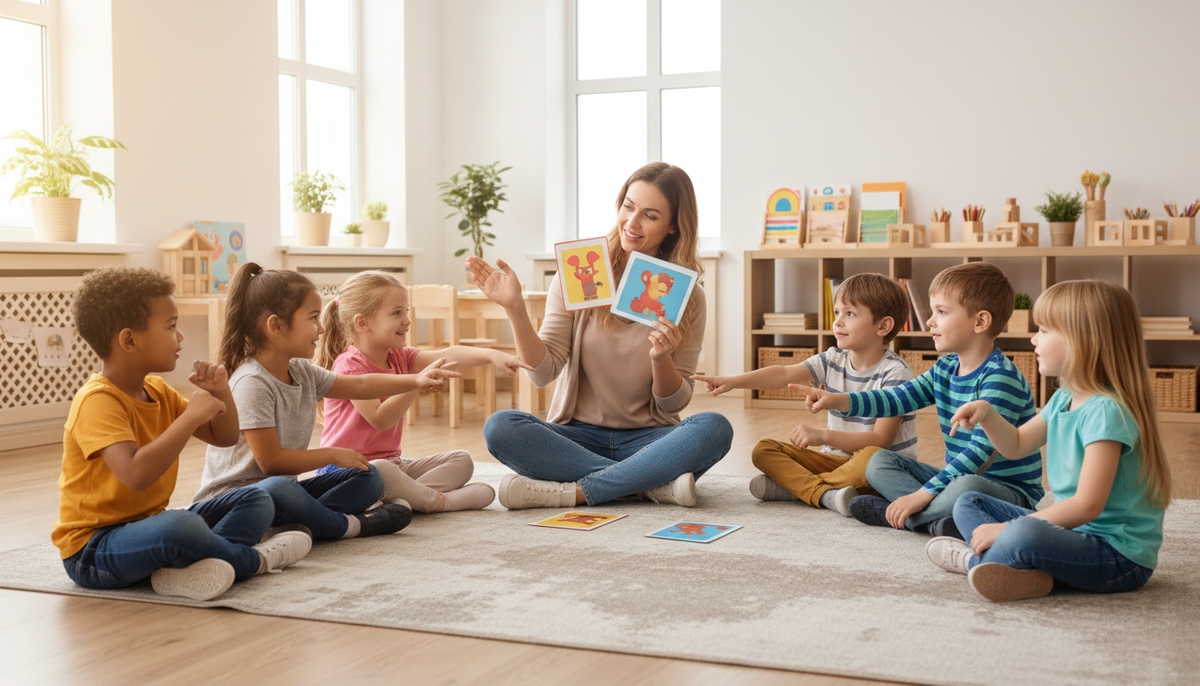
A room full of children does not need to be perfectly silent to be working well. It does need a rhythm. When little learners know what happens next, get chances to move, and feel that their ideas matter, they are far more likely to stay with you.
Picture a rainy Tuesday morning: coats are dripping by the door, one child is telling a long story about a lost glove, and three others are already wriggling on the carpet. You do not need a brand-new lesson plan. A few small classroom engagement ideas can turn that busy energy into a useful start.
Editorial illustration
Little learners do not need constant entertainment; they need a clear next step and a reason to join in.
Key takeaways
Begin with a familiar two-minute routine so children can settle without waiting.
Plan short movement breaks before attention runs out, not after everyone is restless.
Offer two sensible choices instead of asking an open-ended question.
Use pictures, objects, and child-friendly actions alongside spoken instructions.
Keep a quiet reset activity ready for children who need a softer moment.
Finish with a tiny review so children can remember what they did well.
Watch for the Wriggles Before They Grow
Children rarely announce, “My attention is slipping now.” They show you instead. Feet start tapping. A pencil becomes a drumstick. Someone suddenly needs to sharpen a crayon that is already sharp. These are not always signs of poor behaviour. Often, they are signs that the task has gone on a little too long or the next step is unclear.
Try pausing for ten seconds before you repeat a direction more loudly. Look around the room and ask yourself one practical question: do children need movement, help, a choice, or a quicker finish line? That small check can stop a tricky moment from becoming a big one.
Use a quick reset signal
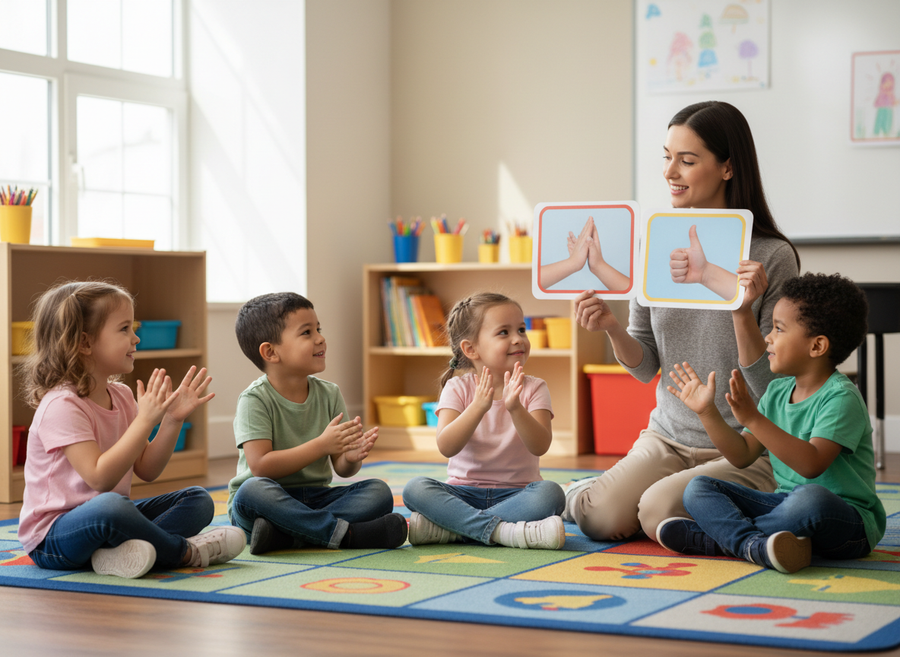
Choose one signal and practise it when everyone is calm. A raised hand, two quiet claps, or a simple call-and-response works well. Keep it friendly and brief. The signal is not magic; it is a shared reminder that the group is coming back together.
Say, “Show me your listening shoulders,” and let children sit tall or stand ready.
Ask, “Do we need a stretch, a question, or a fresh start?”
Give one direction at a time, then wait long enough for children to begin.
At home, the same idea helps with homework or a craft at the kitchen table. When a child drifts away, offer a two-minute reset before asking for more work. A short pause is often faster than a long argument.
Editorial illustration
Start Each Day With a Routine Children Can Own
The first five minutes set the temperature of the room. A complicated welcome activity may look exciting on paper, but a simple routine gives children a steady place to land. They can walk in, hang up their things, choose a seat task, and know that they belong there.
One teacher I know keeps three picture cards by the door: a book, a puzzle, and a drawing prompt. Children choose one while she greets each person by name. On a busy morning, that small choice prevents twenty children from asking, “What do I do now?”
A dependable five-minute arrival
Greet children with the same warm phrase or hand signal.
Point to two or three ready-to-go activities on tables or the carpet.
Play a quiet timer or give a clear warning when there is one minute left.
Bring everyone together with the familiar reset signal.
Keep the activities easy enough that children do not need adult help to begin. Matching cards, a “find something blue” hunt, building a shape with sticks, or drawing one thing they saw on the way in all work. Save the new, more demanding task for after the group has settled.
Editorial illustration
Build Movement Into the Lesson, Not Just Recess
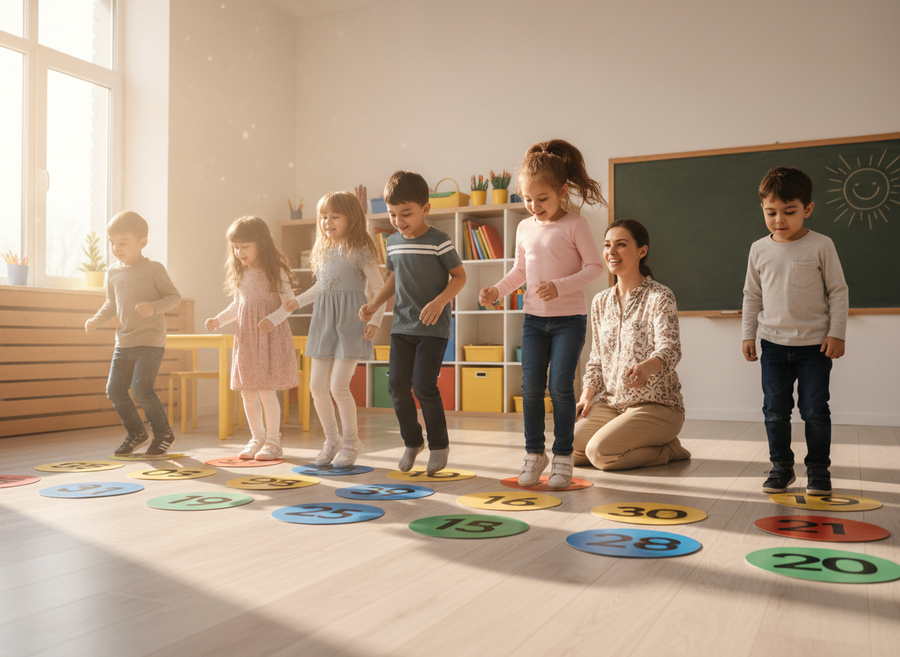
Young children learn with their whole bodies. Sitting still for a long stretch can make even a favourite topic feel heavy. A movement break does not need to be wild or noisy. It can be a thirty-second action that helps brains and bodies wake up.
Match the movement to what children are learning. During a number lesson, call out a number and let children do that many star jumps, toe touches, or slow claps. While reading a story, ask them to freeze like a character when they hear a key word. These fun classroom activities make the lesson easier to remember because the idea has an action attached to it.
For letters, children can air-write a sound with one finger.
For science, they can curl small like seeds, then grow tall like plants.
For geography, they can point north, south, east, and west from the carpet.
For calm, try five slow shoulder rolls and three deep “smell the flower” breaths.
Plan movement breaks every 15 to 20 minutes for younger children, or sooner after a long sit-down task. Tell children what comes after the movement: “We will wiggle for one minute, then we will find the first word together.” That promise makes it easier for everyone to return.
Editorial illustration
Give Small Choices That Keep Everyone Moving
Choice is powerful, but too much choice can leave children stuck. “What would you like to do?” may sound generous, yet a four-year-old can spend five minutes staring at the room. Instead, offer two good options that both lead toward the learning goal.
For example, after hearing a story, children might choose to draw their favourite part or use picture cards to put three events in order. Both choices invite them to think about the story. One child gets a pencil; another gets cards to move around. Nobody is left wondering what counts as the right answer.
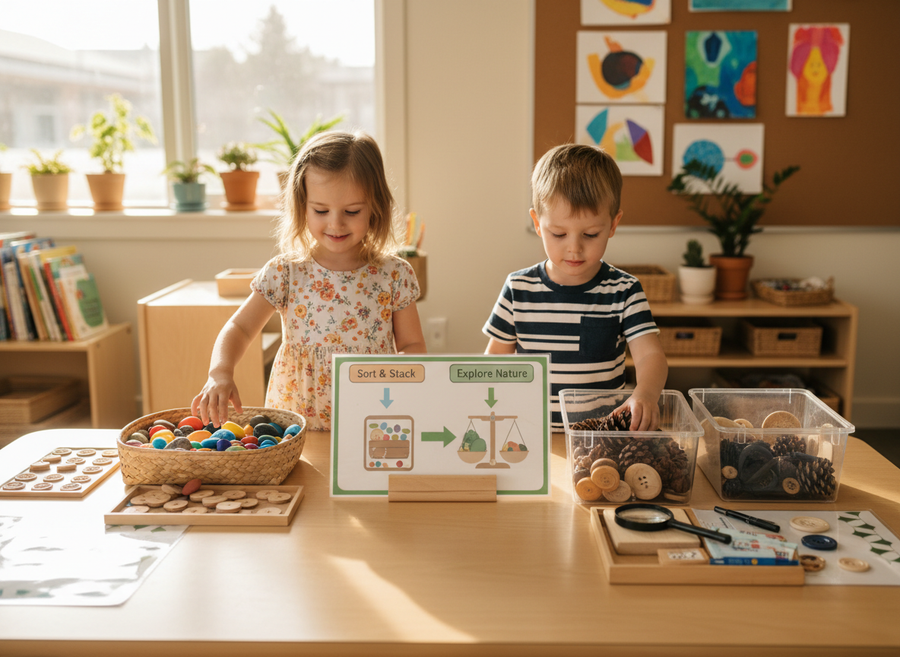
Set up simple choice stations
You do not need a room full of expensive tubs. Start with two stations and a timer. Explain what success looks like before children spread out: a finished pattern, three labelled pictures, five matched cards, or a quiet partner conversation.
Make station cards visual: use a photo or quick symbol for each activity.
Keep materials limited: put out just enough for the group at that table.
Use a clear finish: children should know when to tidy and move on.
Rotate slowly: two well-run stations beat six confusing ones.
At home, try the same approach after school. Ask, “Would you like to read beside me or draw while I make dinner?” A small, real choice can help a tired child cooperate without turning the evening into a negotiation.
Make Directions Easy to See, Hear, and Do
Children can miss an instruction even when they are trying hard to listen. There may be a chair scraping, a friend whispering, or simply too many words arriving at once. Clear directions are one of the kindest classroom engagement ideas because they reduce the chance that a child feels lost.
Try the “say it, show it, do it” pattern. First, give a short spoken instruction. Next, point to a picture, example, or real object. Then ask children to make the first action with you. If the task is to glue three shapes in a pattern, show the pattern and place the first shape together before handing out supplies.
Use a sentence with one action: “Write your name at the top.”
Pause while children do it.
Give the next action: “Choose one red crayon.”
Check a few tables before moving on.
Invite children to repeat the step back in their own words. You might say, “Tell your partner what we are doing first.” This is not a test. It lets you hear where the confusion is before glue sticks appear on every desk.
Visual schedules are especially useful on unusual days. A row of simple pictures for arrival, carpet time, snack, art, outdoor play, and home time gives children a map of the day. When plans change, move the picture and say why. Children cope better with surprises when they can see them.
Keep a Quiet Reset Ready for Busy Moments
Not every child needs more noise or more movement. Sometimes the room has just finished a lively game, rain is thudding against the windows, and everyone needs a softer bridge to the next task. A quiet reset is not a punishment or a reward. It is a useful tool for helping bodies settle.
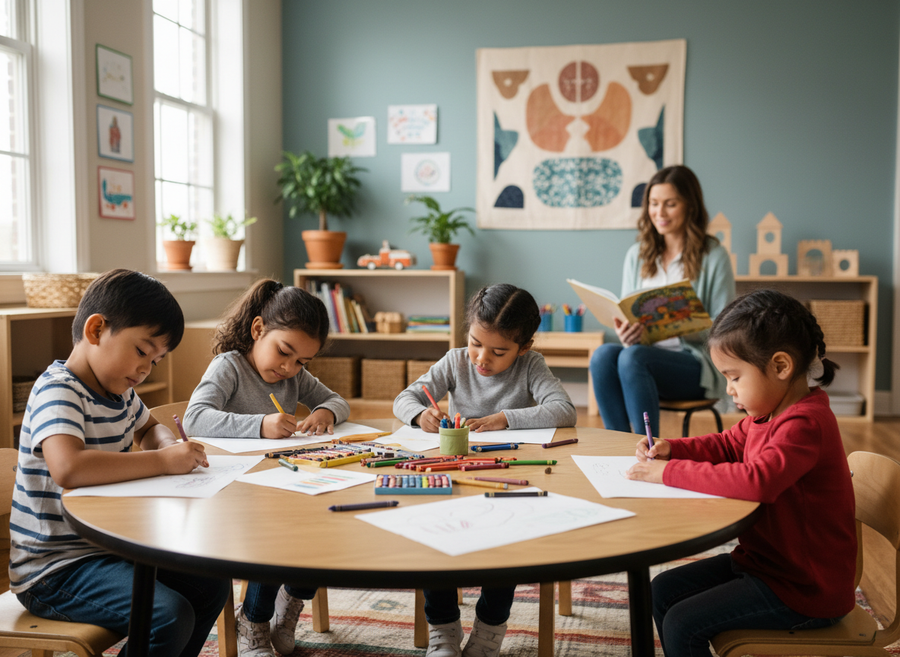
Colouring, simple tracing, dot-to-dot activities, or looking carefully at a picture can work well here because the hands have something calm to do. Keep the expectation light: children might colour for five minutes while you read a short poem, play gentle instrumental music, or quietly call small groups to the next activity.
Make calm time feel welcoming
Put out a small basket of crayons in a few easy-to-reach colours.
Offer paper on clipboards, at tables, or on the classroom carpet.
Give a simple invitation, such as “Choose three colours you can spot in nature.”
Let children stop when the timer ends; perfection is not the goal.
For children who finish early, have a calm activity ready rather than asking them to wait with nothing to do. At a kitchen table, this can be the helpful ten minutes before supper. In class, it can be the gentle landing after lunch. The key is to use it as a planned part of the day, not as filler when everything else has gone wrong.
End With a Tiny Win and a Look Ahead
Children remember endings. If the day ends with a rushed command to pack up, they may carry that scramble home. A two-minute closing routine helps everyone notice what happened and feel ready for tomorrow.
Gather children on the carpet or ask them to turn to a partner. Give one clear prompt: “What is one thing you can do now that was tricky before?” Younger children can point to a picture card, hold up a finger, or complete the sentence, “Today I liked…” Older children can name a strategy they used.
Celebrate a class effort: “We moved from tables to carpet in under one minute.”
Name a learning moment: “I heard brilliant new words during our story.”
Preview tomorrow: “In the morning, we will test which objects float.”
Keep praise specific. “You kept trying when the pattern was hard” tells a child much more than “Good job.” If a day felt bumpy, find one honest success anyway. Perhaps the group came back after a noisy transition, or a child asked for help instead of giving up. Those are real wins worth noticing.
Over time, this closing habit gives children language for their own learning. They begin to see that joining in is not about being the loudest or fastest. It is about trying, listening, moving when needed, and taking the next small step.
Engaged classrooms are not built from one dazzling activity. They grow from repeatable little moments: a clear arrival, a stretch at the right time, a choice that feels manageable, and a calm reset when the room needs one.
Choose just one idea to try this week. For a quiet transition, you can also explore our free colouring pages, colour online, or print a PNG for the classroom table or a rainy-day activity at home.
Looking for Free Printable Coloring Sheets?
Explore thousands of free printable pages ready for home or classroom learning.