Playing Pretend: How Kids' Imagination Can Spark Future Career Ideas

Remember building epic forts in the living room, or pretending to be a brave astronaut exploring distant planets? That wasn't just fun and games – it was serious work! As parents and educators, we often marvel at the boundless energy and creativity our children pour into their pretend play. But have you ever stopped to think about how those make-believe adventures might actually be laying the groundwork for their future career choices?
It's true! What looks like simple play is a powerful learning laboratory. When your little one dons a chef's hat, or carefully examines a stuffed animal as a vet, they're not just passing the time. They're trying on different roles, testing out skills, and exploring the world around them in a way that's deeply personal and meaningful. We'll explore how these imaginative journeys can be much more than just childhood antics; they can be early glimpses into passions and professions that might shape their adult lives.
So, pull up a chair, maybe with a cup of tea, and let's delve into how we can gently encourage and observe our children as they play their way towards discovering what truly excites them, and perhaps, what they might want to be when they grow up. It's about nurturing that spark, not forcing a path.

Editorial illustration
Play is the highest form of research. — Albert Einstein
Key takeaways
Pretend play is a powerful tool for early career exploration and skill development.
Children learn problem-solving, empathy, and communication through role-playing.
Observe your child's play themes for clues about their natural interests and strengths.
Provide open-ended props and environments to encourage diverse role-playing scenarios.
Engage with your child's play by asking open-ended questions, fostering deeper thought.
Connect pretend play to real-world jobs, helping children understand the purpose of work.
Remember, the goal is exploration and skill-building, not to lock in a career choice early.
The Unseen Classroom: How Pretend Play Teaches Real-World Skills
Think about a child pretending to be a doctor. They're not just mimicking an adult; they're practicing a whole host of essential skills. They might be comforting a 'patient' (a teddy bear, perhaps), explaining a 'diagnosis,' or even writing a 'prescription.' This seemingly simple scenario involves empathy, communication, critical thinking, and even a touch of scientific inquiry. These are foundational skills that translate into almost any career path, whether they become a doctor, a teacher, or an engineer.
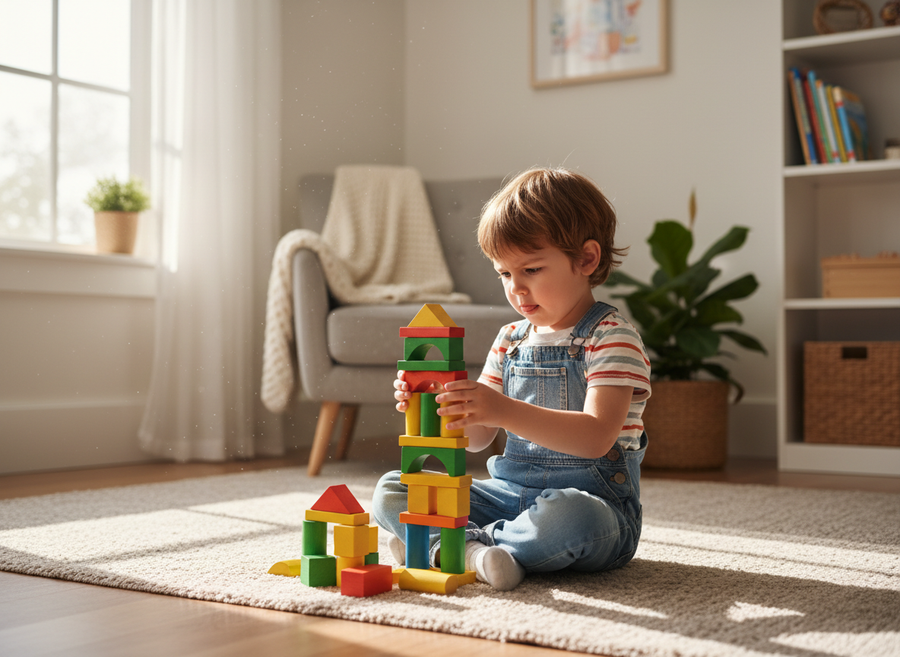
When kids engage in pretend play, they're constantly solving mini-problems. A child building a pretend house needs to figure out how to make the roof stay up (problem-solving!). A group of children running a pretend restaurant needs to decide who takes orders, who cooks, and who serves (teamwork and organization!). These experiences, repeated over time, build resilience, creativity, and the ability to adapt – all crucial for navigating the complexities of the adult world and future workplaces.
Communication: Explaining rules, negotiating roles, giving instructions.
Empathy: Understanding others' feelings, taking different perspectives.
Problem-Solving: Overcoming obstacles within the play scenario.
Creativity: Inventing scenarios, characters, and solutions.
Collaboration: Working with others to achieve a shared play goal.
Editorial illustration
Spotting the Sparks: Observing Your Child's Natural Interests
One of the most fascinating aspects of pretend play is how it can reveal a child's natural inclinations. Does your little one consistently gravitate towards building things? Perhaps they're a budding architect or engineer. Do they spend hours nurturing their dolls and stuffed animals? A future veterinarian, nurse, or teacher might be in the making. Are they always organizing their toys into neat rows or making elaborate schedules for their playmates? They might have a knack for planning and management.
It's not about pigeonholing them into a specific job title, but rather about noticing the *types* of activities and roles they enjoy. These patterns can offer valuable insights into their intrinsic motivations and strengths. For instance, a child who loves pretending to be a chef might not necessarily become a professional cook, but their love for creating, following instructions, and experimenting with ingredients points to a strong interest in hands-on tasks and tangible results. These are transferable skills and interests that could lead them down many different fulfilling career paths.

Editorial illustration
Creating the Stage: How to Encourage Diverse Role-Playing
You don't need a fancy play kitchen or an elaborate doctor's kit for rich pretend play to happen. Sometimes, the simplest props spark the most imagination. A cardboard box can become a spaceship, a car, or a house. A blanket draped over chairs transforms into a cave or a secret hideout. The key is to offer open-ended materials that can be anything the child imagines.
Think about providing a 'prop box' filled with items like old scarves, empty food containers, an old phone, a notepad and pencil, or even just a few blocks. These items invite children to invent their own scenarios rather than just following pre-set scripts. You can also subtly introduce new themes. "What if we were explorers in the jungle today?" or "Let's pretend we're running a busy post office!" These gentle suggestions can broaden their horizons and expose them to a wider range of roles and activities, helping them discover new interests they might not have considered before.
Simple Prop Ideas for Imaginative Play:
Old clothes, hats, scarves (dress-up box)
Empty food boxes and plastic containers (grocery store, restaurant)
Notepads, pens, old keyboards (office, school)
Small tools, blocks, cardboard tubes (construction, engineering)
Stuffed animals, bandages, small bottles (vet, doctor)

Editorial illustration
The Power of Your Presence: Engaging Without Taking Over
As tempting as it is to jump in and direct the play, sometimes the most powerful thing we can do is simply be present and follow our child's lead. When they invite you into their make-believe world, join in as a supporting character. If they're the brave knight, maybe you're the loyal squire. If they're the master chef, you could be the hungry customer.
Ask open-ended questions that encourage them to elaborate on their play: "Tell me about your amazing invention! How does it work?" or "What kind of animal are you helping today, Doctor?" These questions validate their play, encourage storytelling, and help them think more deeply about the roles they're inhabiting. It's about fostering their imagination and critical thinking, not imposing your ideas. Remember, their play, their rules!
Connecting Play to Real Life: Bridging the Gap
Once you've observed their play and engaged with it, you can start to gently connect their imaginative scenarios to real-world jobs and activities. If your child loves pretending to fix things, you might say, "You're such a great builder! That reminds me of an engineer who designs buildings, or a mechanic who fixes cars." If they enjoy organizing their toys, you could mention how librarians organize books or how scientists organize their experiments.
These connections don't need to be formal lessons. They can be casual comments during a trip to the grocery store, a visit to the park, or while reading a book. Point out people doing different jobs and how their work helps others. "Look, there's a construction worker building a new house!" or "The baker made all these delicious cakes!" This helps children understand that the skills they practice in play are valuable in the adult world and that there are many different ways people contribute to society.
Beyond the Playroom: Exposing Kids to Diverse Experiences
While pretend play is a fantastic starting point, real-world experiences can further ignite and refine a child's interests. This doesn't mean expensive trips or elaborate workshops. Simple outings can be incredibly impactful. A visit to the local library, a fire station open house, a community garden, or even just watching a local artist at work can open up new worlds of possibility.
Reading books about different professions is another wonderful way to introduce children to various career paths. Look for stories that show people from diverse backgrounds in a wide range of jobs. Discuss what you see and read. "What do you think a scientist does all day?" "Would you like to help animals like the vet in this book?" The more exposure children have to different roles and activities, the more informed and confident they'll be in exploring their own passions and potential future paths. It's about broadening their horizons, one experience at a time.
Patience and Perspective: It's a Journey, Not a Destination
It's important to remember that the goal of encouraging pretend play for career exploration isn't to pick a career for your child at age five. Far from it! The aim is to foster curiosity, build essential life skills, and help them understand that there's a vast and exciting world of possibilities out there.
Children's interests will change, often quite rapidly. Today's aspiring astronaut might be tomorrow's paleontologist, and the day after that, a chef. This is perfectly normal and healthy! Each phase of interest is an opportunity for learning and growth. Our role is to provide a supportive environment where they feel safe to explore, experiment, and dream big, without the pressure of having to decide their 'forever' job. Enjoy the journey of discovery with them; it's one of the most rewarding parts of parenting.
So, the next time you see your child lost in a world of make-believe, take a moment to appreciate the incredible learning that's happening. They're not just playing; they're building, dreaming, and discovering the seeds of who they might become. Your encouragement, your open-ended questions, and your willingness to simply observe are the best tools you can offer.
And speaking of discovery, if you're looking for another wonderful way to encourage creativity and fine motor skills, why not explore the fantastic world of colouring? At KidsColouringPage.com, we have hundreds of free colouring pages that can spark imagination and provide a calm, creative outlet. From bustling city scenes to adventurous animal habitats, there's a page for every interest. You can colour online or print a PNG right from home!
Looking for Free Printable Coloring Sheets?
Explore thousands of free printable pages ready for home or classroom learning.