Why Kids Love Dinosaurs: Unpacking the Prehistoric Fascination
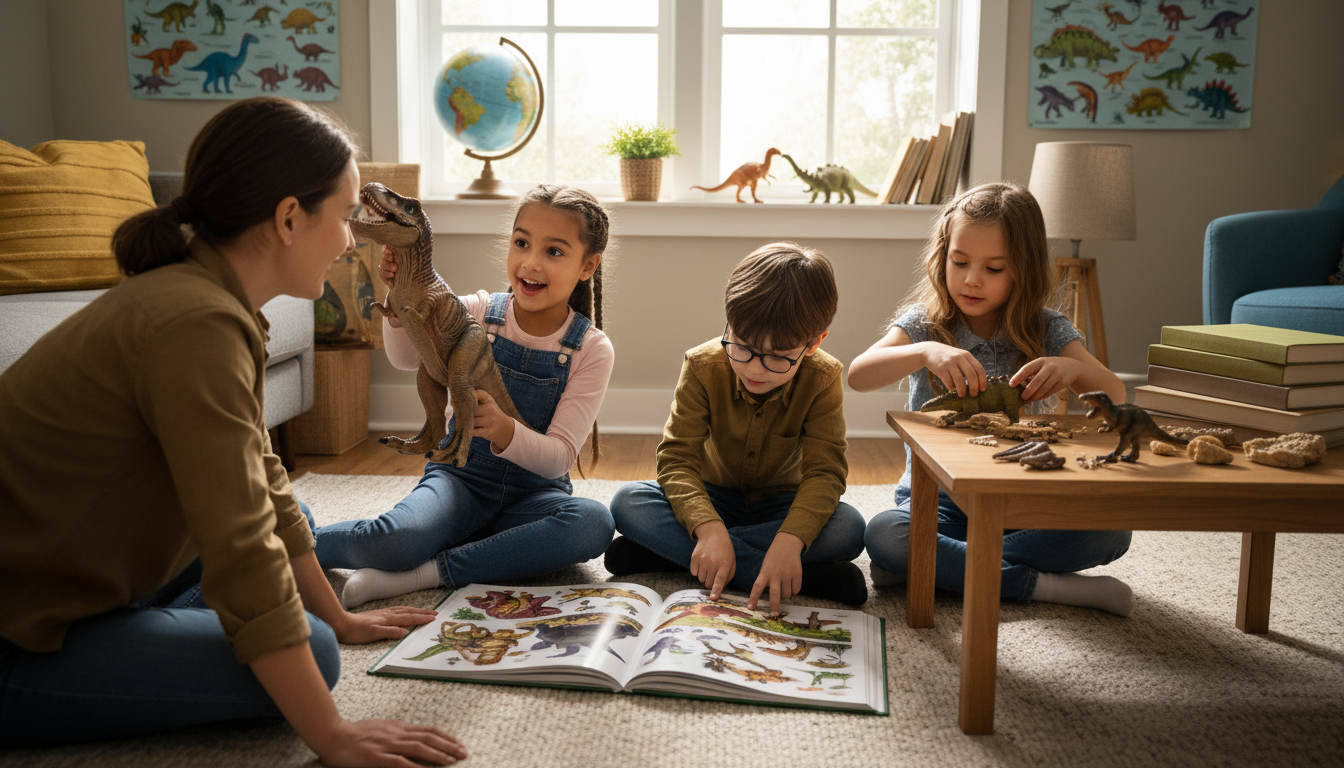
If you've spent any time around young children, you've probably noticed it: the dinosaur obsession. Whether it's roaring like a T-Rex, poring over books about the Jurassic period, or insisting on a Triceratops backpack, dinosaurs hold an undeniable, almost magical, appeal for kids. It's not just a passing phase for many; it's a deep dive into a world that's both terrifying and utterly captivating. As parents, we often find ourselves becoming accidental paleontologists, learning the difference between a Stegosaurus and a Spinosaurus right alongside our little ones.
But what is it about these ancient giants that sparks such wonder? Is it their sheer size, their mysterious disappearance, or the thrill of imagining a world so different from our own? It's likely a wonderful mix of all these things, combined with a child's natural curiosity about the unknown and the powerful. In this article, we'll explore some of the fascinating reasons behind this prehistoric pull, share some cool dinosaur facts your kids (and you!) will love, and suggest some engaging dinosaur colouring activities that can bring their passion to life right at your kitchen table.
You see, dinosaurs offer more than just entertainment. They're a gateway to understanding science, history, and even the natural world around us. They teach us about extinction, adaptation, and the incredible diversity of life. And for kids, they’re just plain cool. So, let's journey back in time and uncover the secrets of their enduring appeal!

Editorial illustration
Dinosaurs aren't just ancient beasts; they're the ultimate storytellers of a world long past, igniting curiosity in every child who dares to imagine them.
Key takeaways
Dinosaurs spark imagination by offering a world of giants, mysteries, and ancient times.
Their sheer size and power appeal to children's natural awe and desire for control.
Learning dinosaur names and facts boosts vocabulary and cognitive skills.
Dinosaurs provide a safe way for kids to explore themes of fear and bravery.
Creative activities like colouring help children process and express their dinosaur knowledge.
Sharing dinosaur interests strengthens parent-child bonds and fosters shared learning.
The ongoing discovery of new fossils keeps the wonder alive for generations.
The Allure of the Ancient: Why Dinosaurs Capture Young Minds
Think about it: what's more exciting than a creature that's bigger than your house, had sharp teeth, and roamed the Earth millions of years ago? For kids, dinosaurs represent a potent mix of fantasy and reality. They're real enough to be studied in books and museums, yet distant enough in time to allow for boundless imaginative play. This blend is irresistible.
One big draw is their sheer scale. In a world where children are often the smallest, the idea of a creature as massive as a Brachiosaurus or as powerful as a Tyrannosaurus Rex is incredibly appealing. It taps into a primal sense of awe and wonder. These aren't just animals; they're titans, heroes, and sometimes even friendly companions in a child's make-believe world. They embody strength and a kind of wild freedom.
Then there's the mystery. Dinosaurs disappeared long before humans existed, leaving behind only fossilised clues. This naturally sparks a child's inner detective. They love piecing together what life was like, how these creatures lived, and what might have happened to them. It’s like a giant, real-life puzzle waiting to be solved. This sense of historical discovery is a powerful motivator for learning.

Editorial illustration
Unleashing the Inner Paleontologist: Learning Through Dinosaurs
Beyond the 'cool' factor, dinosaurs are fantastic educational tools. They introduce children to complex scientific concepts in an accessible way. Paleontology, geology, biology – all these big words become less intimidating when they're wrapped up in the story of a Triceratops protecting its young or a Pterodactyl soaring through the sky.
Learning dinosaur names, for example, is a cognitive workout. Kids often rattle off names like 'Archaeopteryx' or 'Parasaurolophus' with ease, showing impressive memorisation skills. This isn't just rote learning; it's a deep engagement with new vocabulary and classification. It builds confidence and a sense of mastery. When a child can correctly identify a dozen different dinosaurs, they feel smart and capable.
Dinosaurs also teach about different ecosystems and adaptations. Kids learn that some dinosaurs ate plants (herbivores) while others ate meat (carnivores), and that their bodies were designed for specific purposes – long necks for reaching high leaves, sharp claws for hunting, or thick plates for defence. This lays a foundational understanding of ecology and evolution, all while having fun with giant lizards.
Vocabulary Expansion: Long, scientific names become familiar.
Classification Skills: Learning about different types of dinosaurs (herbivore, carnivore, omnivore, flying, aquatic).
Time Concepts: Understanding 'millions of years ago' and geological eras.
Scientific Inquiry: Asking questions about fossils, extinction, and ancient environments.
Spatial Reasoning: Grasping the immense size of these creatures relative to modern animals.
Editorial illustration
Fantastic Dinosaur Facts Your Kids Will Love
Ready to impress your little dino enthusiast? Here are some amazing facts that often surprise even seasoned dinosaur fans. Share these during dinner, on a car ride, or while you're colouring together. They're great conversation starters!
Did You Know?
T-Rex Arms: The Tyrannosaurus Rex had tiny arms, but they were incredibly strong! Each arm could lift over 400 pounds (about 180 kg). Researchers aren't entirely sure what they were for, but theories range from holding prey to helping them get up after a fall.
Dino-Sized Poop: Scientists study fossilised dinosaur droppings, called coprolites, to learn what they ate. The largest coprolite ever found was from a T-Rex and was over 2 feet long!
Longest Name: Micropachycephalosaurus is one of the longest dinosaur names, meaning 'tiny thick-headed lizard.' It was only about 3 feet long!
Chicken Connection: Modern birds are direct descendants of dinosaurs. So, next time you see a chicken, you're looking at a distant relative of a T-Rex!
Spinosaurus Swam: The Spinosaurus was a semi-aquatic dinosaur, meaning it spent a lot of its time in the water, hunting fish. It had a long, crocodile-like snout and a sail on its back.
Dinosaur Colours: While we don't know the exact colours of most dinosaurs, scientists have found evidence of iridescent feathers on some, like Anchiornis, suggesting they could have been quite colourful!
These little nuggets of information make the prehistoric world feel even more tangible and exciting. They show kids that science is full of wonders and mysteries, not just dry facts.
Editorial illustration
Bringing Dinosaurs to Life: Creative Colouring Activities
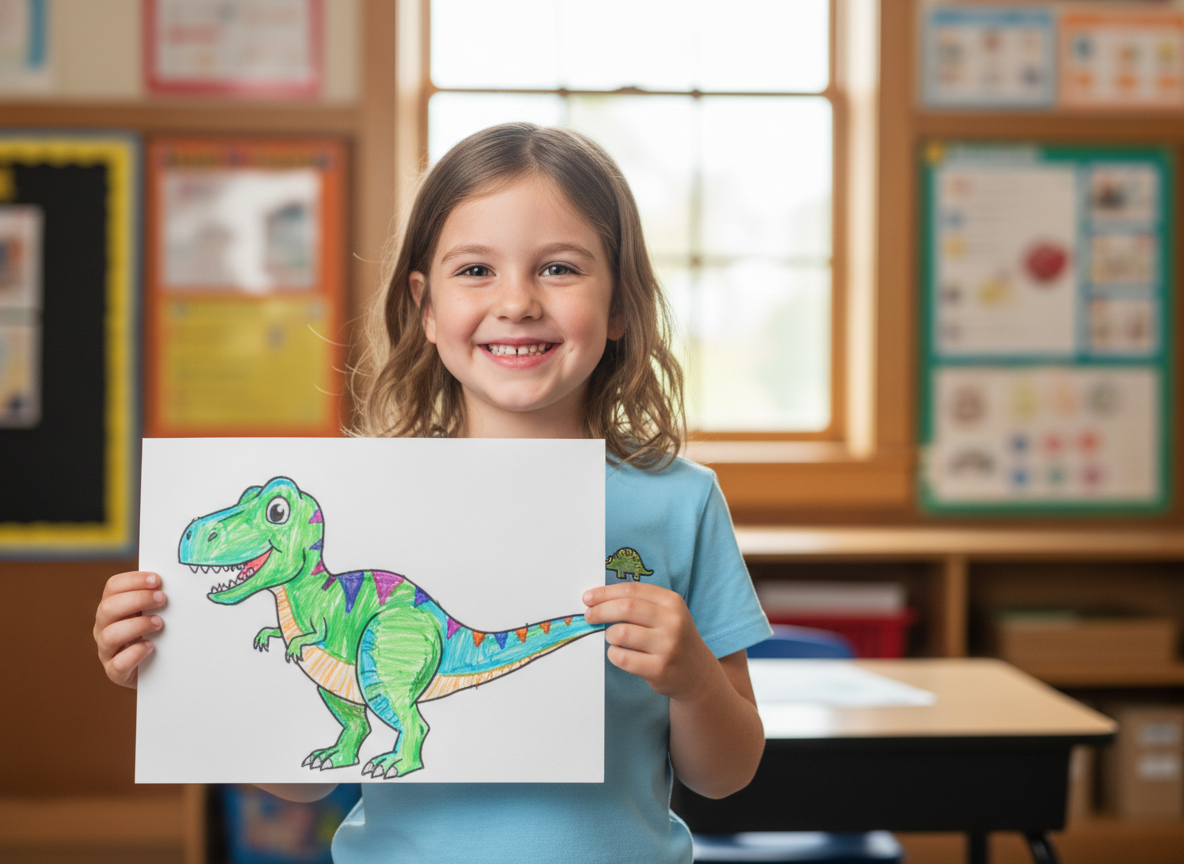
Once kids are buzzing with dinosaur facts, what better way to channel that energy than through creative expression? Colouring isn't just a quiet activity; it's a powerful tool for learning, processing information, and developing fine motor skills. Dinosaur colouring pages are perfect for this.
When your child colours a dinosaur, they're not just filling in lines. They're making choices: what colour was a Stegosaurus? Did a Velociraptor have stripes or spots? This encourages imaginative thinking and allows them to visualise the facts they've learned. Perhaps they'll remember the fact about iridescent feathers and decide their dinosaur should shimmer with all the colours of the rainbow!
Here are a few ways to supercharge your dinosaur colouring sessions:
Fact-Finding Colouring: Before starting, pick a dinosaur and read a few facts about it. Discuss its habitat, what it ate, and its unique features. Then, encourage your child to incorporate those details into their colouring. For example, if it's a herbivore, maybe they'll draw some leafy greens around its feet.
Habitat Creation: Don't just colour the dinosaur; colour its world! Ask your child to imagine the prehistoric landscape. Was it a lush jungle, a dry desert, or a swampy wetland? This adds context and expands their creative storytelling.
Dinosaur Design Challenge: What if dinosaurs had survived? Ask your child to design a 'modern' dinosaur, giving it colours and patterns that would help it camouflage in today's world. Or, imagine a brand new dinosaur and draw/colour it from scratch!
Collaborative Murals: Print out several different dinosaur pages and tape them together to create a giant prehistoric scene. Everyone in the family can contribute, colouring different sections and talking about their dinosaurs as they work.
These activities move beyond simple colouring, turning it into a rich, interactive learning experience. It's a chance for kids to be both artists and scientists simultaneously.
From Roars to Role-Playing: The Social and Emotional Benefits
The fascination with dinosaurs isn't just about knowledge; it's also deeply tied to a child's social and emotional development. Dinosaurs provide a safe outlet for exploring big emotions and concepts.
For instance, the sheer power of a T-Rex can be both exciting and a little bit scary. By engaging with these creatures through play or stories, children can process feelings about strength, vulnerability, and even fear in a controlled environment. Roaring like a dinosaur can be a wonderful way to express energy and assertiveness. It's a way for them to feel powerful and in control, even if just for a moment.
Dinosaurs also fuel imaginative play, which is crucial for developing social skills. When kids pretend to be dinosaurs, they often engage in role-playing scenarios: a mama dinosaur protecting her babies, a group of herbivores grazing peacefully, or a brave explorer discovering a new species. This type of play helps them practice empathy, negotiation, and cooperation with others. They learn to take on different perspectives and create shared narratives.
How Dinosaurs Aid Development:
Emotional Expression: Safely exploring feelings of power, fear, and wonder.
Imaginative Play: Fostering creativity and storytelling abilities.
Social Skills: Encouraging cooperation and negotiation during shared play.
Problem-Solving: Imagining how dinosaurs survived or solved challenges.
Persistence: The drive to learn all the names and facts.
Keeping the Dino-Love Alive: Tips for Parents and Educators
So, your child is thoroughly captivated by the prehistoric world. How can you continue to nurture this wonderful interest? It's easier than you think, and often just involves following their lead and providing opportunities for exploration.
First, embrace their passion! Read dinosaur books together, watch documentaries, or visit natural history museums if you have the chance. Even a trip to the library to check out new dinosaur books can feel like a grand adventure. These shared experiences not only feed their curiosity but also create wonderful bonding moments. Remember, it's not just about the dinosaurs; it's about the shared journey of discovery.
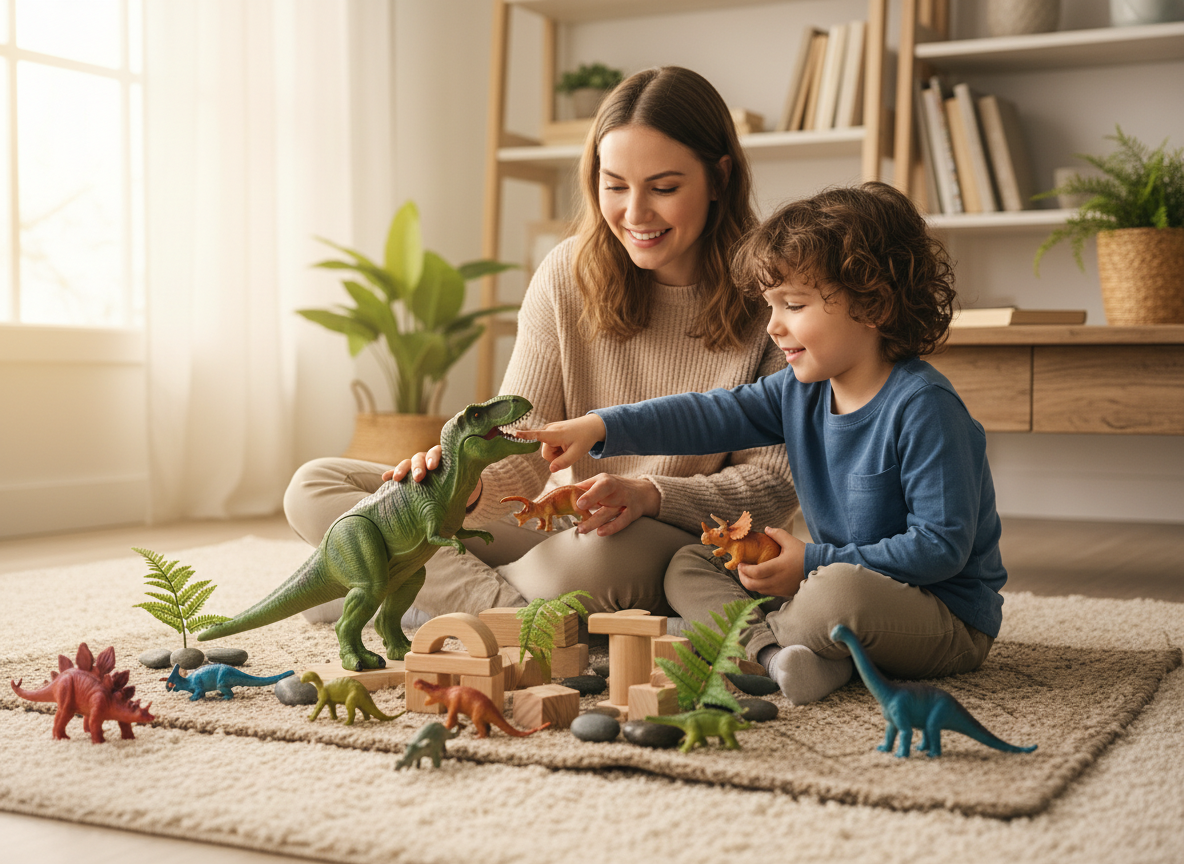
Encourage creative play. Provide them with dinosaur toys, even simple plastic figures, and let their imaginations run wild. You might be surprised by the intricate stories they weave. Suggest building a 'dinosaur habitat' with blankets and pillows, or drawing their own prehistoric creatures on a large sheet of paper. The less structured the play, the more creative it often becomes.
Finally, connect dinosaurs to the wider world. Talk about how scientists learn about things that happened long ago, or how we can protect animals that are alive today. This helps bridge the gap between ancient history and current events, showing them that the skills and curiosity they develop through dinosaurs are valuable in many areas of life.
The enduring fascination children have with dinosaurs is a testament to the power of imagination, the thrill of discovery, and the wonder of the natural world. These ancient creatures offer so much more than just cool visuals; they're a springboard for learning, creativity, and emotional growth. As parents and educators, we have a unique opportunity to tap into this innate curiosity and guide our children on incredible journeys through time.
Whether they're roaring like a T-Rex, carefully colouring a Diplodocus, or debating the diet of a Pterodactyl, your child is engaging with complex ideas and developing valuable skills. So, the next time your little one asks for another dinosaur story or wants to spend an hour colouring a prehistoric scene, remember that you're not just entertaining them; you're nurturing a budding scientist, historian, and artist. For a treasure trove of free dinosaur colouring pages that are perfect for sparking imagination, head over to KidsColouringPage.com. You can colour them online or print out PNGs for hours of creative fun!
Looking for Free Printable Coloring Sheets?
Explore thousands of free printable pages ready for home or classroom learning.