Colouring Fun: Boosting Preschoolers' Fine Motor Skills
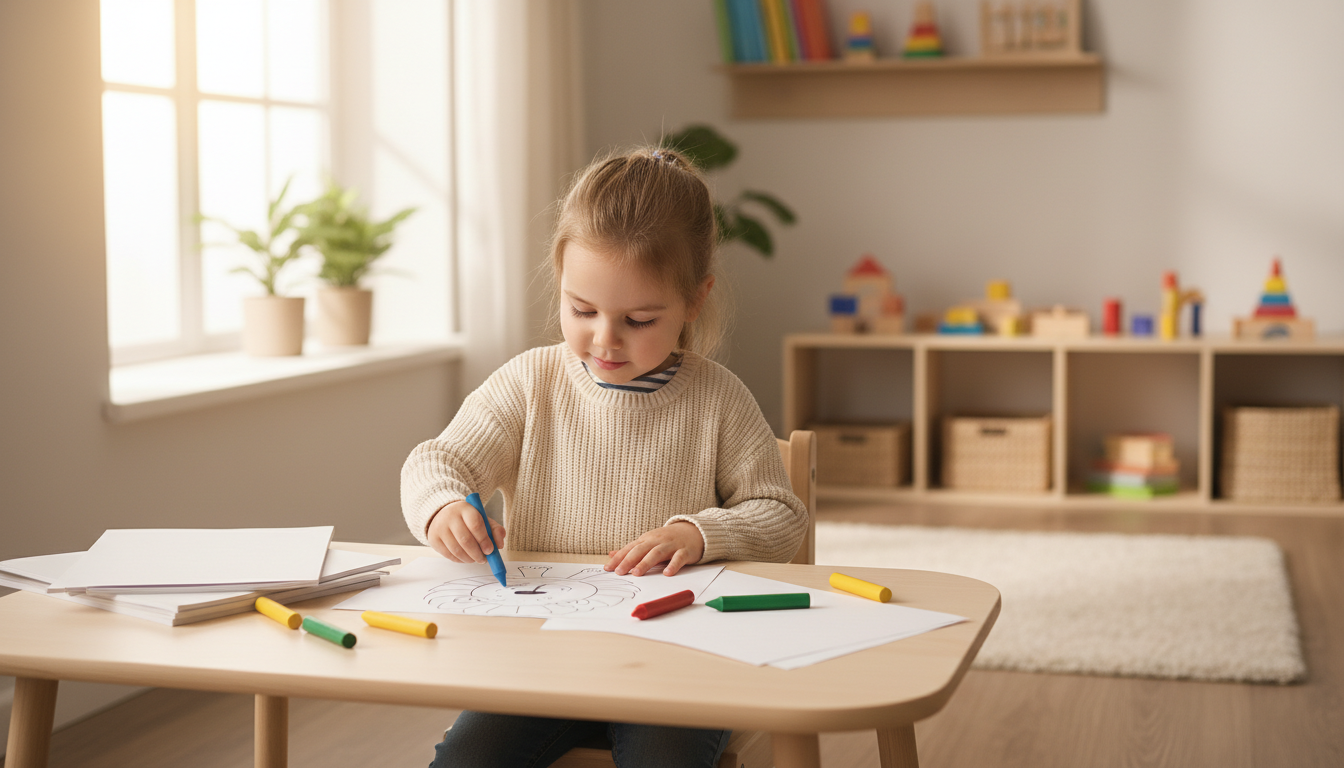
Remember those first wobbly lines your little one drew? Or the way they struggled to hold a crayon, fingers wrapped around it like a tiny fist? It’s a familiar scene in many homes, and it’s a beautiful reminder of the incredible journey our preschoolers are on. They’re not just making art; they’re building the foundational skills they’ll need for a lifetime.
One of the quiet superpowers of a simple activity like colouring is its profound impact on fine motor skills. These are the small, precise movements our hands and fingers make, crucial for everything from buttoning a shirt to writing their name. For preschoolers, every scribble, every attempt to stay within the lines, is a practice session for these vital skills. It’s not about perfection; it’s about the process, the muscle memory, and the growing confidence.
As parents and educators, we often look for engaging ways to support this development. And what could be more engaging than a fresh box of crayons and a stack of fun colouring pages? Let's dive into how this beloved pastime is actually a powerhouse for developing those essential fine motor skills, and how you can make the most of every colouring session.
Editorial illustration
Every crayon stroke is a step towards stronger hands and brighter futures.
Key takeaways
Colouring directly strengthens the small muscles in hands and fingers.
It refines pencil grasp, a key pre-writing skill.
Hand-eye coordination improves with every attempt to colour within lines.
Bilateral coordination develops as both hands work together.
Concentration and focus are quietly built during colouring time.
Activities can be adapted for various skill levels, from scribbling to detailed work.
It’s a low-pressure, enjoyable way to prepare for academic tasks.
What Exactly Are Fine Motor Skills, Anyway?
Before we jump into how colouring helps, let’s quickly chat about what fine motor skills truly are. Think of them as the 'small muscle' team of the body, specifically in the hands and fingers. These aren’t the big, powerful muscles you use for running or jumping; these are the delicate ones that allow for precision.
When your preschooler picks up a tiny block, strings a bead, or tries to zip up their jacket, they're calling on their fine motor skills. For school, these skills are absolutely essential. They’ll need them for holding a pencil correctly, cutting with scissors, turning pages in a book, and even managing their lunchbox. Without these foundational abilities, everyday tasks can become frustrating, and learning can feel much harder.
Colouring provides a safe, enjoyable 'gym' for these tiny muscles. It’s an activity where mistakes are just part of the fun, and every attempt is a win. This low-stakes environment encourages practice without the pressure that might come with other learning tasks.
Editorial illustration
The Pencil Grasp Journey: From Fist to Tripod
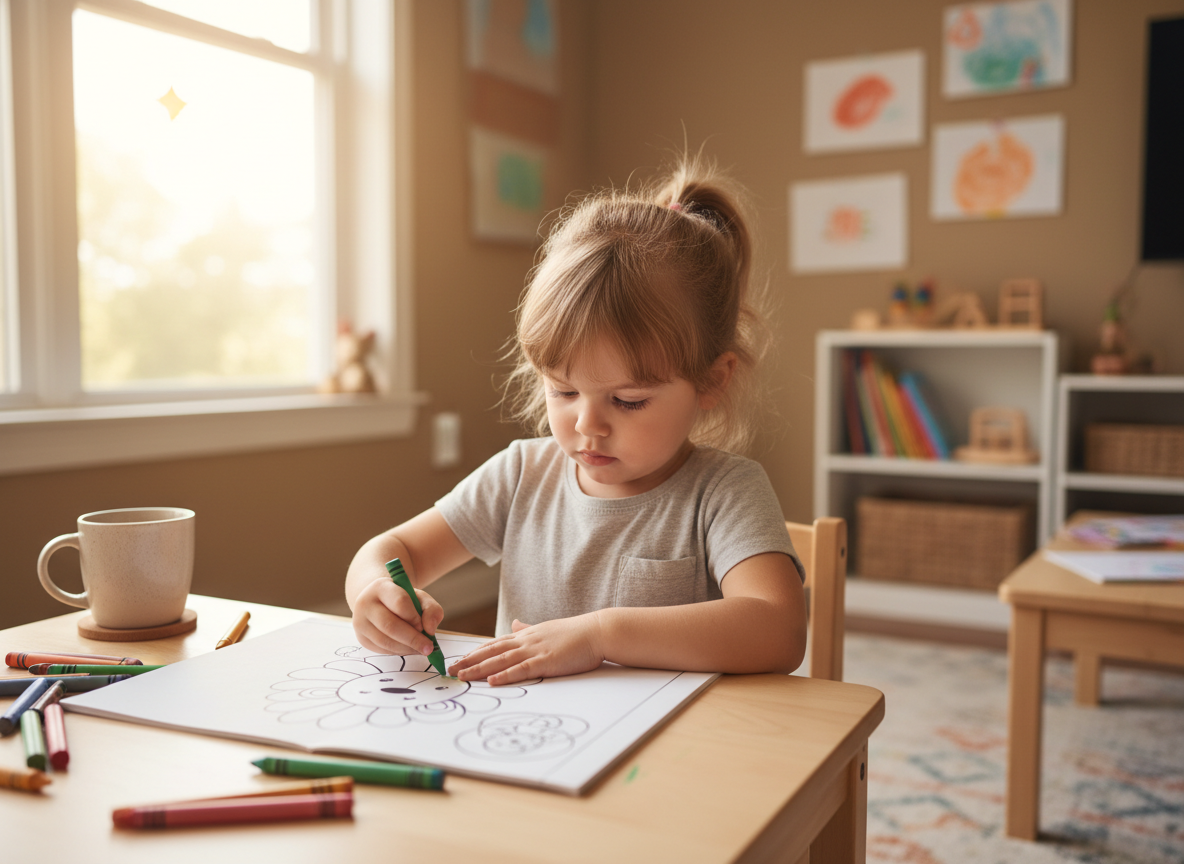
One of the most visible ways colouring helps with fine motor skills is by developing a proper pencil grasp. You’ll notice that young preschoolers often start by gripping a crayon with their whole hand – we call this a 'palmar grasp' or 'fisted grasp.' It’s perfectly normal, but it's not very efficient for detailed work.
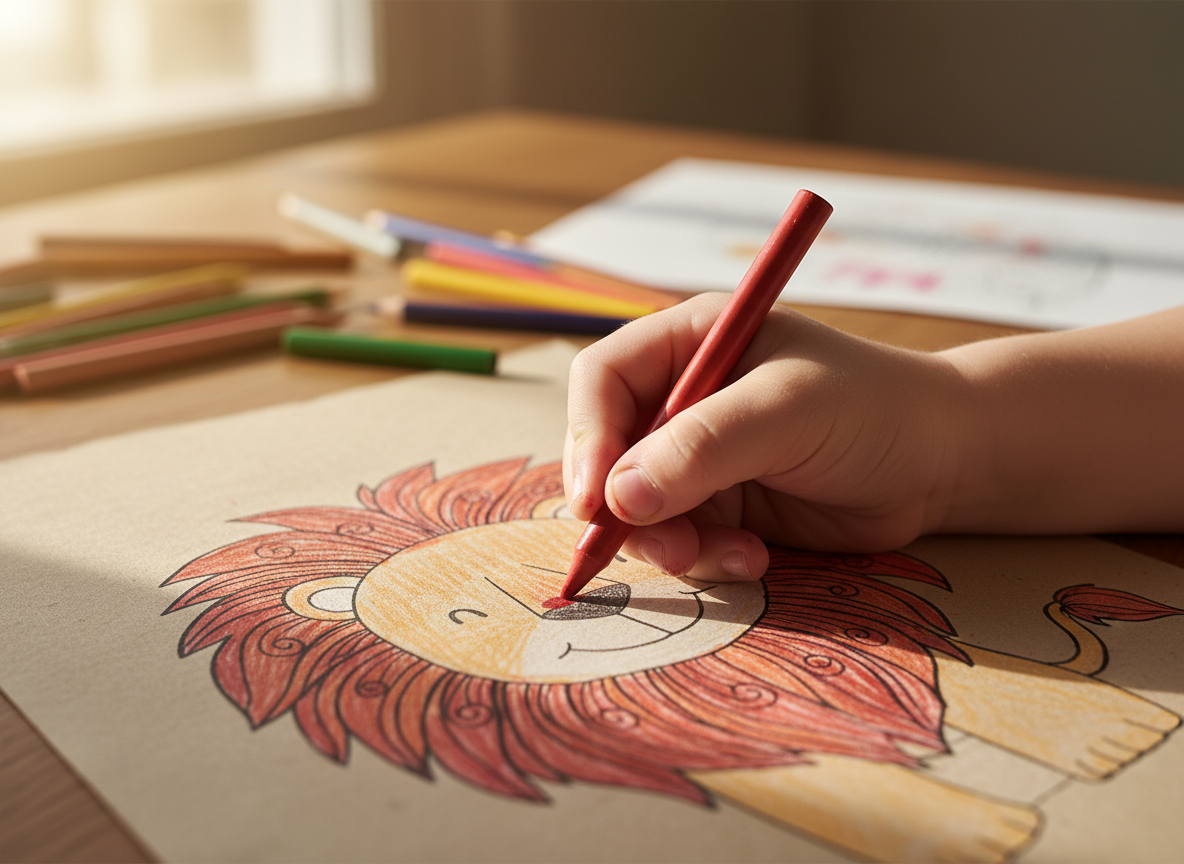
As they grow and practice, their grip will naturally evolve. They’ll move towards a 'digital pronate grasp' (using fingers, but still a bit clunky), and eventually, with lots of practice, to the 'tripod grasp' – where the pencil rests on the middle finger, held by the thumb and index finger. This is the ideal grasp for control and endurance, crucial for writing letters and numbers.
Colouring encourages this progression. When a child tries to colour within lines or fill a small space, they naturally begin to adjust their grip for better control. You can help by offering shorter crayons or broken crayon pieces, which naturally encourage a more refined finger grip rather than a whole-hand grasp. It’s a subtle nudge that makes a big difference.
Tips for Encouraging a Better Grasp:
Short Crayons: Offer crayons that are about 1-2 inches long. This makes it harder for small hands to use a fisted grip.
Triangle Crayons: Some crayons are triangular, which can help guide little fingers into a more ergonomic position.
Vertical Surfaces: Taping colouring pages to a wall or easel encourages wrist extension, which is helpful for developing a mature pencil grasp.
Editorial illustration
Hand-Eye Coordination: The Brain's Guiding Hand
Think about colouring a picture of a big, friendly dinosaur. Your child's eyes are scanning the outline, and their hand is trying its best to make the crayon follow that line. This isn't just about 'staying in the lines' – it's a powerful exercise in hand-eye coordination.
Hand-eye coordination is the ability of the brain to process visual information and use it to guide the movements of the hands. It's vital for countless everyday tasks, from catching a ball to pouring a glass of juice, and of course, for writing. Colouring requires constant adjustments: seeing where the colour needs to go, moving the hand, checking the result, and adjusting again.
The more your child colours, the better their brain and hands communicate. This improved coordination translates directly into better control over a pencil for writing, more accurate cutting with scissors, and greater independence in self-care tasks like dressing.
Editorial illustration
Building Hand Strength and Dexterity
Have you ever noticed how tired a preschooler’s hand can get after a long colouring session? That’s because they’re giving their hand muscles a real workout! The act of gripping the crayon, applying pressure to make a mark, and moving it across the page all contribute to building strength in the small muscles of the hand and fingers.
Dexterity, which is the skill and grace in using your hands, also gets a boost. As children try to fill in smaller areas or use different colours for details, they learn to manipulate the crayon with increasing precision. This fine-tuning of movements is critical for future tasks that require intricate hand movements, like tying shoelaces or using utensils.
It’s not just about strength; it’s about control. A strong hand that lacks dexterity is like a powerful car without good steering. Colouring helps develop both, ensuring that those little hands are not only strong but also agile and precise.
Bilateral Coordination: When Both Hands Work Together
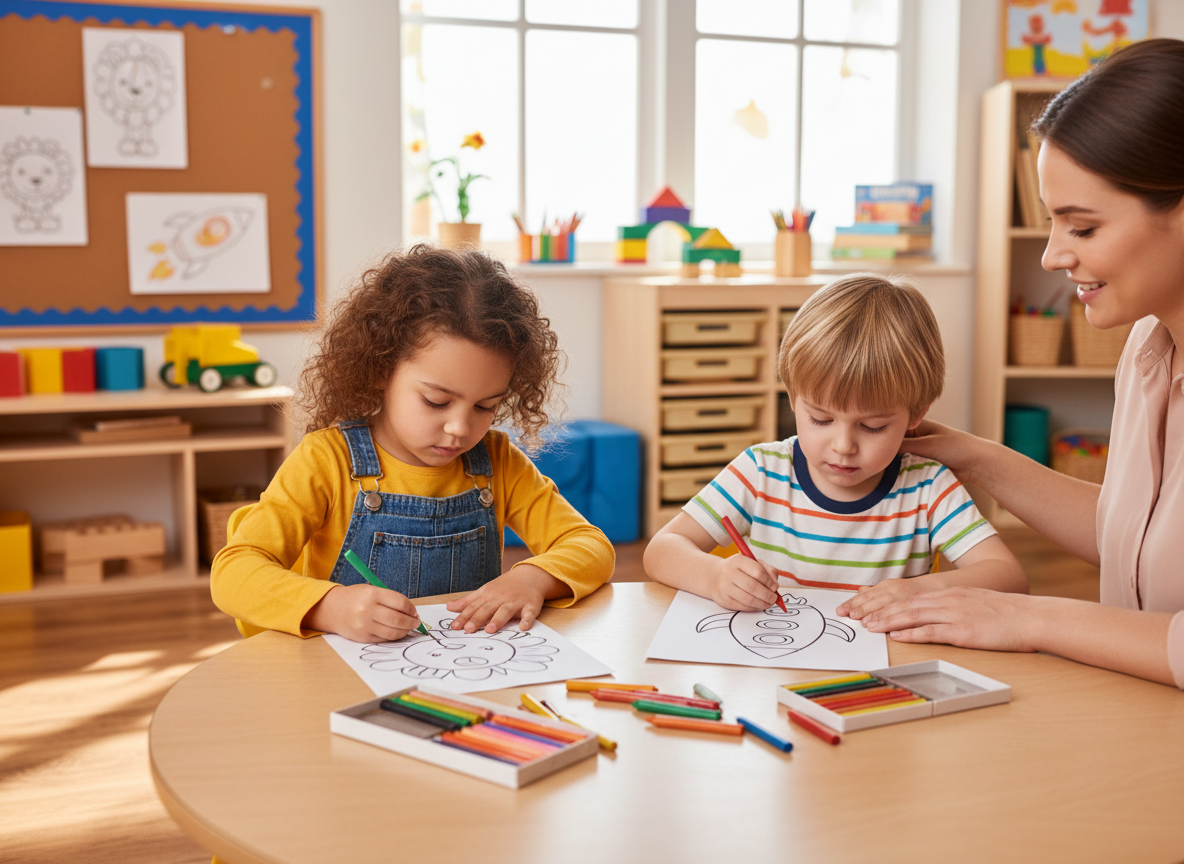
When your child is colouring, they’re often using both hands, even if it’s not immediately obvious. One hand holds the crayon, while the other hand often holds the paper steady. This is called bilateral coordination – the ability to use both sides of the body together in a coordinated way.
This skill is fundamental for tasks like cutting with scissors (one hand holds the paper, the other cuts), tying shoelaces (both hands manipulate the laces), or even eating with a fork and knife. Colouring provides a gentle, natural way to practice this teamwork between the hands. The non-dominant hand learns to stabilize, while the dominant hand performs the more active task.
Encourage your child to hold the paper with their non-dominant hand if they aren't already. Sometimes, just a simple reminder can help them establish this important habit. It's a small detail that contributes significantly to overall motor development.
Beyond the Lines: Focus, Patience, and Problem-Solving
While we're focusing on fine motor skills, it’s worth noting that colouring brings a whole host of other benefits too. It teaches patience, for example. Staying within the lines, choosing colours, and completing a picture all require a certain amount of sustained attention.
This sustained focus, often called 'task persistence,' is a crucial skill for school readiness. It helps children learn to sit still, concentrate on an activity, and see it through to completion. These are not just motor skills, but cognitive and emotional skills that are deeply intertwined with physical development.
Colouring also offers opportunities for gentle problem-solving. 'Which colour should I use for the sky? What happens if I go outside the lines? How do I fill this tiny spot?' These are all small decisions that help a child develop their executive functions – the brain’s ability to plan, organize, and manage tasks.
Making Colouring an Everyday Fine Motor Workout
The best part about using colouring to boost fine motor skills is how easy it is to incorporate into daily life. You don’t need fancy equipment or a special curriculum. Just some paper and crayons, and you're good to go! Here are a few ways to make the most of colouring time:
Vary the Tools: Don't just stick to crayons! Try chunky pencils, markers, or even paint sticks. Each offers a slightly different grip and pressure experience, working different muscles.
Change the Canvas: Sometimes, a smaller picture encourages more precise movements. Other times, a huge mural on a large sheet of paper taped to the floor encourages bigger arm movements before refining to smaller ones.
Talk About It: Ask your child about their colouring. 'What colour did you choose for that leaf? How did you manage to stay so close to the line there?' This encourages reflection and builds their vocabulary around their actions.
Make it Accessible: Keep colouring supplies readily available in a designated spot. A basket of crayons and a stack of pages on the kitchen table can make it an easy go-to activity for a quiet moment.
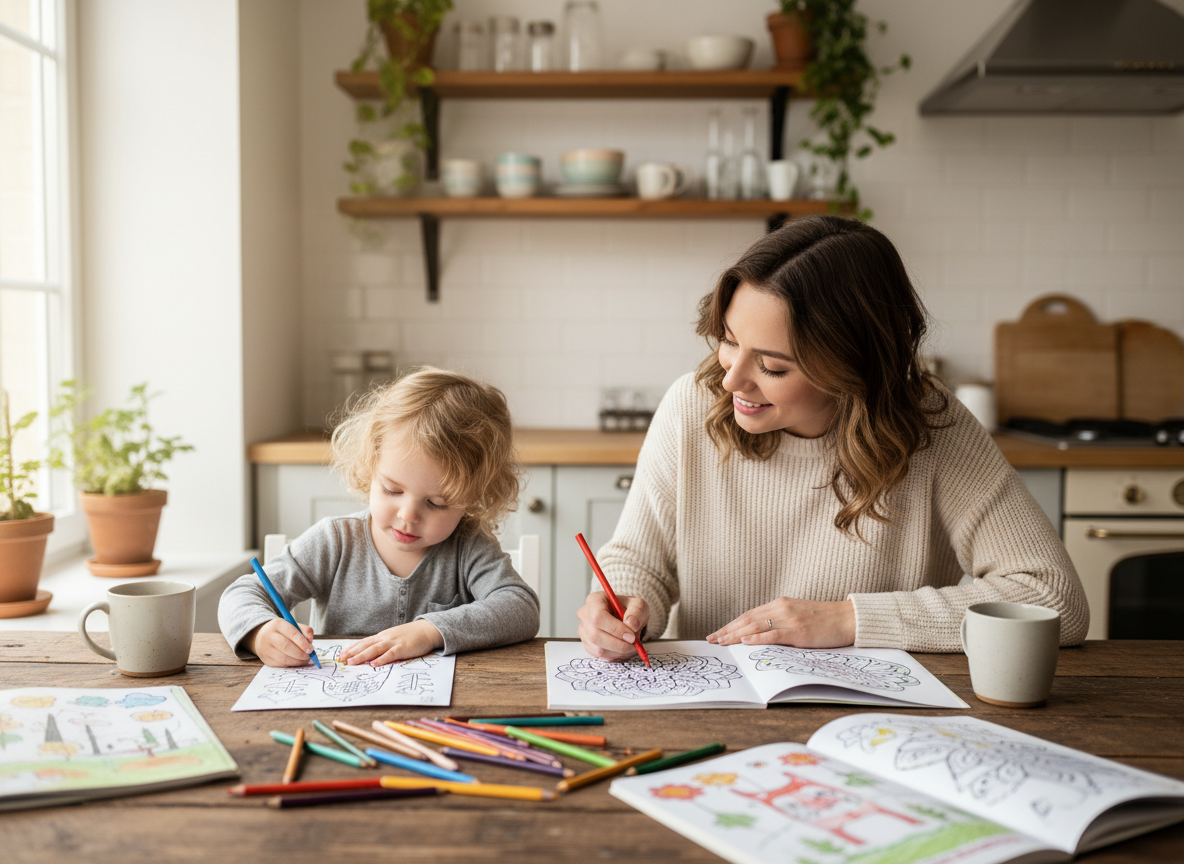
Lead by Example: Sit down and colour with them! Children learn so much by watching us. It also makes it a shared, enjoyable experience rather than just a 'task.'
Remember, the goal isn't to create masterpieces, especially not at this age. The goal is to provide opportunities for practice, to build confidence, and to make learning fun. Every stroke, every colour chosen, is a step towards greater independence and readiness for the adventures of school.
From those first scribbles to carefully chosen colours, colouring is so much more than just a fun pastime. It’s a powerful tool for developing those all-important fine motor skills, paving the way for writing, self-care, and so much more. By simply providing access to crayons and paper, you're nurturing your child’s development in a truly meaningful way.
Ready to start colouring and boosting those little hands? Head over to KidsColouringPage.com for a treasure trove of free colouring pages. You can print them out as many times as you like, or even colour them online for a screen-time twist! Happy colouring!
Looking for Free Printable Coloring Sheets?
Explore thousands of free printable pages ready for home or classroom learning.