
Why Do We Float in Space? The Amazing Science of Weightlessness
Have you ever watched videos of astronauts in space, gracefully floating around their spacecraft? It looks like so much fun, like a giant game of tag without touching the floor! But have you ever stopped to think about why they float? It's not because there's no gravity in space, which is a common misunderstanding. In fact, gravity is everywhere, even far beyond Earth!
The real reason astronauts float is a super cool science secret called 'freefall' or 'orbital motion.' Imagine you're on a roller coaster going down a steep hill. For a few seconds, you might feel like you're floating out of your seat. That's a tiny taste of what astronauts experience all the time. Let's blast off on an adventure to understand how gravity works in space and why floating is a big part of an astronaut's job!
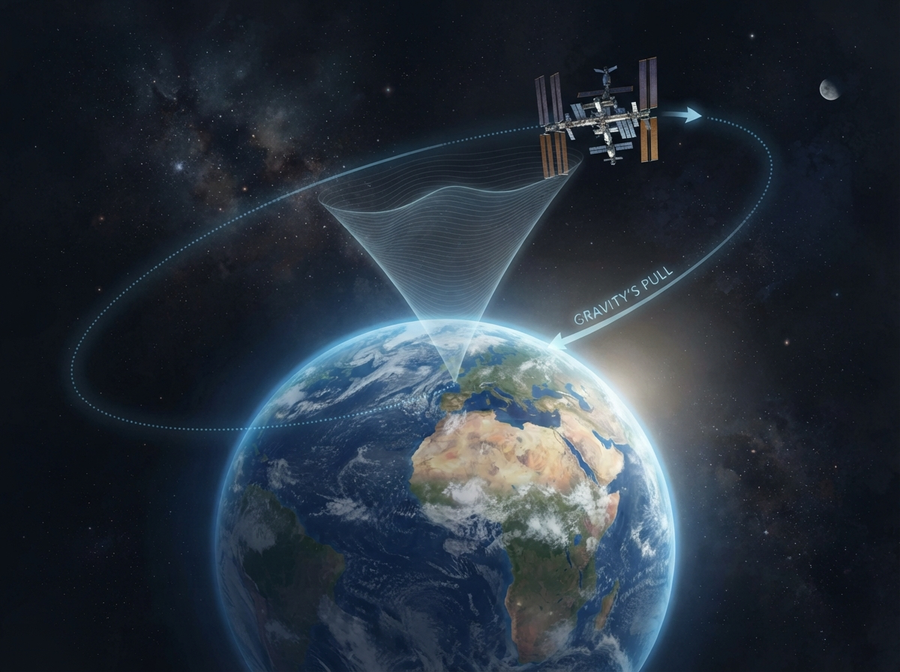
Floating in space isn't magic, it's amazing science!
Quick Facts
Astronauts float due to 'freefall' around Earth, not because there's no gravity.
Gravity is a force that pulls everything towards everything else.
The International Space Station (ISS) orbits Earth at about 250 miles (400 km) high.
At the ISS's altitude, Earth's gravity is still about 90% as strong as on the surface.
Weightlessness is the feeling of having no weight, even though you still have mass.
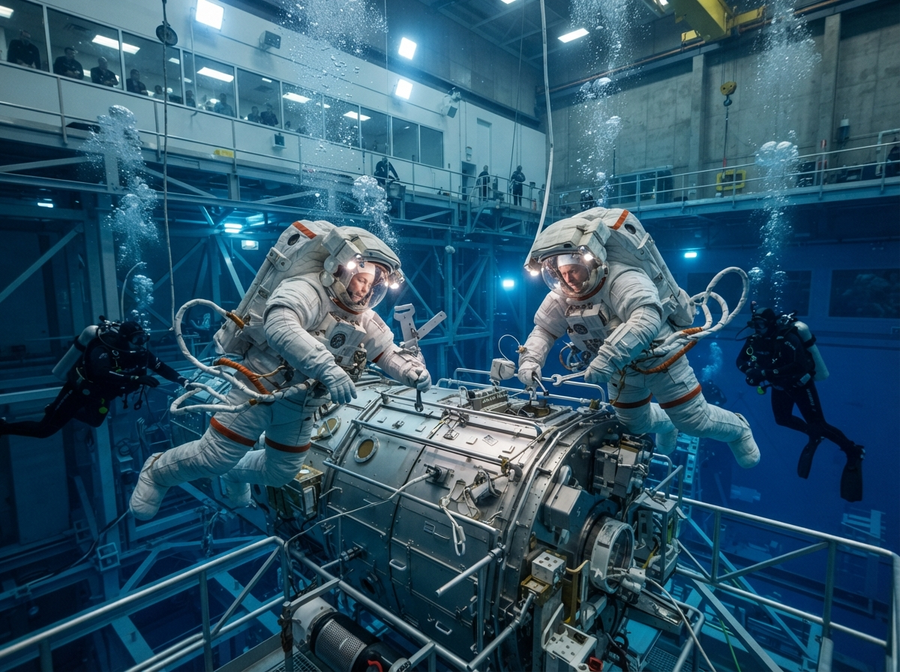
Astronauts train underwater to simulate the feeling of floating in space.
Living in microgravity can make muscles and bones weaker over time.
Gravity: The Invisible Pull That Keeps Us Grounded
Before we talk about floating, let's talk about gravity. Gravity is an invisible force that pulls things towards each other. The bigger an object is, the stronger its gravity. That's why Earth, which is huge, pulls everything on its surface towards its center. It's what keeps your feet on the ground, stops your toys from flying away, and makes apples fall from trees. Without gravity, we'd all just float off into the sky!
Imagine throwing a ball up in the air. What happens? It goes up, slows down, and then comes back down. That's gravity at work, pulling the ball back to Earth. The same gravity that pulls the ball down is also pulling on the Moon, keeping it in orbit around Earth. And it's pulling on the International Space Station (ISS) too!
The International Space Station: A Falling Home
The International Space Station (ISS) is a giant laboratory that orbits Earth. When we say 'orbits,' it means it's constantly falling around the Earth. Think of it like this: if you throw a ball very, very hard, it will go a long way before hitting the ground. If you could throw it so hard that it goes around the entire Earth without ever touching down, it would be in orbit! The ISS is doing exactly that.
It travels incredibly fast, about 17,500 miles (28,000 kilometers) per hour. This speed makes it constantly fall around the curve of the Earth. As it falls, everything inside it, including the astronauts, is also falling at the same speed. This constant falling creates the feeling of weightlessness, even though Earth's gravity is still very much present.
Imagine dropping a feather and a rock at the same time in a vacuum (a place with no air). They would fall at the same speed. This is similar to how the ISS and everything inside it are constantly falling together around Earth. This feeling of being in a continuous fall is what we call microgravity or weightlessness.
Weightlessness vs. No Gravity: What's the Difference?
This is a super important point: floating in space is not because there is no gravity. In fact, at the altitude where the International Space Station orbits, Earth's gravity is still about 90% as strong as it is on the ground! So, if gravity is still pulling, why do astronauts float?
It's all about the feeling of weight. Weight is how much gravity pulls on an object's mass. When you stand on a scale, you're measuring your weight. But when you're in freefall, like the astronauts in the ISS, you're constantly falling, so you don't press down on anything. This means you feel weightless. It's like being on that roller coaster again, but the fall never ends! So, while gravity is still there, astronauts don't feel its pull in the usual way because they are in a state of continuous freefall around our planet.
How Astronauts Live and Work in Microgravity
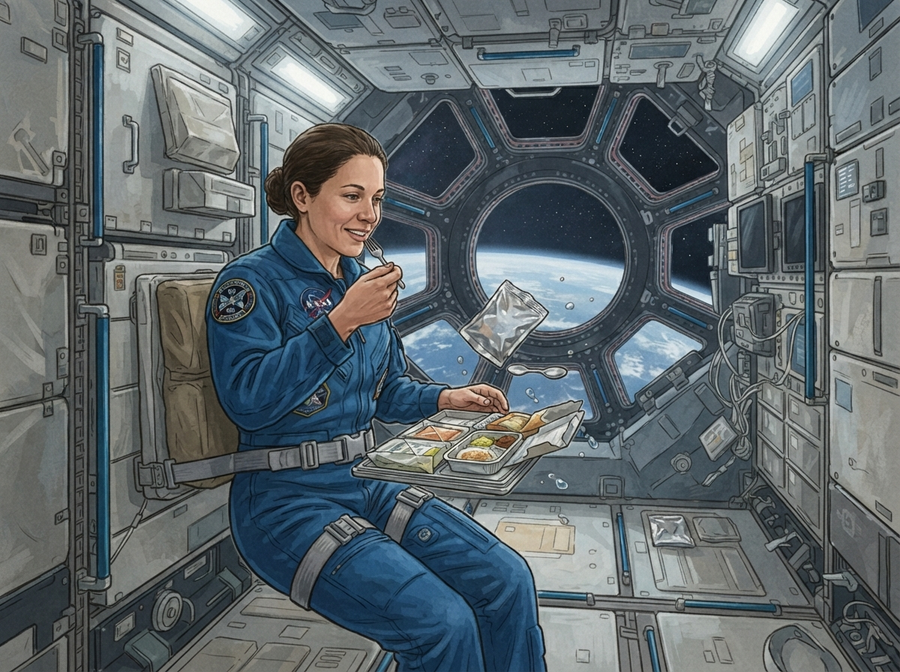
Living in a state of constant floating sounds fun, but it also presents many challenges for astronauts. Simple tasks like eating, sleeping, or even going to the bathroom become much more complicated. Food has to be specially packaged so it doesn't float away. Astronauts often eat with spoons, but they have to be careful not to let their food escape! They even sleep strapped into sleeping bags so they don't drift around.
Floating around also means their bodies change. Muscles and bones don't have to work as hard to hold them up, so they can get weaker. To combat this, astronauts exercise for several hours every day. They use special equipment that simulates the resistance they would feel on Earth.
They also have to be very careful with their tools and equipment. Everything needs to be tethered down or it will simply float away! This is why you often see astronauts using Velcro or straps to keep things in place inside the spacecraft. It's a whole new way of living and working that requires special training and clever solutions.
Training for the Float: Preparing for Space
Astronauts don't just jump into space without practice! They go through extensive training to prepare for life in microgravity. One of the most common ways they train is by going underwater in huge swimming pools. When they are submerged in water, their bodies become buoyant, meaning they float. This gives them a similar feeling to being weightless and allows them to practice moving and working in a three-dimensional environment.
They also train in special airplanes that fly in parabolic arcs, going up and then diving down. For about 20-30 seconds during the dive, passengers experience weightlessness. This is sometimes called the 'Vomit Comet' because it can make people feel sick, but it's an excellent way for astronauts to get short bursts of microgravity experience before their mission.


