
Fascinating Facts About Fossils for Kids at a Glance
Topic Focus
Fascinating Facts About Fossils for Kids
Learning Level
Ages 4–10 (Preschool to Grade 4)
Subject Area
Science Facts
Format
Verified Fun Facts & Guided Exploration
Fascinating Facts About Fossils for Kids: Unearthing Ancient Life
Have you ever wondered what lived on Earth millions and millions of years ago? Before humans, before many of the animals we see today, our planet was home to incredible creatures, from giant dinosaurs to tiny sea animals. How do we know about them? The answer lies in something truly amazing called fossils!
Fossils are like Earth's very own history book, written in stone. They are the preserved remains or traces of ancient plants and animals. Each fossil is a precious clue, helping scientists called paleontologists piece together the puzzle of life long, long ago. Get ready to dig into some super cool facts about these ancient treasures!
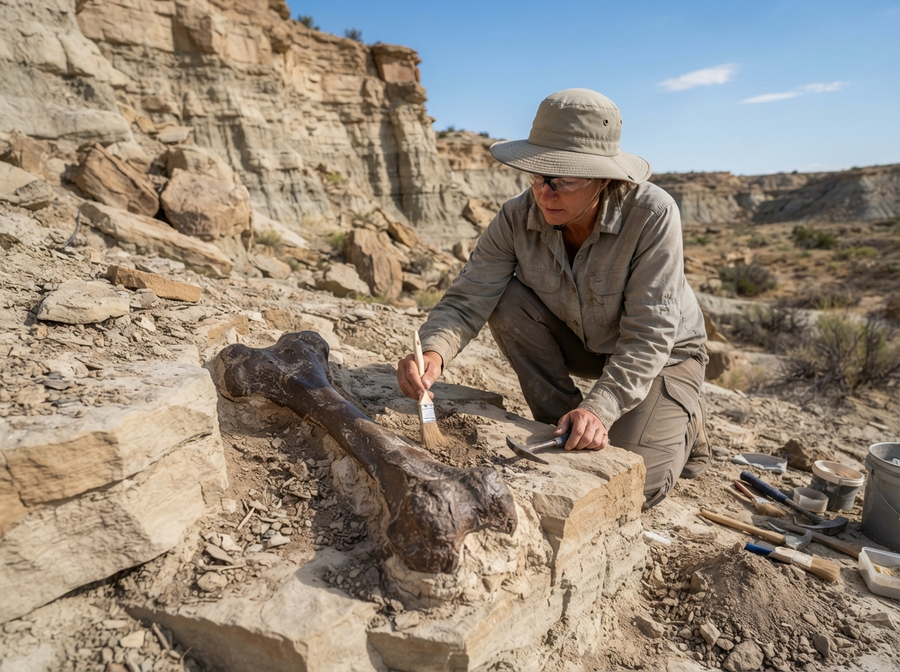
Fossils are Earth's ancient storytellers, whispering secrets from millions of years ago.
Quick Facts
Fossils are the preserved remains or traces of ancient life.
Most fossils are found in sedimentary rocks, like sandstone or shale.
Paleontologists are scientists who study fossils.
The word 'fossil' comes from a Latin word meaning 'dug up'.
Fossils can be bones, teeth, shells, leaves, or even footprints.
The oldest known fossils are over 3.5 billion years old.
Not all dead plants and animals become fossils; it's a very rare process.
What Exactly is a Fossil?
Imagine a dinosaur walking through a muddy swamp millions of years ago. It leaves a footprint. Later, that footprint gets covered by more mud and sand. Over vast amounts of time, that mud and sand turn into rock, and the footprint within it becomes a fossil! This is one type of fossil called a 'trace fossil'.
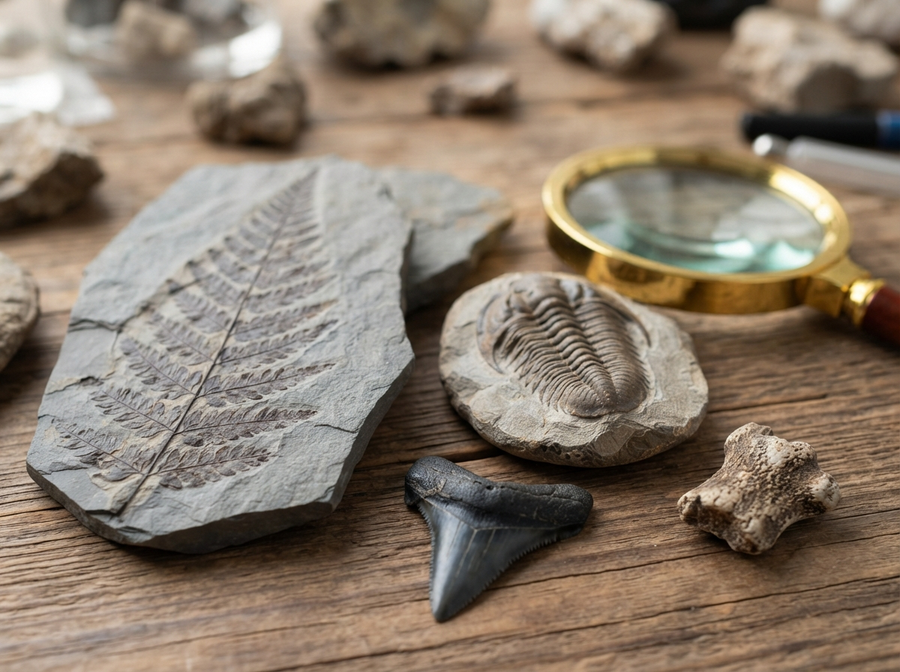
Most people think of fossils as big dinosaur bones, and those are definitely fossils, called 'body fossils'. But fossils can be much more than just bones. They can be:
Bones and Teeth: Like a T-Rex skull or a shark's tooth.
Shells: From ancient snails, clams, or other sea creatures.
Leaves and Wood: Showing us what ancient plants looked like.
Footprints and Tracks: Revealing how animals moved.
Burrows: Tunnels made by ancient worms or insects.
Coprolites: Yes, even fossilized animal droppings can tell us what they ate!
The key thing is that a fossil is very, very old, usually at least 10,000 years old, and often much, much older, like millions of years!
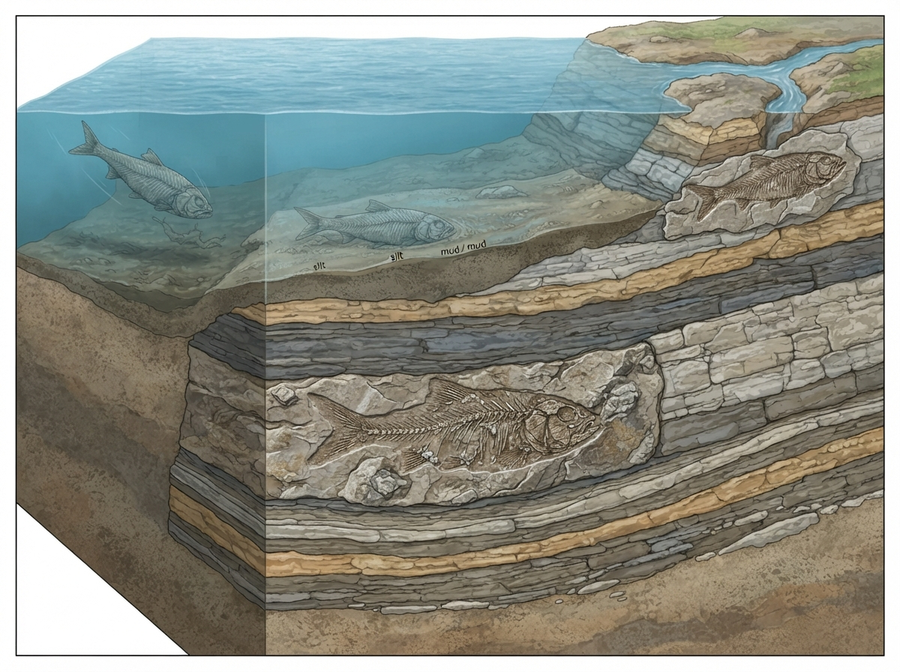
How Do Fossils Form? A Journey Through Time
Fossilization is a truly amazing process that doesn't happen very often. It's like winning the lottery for a plant or animal's remains! Here's a simplified look at how many fossils are made:
Quick Burial: An animal or plant dies and its remains (like bones or leaves) are quickly covered by sediment like mud, sand, or volcanic ash. This quick burial protects the remains from scavengers and decay.
Sediment Layers: More layers of sediment pile up over time, pressing down on the buried remains. This pressure starts to turn the sediment into rock.
Mineral Replacement: As water seeps through the sediment and over the remains, minerals in the water replace the original organic material (like bone or wood). This process, called 'permineralization', turns the soft, organic parts into hard, rock-like material. Sometimes, the original material dissolves completely, leaving a hollow 'mold' that later fills with minerals to form a 'cast'.
Uplift and Erosion: Millions of years later, geological processes like earthquakes or mountain building can push these rock layers closer to the Earth's surface. Wind and water then erode the softer rock, eventually exposing the fossil for scientists (or lucky kids!) to find.
This whole process can take millions of years, which is why finding a fossil is so special.
Who Finds and Studies Fossils? The Paleontologists!
The incredible scientists who dedicate their lives to finding, digging up, and studying fossils are called paleontologists. They are like detectives of the past, using clues found in rocks to understand ancient ecosystems, climates, and the evolution of life on Earth. Paleontologists work in many different places:
In the Field: They go on expeditions to places where fossils are likely to be found, like deserts, badlands, or even mountains. They carefully excavate (dig up) fossils using special tools.
In the Lab: Once fossils are brought back, they are cleaned, repaired, and studied under microscopes. Paleontologists compare new fossils to known ones and try to figure out what kind of creature or plant they belonged to.
In Museums: Many paleontologists also work in museums, preparing exhibits and sharing their discoveries with the public.
It takes a lot of patience, careful work, and a keen eye to be a paleontologist, but imagine the thrill of discovering something that no human has ever seen before, something that lived millions of years ago!
What Do Fossils Tell Us About Earth's Past?
Fossils are not just pretty rocks; they are windows into a world that no longer exists. Each fossil tells a part of Earth's incredible story. Here's what we can learn from them:
Ancient Animals and Plants: Fossils show us what creatures like dinosaurs, woolly mammoths, and ancient sharks looked like. They also reveal plants that grew long ago, like giant ferns or early flowering plants.
How Animals Lived: By studying fossilized bones, scientists can guess how animals moved, what they ate, and how they interacted with each other. For example, sharp teeth suggest a meat-eater, while flat teeth suggest a plant-eater.
Past Climates: Finding fossils of tropical plants in places that are cold today tells us that the climate in that area was once much warmer. Similarly, marine fossils found high in mountains show that those areas were once under the sea.
Evolution of Life: Fossils provide strong evidence for evolution, showing how life forms have changed and adapted over millions of years, leading to the incredible diversity of life we see today.
Every new fossil discovery adds another piece to the giant jigsaw puzzle of Earth's history, helping us understand where we came from and how our planet has changed over eons.
Educational Standards & Fact-Checking
Reviewed by KidsColouring Editorial Team
Educational References & Scientific Sources
Our curriculum and factual articles are synthesized from trusted academic encyclopedias, wildlife conservation bodies, and public science institutions:
- •Smithsonian Institution Educational Resources & National Zoo Archives — Smithsonian Institution
- •National Geographic Kids Science & Animal Encyclopedias — National Geographic Society
- •Encyclopaedia Britannica Academic & Elementary Learning Reference — Encyclopaedia Britannica


