Coloring Pages vs. AI Coloring Generators: A Parent's Guide
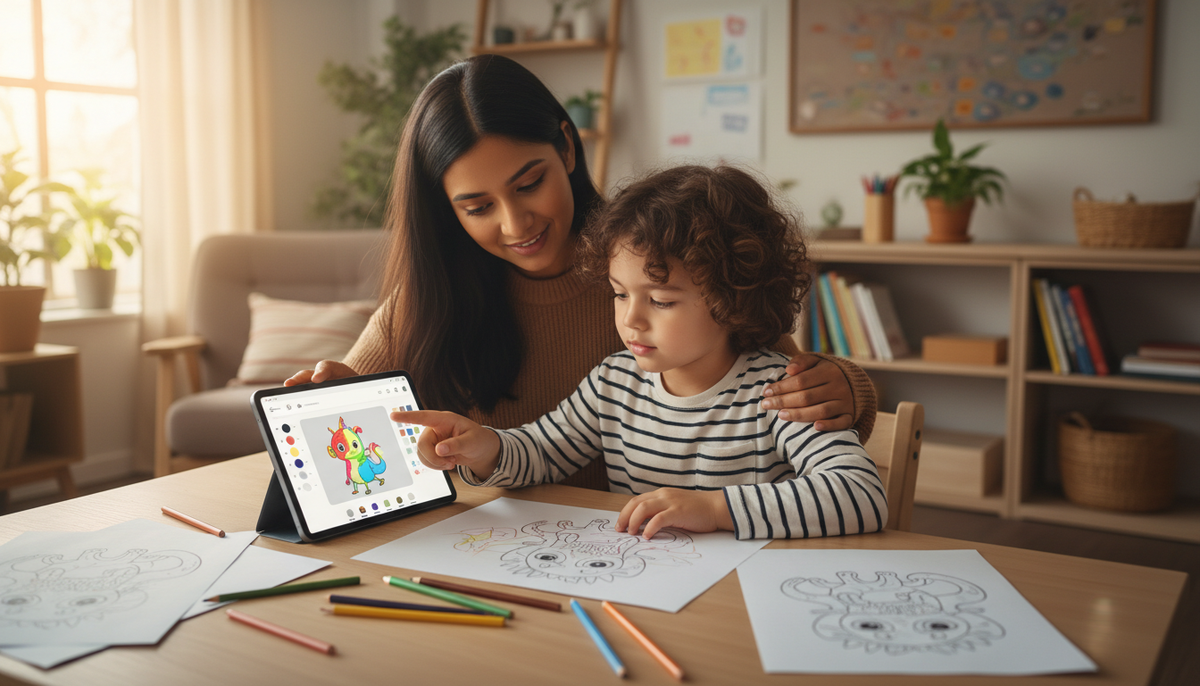
It feels like every week there's a new app or tool that promises to change how our kids learn and play. Lately, one big conversation has been around 'AI coloring generators.' You might have seen them pop up online, offering to create unique coloring sheets with just a few words. On the other hand, we have the good old-fashioned, much-loved coloring pages that have been a staple of childhood for generations.
As parents, we want to make the best choices for our children's development, creativity, and overall well-being. So, when it comes to coloring, how do these two options stack up? Is one better than the other? Or do they each have their own special place in our kids' creative toolkit? Let's take a thoughtful look at what each offers, the potential benefits, and a few things to consider, so you can decide what works best for your family.
Editorial illustration
Creativity isn't about the tool you use, but the imagination you bring to it.
Key takeaways
Traditional coloring pages offer tactile, screen-free engagement and fine motor skill development.
AI generators provide instant, custom line art for specific themes, boosting imagination.
Consider screen time limits and the quality of digital interaction when using AI tools.
Traditional coloring encourages patience, focus, and a sense of accomplishment.
AI tools can introduce new concepts and expand creative prompts quickly.
Both options can foster creativity, but in different ways; balance is key.
Prioritize the process of creation over the final product, regardless of the method.
What Exactly Are AI Coloring Generators?
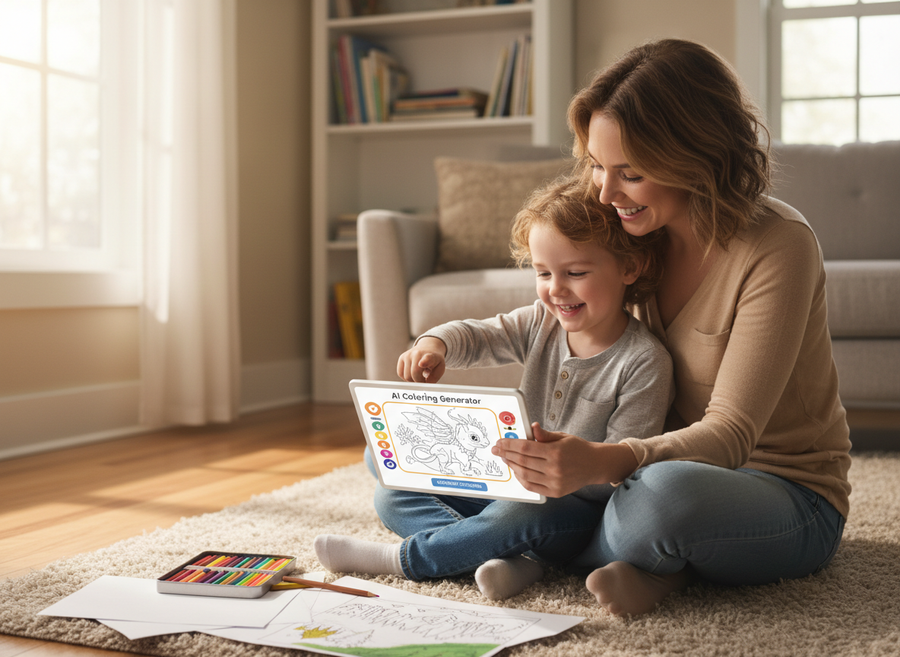
First things first, let's make sure we're all on the same page about what an 'AI coloring generator' is. Imagine you want a coloring page of 'a friendly dragon playing with a kitten in a garden.' You type that description into a special computer program, and in a few seconds, it creates a unique line-art image for you to color. That's essentially what an AI coloring generator does. It uses artificial intelligence to interpret your words and draw a picture based on them.
These tools are often found online, sometimes as part of a larger AI art suite, or as standalone websites specifically for generating coloring pages. They're designed to be easy to use, even for kids, though adult supervision is usually a good idea for typing in prompts and navigating the site. The idea is to give you endless possibilities for custom coloring pages, right at your fingertips.
How AI 'Draws'
It's not magic, though it can feel like it! These programs have been 'trained' on millions of images, learning what different objects look like and how they relate to each other. When you type in a prompt, the AI uses all that learned information to construct a new image that fits your description. It's like a super-fast, super-creative artist who never runs out of ideas, but who also doesn't really 'understand' what it's drawing in the way a human artist does.
The output is usually a black-and-white line drawing, perfect for printing out and coloring with crayons or markers, or sometimes it's an image that can be colored digitally on a tablet. The quality can vary quite a bit, from surprisingly good to a little bit quirky or abstract. It's all part of the fun of experimenting with new tech!
Editorial illustration
The Tried-and-True: Traditional Coloring Pages
Now, let's talk about our familiar friend: the traditional coloring page. These are the sheets you print out from a website, buy in a coloring book, or even draw yourself. They feature a pre-drawn image with outlines, just waiting for your child to fill them with color. Think about the classic scenes: a princess in a castle, a dinosaur roaming the jungle, or a busy farmyard.
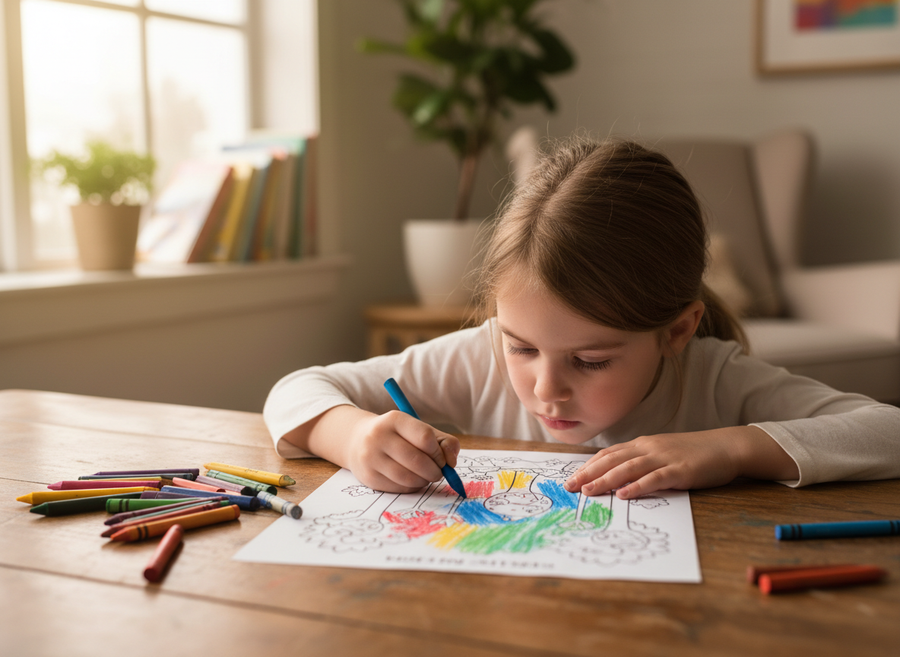
Traditional coloring pages have been a cornerstone of childhood for a very good reason. They offer a simple, accessible way for kids to engage in creative play without needing any special equipment beyond crayons, pencils, or markers. There's something wonderfully tactile about feeling the paper, choosing a physical crayon, and seeing the color appear as you move your hand.
Why We Love Them So Much
Tangible Fun: Kids get to hold the page, feel the texture, and physically create something they can then display on the fridge or share with family.
Screen-Free Time: In a world increasingly dominated by screens, traditional coloring offers a much-needed break. It encourages quiet concentration and imaginative play away from digital distractions.
Readily Available: You can find coloring pages almost anywhere—in stores, libraries, and of course, online from sites like KidsColouringPage.com. They're usually free or very inexpensive.
Predictable Quality: When you choose a coloring page, you generally know what you're getting. The lines are clear, the image is defined, and it's designed specifically for coloring.

Editorial illustration
The Benefits of Traditional Coloring: More Than Just Fun
It's easy to think of coloring as just a fun pastime, but it's actually packed with developmental benefits for children of all ages. When your child sits down with a coloring page, they're not just making pretty pictures; they're building important skills.
Key Developmental Boosts:
Fine Motor Skills: Holding crayons, gripping pencils, and staying within the lines are all excellent exercises for developing the small muscles in the hands and fingers. These are crucial for tasks like writing, tying shoelaces, and buttoning clothes.
Hand-Eye Coordination: Guiding a crayon to fill a specific space requires coordination between what the eyes see and what the hands do. This skill is vital for sports, reading, and many everyday activities.
Focus and Concentration: Completing a coloring page takes sustained attention. Kids learn to focus on a task for an extended period, which is a foundational skill for school and beyond.
Creativity and Self-Expression: Choosing colors, deciding how to fill a space, and even adding their own doodles allows children to express themselves and bring their unique vision to life. There's no 'right' way to color a picture, fostering a sense of artistic freedom.
Patience and Goal Setting: Finishing a detailed coloring page takes time and effort. Children learn patience and the satisfaction of working towards and achieving a goal.
Stress Reduction: The rhythmic, repetitive motion of coloring can be very calming and meditative for children, helping them to relax and process emotions.
Think about a rainy Saturday afternoon, sitting at the kitchen table with a stack of fresh coloring pages and a new box of crayons. That quiet, focused time is precious, offering both entertainment and a gentle way to nurture essential skills.
Editorial illustration
The Unique Appeal and Considerations of AI Coloring Generators
AI coloring generators bring a whole new dimension to creative play. Their biggest draw is the ability to create truly unique and custom coloring pages on demand. Want a unicorn riding a skateboard while juggling apples? An AI generator can probably whip that up for you in seconds. This level of customization can be incredibly exciting and inspiring for kids who have very specific ideas.
Pros of AI Coloring Generators:
Endless Customization: The sky's the limit! Kids can dream up almost anything and see it turned into a coloring page. This can be fantastic for sparking imagination and bringing specific story ideas to life.
Novelty and Excitement: For kids who love technology, interacting with an AI tool can be a thrilling experience. It introduces them to a cutting-edge concept in a fun, accessible way.
Educational Potential: Using prompts can help kids practice descriptive language and learn about how AI works in a simplified context. It can also be a springboard for discussions about technology and art.
Instant Gratification: No need to search for the perfect page; just type and generate. This can be great for kids with short attention spans or when a very specific topic is needed for a project.
Things to Keep in Mind:
While exciting, AI generators aren't without their considerations, especially for young children.
Quality Can Vary: AI-generated images aren't always perfect. Sometimes lines are broken, objects are distorted, or the composition can be a bit strange. This might frustrate some children or require adult help to fix.
Screen Time: Interacting with an AI generator usually means screen time. It's important to balance this with plenty of screen-free activities, especially for younger kids.
Over-reliance on Prompts: While prompting is a skill, too much reliance on the AI to generate ideas might reduce a child's own internal imaginative 'muscle' if not balanced with free-form drawing or traditional play.
Safety and Content: While most reputable AI generators have filters, there's always a slight chance an unexpected or inappropriate image could be generated if a child types in unusual prompts. Adult supervision is key.
Loss of Tactile Experience: If the AI image is colored digitally, children miss out on the valuable fine motor skill development and sensory experience of traditional coloring.
Finding the Right Balance: Integrating Both into Play
So, which is 'better'? The good news is, you don't have to choose just one! Both traditional coloring pages and AI coloring generators offer unique benefits, and they can absolutely coexist in your child's creative world. The key is finding a balance that works for your family and your child's individual needs and interests.
Think of it like different tools in an art kit. Sometimes you need a paintbrush, sometimes a crayon, and sometimes a digital stylus. Each has its moment to shine. For instance, when you're looking for quiet, focused, screen-free time to develop fine motor skills, traditional coloring pages are perfect. When your child has a wild, imaginative idea that's impossible to find in a coloring book, an AI generator can be a fantastic way to bring that specific vision to life.
Practical Ideas for Blended Play:
'AI Prompt, Traditional Color': Have your child use an AI generator to create a unique coloring page, then print it out and color it with physical crayons or markers. This blends the best of both worlds!
Story Starters: Use an AI-generated image as a prompt for a story, then follow up with traditional coloring pages that relate to the story's themes.
Theme Weeks: Dedicate certain days or weeks to different types of creative play. One week could be all about traditional art, the next could involve exploring digital tools.
Limit Screen Time: If using AI generators, set clear time limits. Maybe 15-20 minutes to generate and print a few pages, then switch to screen-free coloring time.
The goal is to provide a rich, varied creative environment where children can explore different mediums and express themselves in many ways. Neither method is inherently 'bad' or 'good'; it's about thoughtful integration.
Tips for Parents: Guiding Your Child's Creative Journey
No matter which coloring method you lean towards, your role as a parent or educator is to guide and encourage. Here are a few tips to help you make the most of coloring time, whether it's digital or traditional:
Focus on the Process, Not Just the Product: Emphasize the joy of creating, the choices they make, and the effort they put in, rather than just how 'good' the final picture looks.
Ask Open-Ended Questions: Instead of 'What is it?' try 'Tell me about your drawing!' or 'What colors did you choose and why?' This encourages deeper thinking and verbal expression.
Model Creativity: Sit down and color with them! Kids learn so much by watching us. It also creates a wonderful bonding opportunity.
Provide a Variety of Materials: Offer different types of coloring tools (crayons, markers, colored pencils, pastels) and paper. This keeps things interesting and helps them discover new preferences.
Celebrate Their Work: Display their finished creations! A place on the fridge or a special art wall shows them their work is valued.
Set Healthy Boundaries: If using digital tools, be firm but gentle about screen time limits. Explain why balance is important for their eyes, bodies, and minds.
Remember, the most important thing is that your child enjoys the act of creation and feels safe to experiment and express themselves. Both coloring pages and AI generators can be wonderful tools to support that journey.
Making Informed Choices for Your Family
Ultimately, the choice between traditional coloring pages and AI coloring generators isn't about one being superior to the other in every single way. It's about understanding what each offers and how it fits into your family's values, your child's developmental stage, and your goals for their creative play.
If you're looking for screen-free, tactile engagement that builds foundational fine motor skills and concentration, traditional coloring pages are your go-to. They are a timeless, reliable source of quiet, creative fun.
If your child is a bit older, curious about technology, and has incredibly specific, imaginative ideas they want to see come to life instantly, an AI generator can be a thrilling supplementary tool. Just be mindful of screen time and supervise their interactions.
Many families will find a happy medium, using traditional pages for daily creative outlets and occasionally venturing into AI generation for a special, custom project or to explore new technological horizons. The world of creativity is vast and varied, and giving our children access to both classic and cutting-edge tools can only enrich their artistic journey.
We hope this guide helps you navigate the exciting world of coloring options for your children. Whether you choose paper and crayons, a digital canvas, or a mix of both, the joy of creating is what truly matters.
If you're looking for a fantastic collection of traditional, printable coloring pages, KidsColouringPage.com has a huge variety of free options. You can easily print them out for instant creative fun, or even color them online if you prefer! We're always adding new designs, so there's always something fresh to spark your child's imagination.
Looking for Free Printable Coloring Sheets?
Explore thousands of free printable pages ready for home or classroom learning.