
Pig Facts for Kids: Amazing Farm Animal Facts at a Glance
Topic Focus
Pig Facts for Kids: Amazing Farm Animal Facts
Learning Level
Ages 4–10 (Preschool to Grade 4)
Subject Area
Farm Animal Facts
Format
Verified Fun Facts & Guided Exploration
Pig Facts for Kids: Amazing Farm Animal Discoveries!
Have you ever seen a pig? These fascinating farm animals are much more than just pink oinkers! Pigs are incredibly intelligent creatures with a lot of surprising secrets. From their curly tails to their snorting sounds, there's so much to learn about these wonderful animals. Get ready to dive into the world of pigs and discover what makes them so special!
Pigs have been living alongside humans for thousands of years, helping farmers and providing food. But beyond their farm duties, pigs have unique personalities and interesting behaviors. They love to play, explore, and even communicate with each other in many different ways. Let's explore some amazing pig facts that will make you look at these animals in a whole new light!
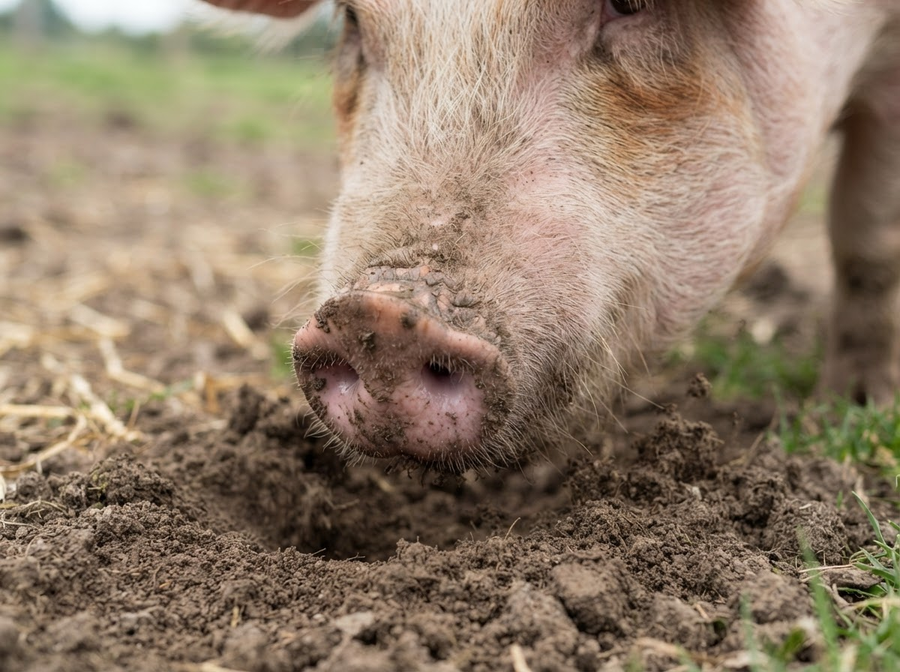
Pigs are truly amazing animals, much smarter and cleaner than many people think!
Quick Facts
Pigs are highly intelligent animals, often compared to dogs in their cleverness.
They use their strong snouts for digging, exploring, and finding food.
Pigs communicate with a variety of sounds, including oinks, grunts, and squeals.
A baby pig is called a piglet.
Pigs don't sweat much, so they roll in mud to stay cool.
They have an excellent sense of smell, even better than a dog's.
Pigs are social animals and prefer to live in groups called sounders.
There are many different breeds of pigs, each with unique characteristics.
Who Are Pigs and Where Do They Live?
Pigs belong to a group of mammals called Suidae. Most of the pigs we see on farms today are domestic pigs, which means they have been tamed and raised by humans for a very long time. Their wild relatives, like wild boars, still live in forests around the world. Domestic pigs are found almost everywhere humans live, from small family farms to large agricultural operations.
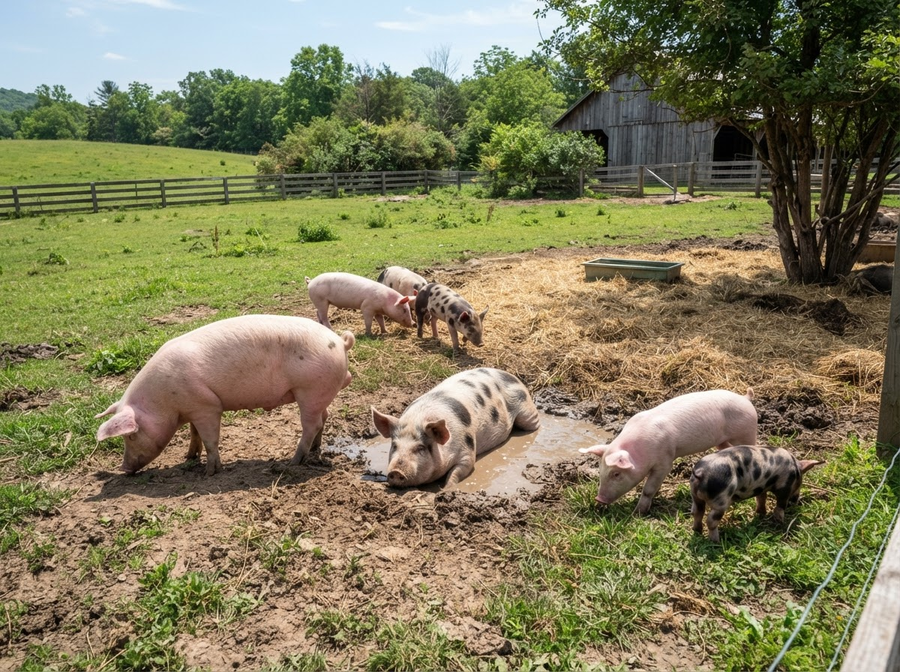
These animals are adapted to many different environments. You might find them in barns, in outdoor pens, or even roaming freely in certain parts of the world. They are very adaptable and can thrive in various climates, as long as they have access to food, water, and shelter. Their natural instinct is to forage, which means they love to dig around with their snouts to find tasty roots, insects, and other treats.
The Clever Minds of Pigs: How Smart Are They?
One of the most surprising facts about pigs is how incredibly intelligent they are! Many scientists and farmers believe pigs are among the smartest animals on the planet, often ranking higher than dogs and even some primates in certain tests. They can learn quickly, solve problems, and even understand simple commands. Some pigs have been taught to play video games using their snouts!
Problem Solvers: Pigs can figure out how to open gates and navigate mazes to find food.
Memory Masters: They have excellent long-term memory and can remember locations and other pigs for a long time.
Emotional Beings: Pigs can feel a range of emotions, including joy, fear, and even sadness. They show affection to their caretakers and other pigs.
Their intelligence makes them very curious. They love to explore their surroundings and learn new things. This is why providing toys and enrichment, like balls or objects to root through, is important for their well-being.
Snouts, Oinks, and Curly Tails: Piggy Body Parts
Pigs have some very unique body parts that help them live and thrive. Let's start with their famous snouts! A pig's snout is not just a nose; it's a powerful tool. It's made of strong cartilage and muscle, allowing them to dig deep into the ground to find food. Their sense of smell is amazing, much better than a human's, helping them sniff out delicious roots and treats.
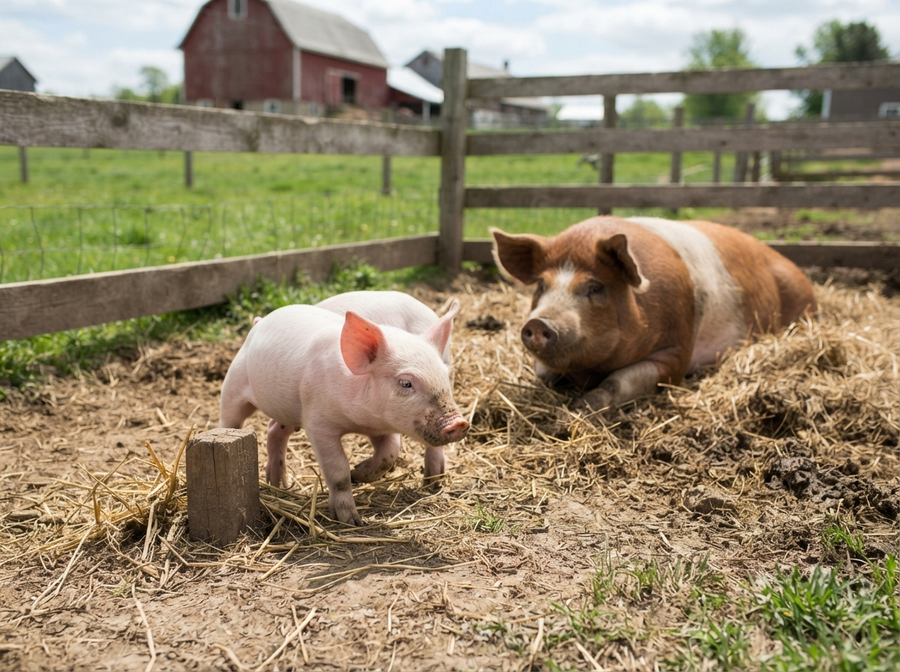
Their bodies are usually plump and covered in coarse hair, which can be different colors like pink, black, brown, or spotted. They have short legs and four toes on each foot, though they walk mostly on two. And, of course, there's the curly tail! Not all pigs have perfectly curly tails; some can be straight or slightly wavy, but the curly tail is a classic pig feature.
Pigs communicate through a variety of sounds. They oink when they are happy or exploring, grunt when they are content, and squeal loudly if they are surprised or upset. Each sound has a different meaning, and they use these sounds to talk to each other in their group.
Why Do Pigs Love Mud? The Truth About Piggy Hygiene
You might have heard that pigs are messy, but that's not entirely true! Pigs are actually quite clean animals if given the chance. The reason they love to roll in mud, called 'wallowing,' is not because they like to be dirty. It's because they have very few sweat glands. Unlike humans, who sweat to cool down, pigs can't sweat much at all.
So, when it's hot outside, a mud bath is the perfect way for them to cool their bodies down. The mud also acts like a natural sunscreen, protecting their skin from sunburn, and can even help get rid of parasites like insects. After a good wallow, the mud dries and falls off, taking dirt and bugs with it! This shows that pigs are actually very smart about keeping themselves clean and comfortable.
If given a choice, pigs prefer to keep their sleeping and eating areas separate from where they go to the bathroom. This behavior shows they have a natural inclination towards cleanliness.
What Do Pigs Eat? A Pig's Diet
Pigs are omnivores, which means they eat both plants and animals, just like humans! In the wild, their diet would include roots, fruits, leaves, insects, worms, and even small rodents. On a farm, pigs are typically fed a balanced diet of grains like corn and soy, along with vitamins and minerals to keep them healthy and growing strong.
They use their powerful snouts to root around for food, turning over soil and finding hidden treasures. This natural foraging behavior is important for their well-being. Farmers often provide them with hay or other materials to root through, which keeps them entertained and allows them to express their natural instincts. Pigs have a good appetite and enjoy a variety of foods, making them efficient eaters on the farm.
Educational Standards & Fact-Checking
Reviewed by KidsColouring Editorial Team
Educational References & Scientific Sources
Our curriculum and factual articles are synthesized from trusted academic encyclopedias, wildlife conservation bodies, and public science institutions:
- •Smithsonian Institution Educational Resources & National Zoo Archives — Smithsonian Institution
- •National Geographic Kids Science & Animal Encyclopedias — National Geographic Society
- •Encyclopaedia Britannica Academic & Elementary Learning Reference — Encyclopaedia Britannica


