
Lightning Facts for Kids: Nature's Amazing Electric Show at a Glance
Topic Focus
Lightning Facts for Kids: Nature's Amazing Electric Show
Learning Level
Ages 4–10 (Preschool to Grade 4)
Subject Area
Science Facts
Format
Verified Fun Facts & Guided Exploration
Lightning Facts for Kids: Nature's Amazing Electric Show
Have you ever seen a flash of brilliant light streak across the sky during a thunderstorm? That incredible sight is lightning, one of nature's most powerful and dazzling displays! It's like a giant spark of electricity, far bigger and stronger than anything you've ever seen come out of a wall socket. But how does this spectacular light show happen? What makes the sky glow so brightly, and sometimes even rumble with thunder?
Lightning isn't just beautiful; it's also a very important part of our planet's weather. It helps balance the atmosphere and can even create special gases that plants need to grow. While it's exciting to watch from a safe distance, understanding lightning also helps us stay safe when storms are around. Let's explore the electrifying world of lightning and uncover some truly amazing facts!
Lightning is nature's way of showing us just how much power the sky holds!
Quick Facts
Lightning is a giant spark of electricity in the atmosphere.
It can be hotter than the surface of the sun, reaching up to 50,000 degrees Fahrenheit (27,760 degrees Celsius).
Lightning travels incredibly fast, about 220,000 miles per hour (354,000 kilometers per hour).
A single lightning bolt carries enough energy to power a 100-watt light bulb for about three months.
Thunder is the sound made by the rapid heating and expansion of air around a lightning bolt.
Lightning can strike the ground, between clouds, or even within a single cloud.
There are about 100 lightning strikes per second around the world.
The Empire State Building is struck by lightning about 25 times a year.
What is Lightning and How Does it Form?
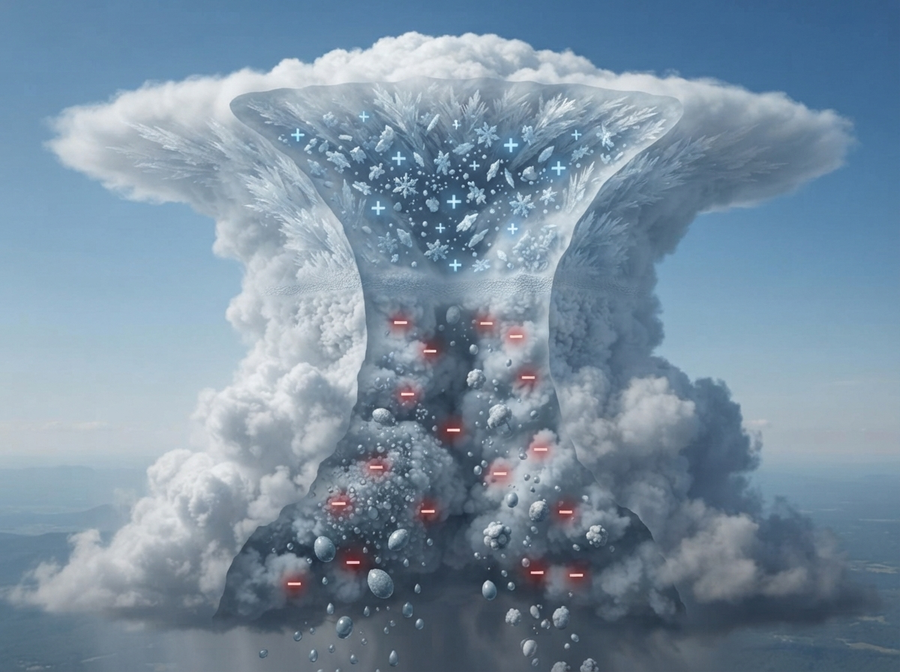
Imagine rubbing a balloon on your hair. What happens? Your hair stands up, right? That's static electricity! Lightning works in a similar, but much bigger, way. Inside a storm cloud, tiny ice crystals and water droplets are constantly bumping into each other. These collisions cause the particles to rub together, creating an electrical charge.
Think of it like this: the lighter, positively charged particles tend to float to the top of the cloud, while the heavier, negatively charged particles sink to the bottom. This creates a huge separation of charges within the cloud, and sometimes between the cloud and the ground. When this electrical difference becomes too great, it needs to balance itself out. And boom! A giant spark, or lightning bolt, flashes to release all that built-up energy.
This spark can happen in a few different ways:
Cloud-to-ground lightning: This is the lightning we see strike the earth. It's the most dangerous type.
Intra-cloud lightning: This happens entirely within one cloud, lighting it up from the inside.
Cloud-to-cloud lightning: This occurs between two different clouds.
The Super-Fast Flash and the Loud Boom: Light and Sound
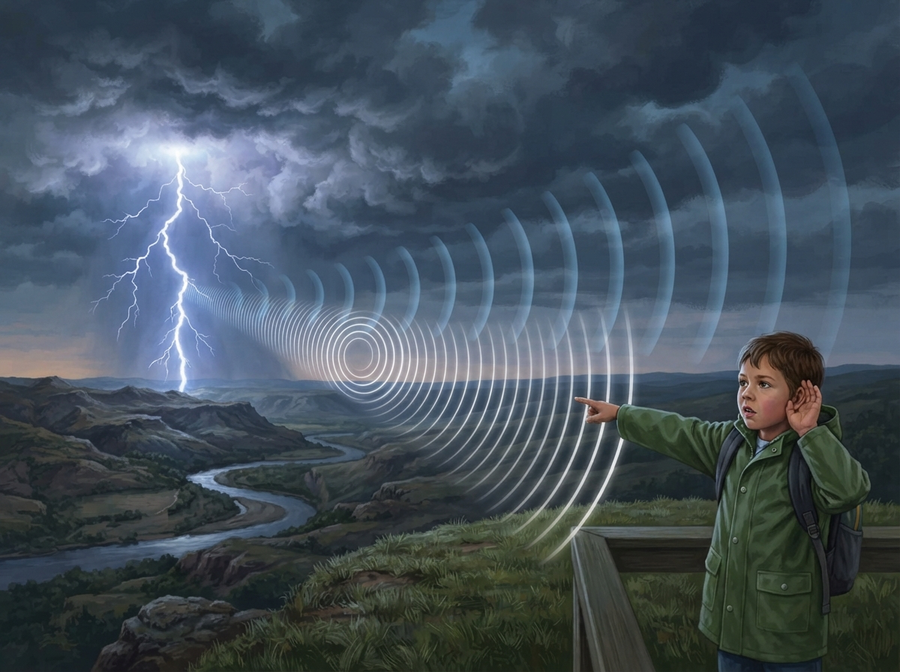
When lightning strikes, you see a dazzling flash almost instantly, but the thunder usually follows a few seconds later. Why is that? It's because light travels much, much faster than sound! Light travels so fast that it reaches your eyes almost the moment the lightning bolt happens.
The lightning bolt itself is incredibly hot, heating the air around it to temperatures hotter than the surface of the sun in a tiny fraction of a second. This super-hot air expands outwards extremely quickly, creating a powerful shockwave. This shockwave is what we hear as thunder. The rumble you hear is the sound waves bouncing off things like mountains, buildings, and other clouds, making the sound last longer.
You can even estimate how far away a lightning strike is by counting the seconds between seeing the flash and hearing the thunder. For every 5 seconds you count, the lightning is about 1 mile (1.6 kilometers) away. So, if you count 10 seconds, the storm is about 2 miles away!
Different Kinds of Lightning
While all lightning is a powerful electrical discharge, it can appear in different forms and colors. You might have seen some of these types:
Forked lightning: This is the most common kind, where the lightning bolt appears to branch out like the roots of a tree.
Sheet lightning: This is when a distant lightning strike lights up a whole cloud or part of the sky, making it look like a sheet of light. You often don't hear the thunder because it's too far away.
Heat lightning: This is actually just sheet lightning from a very distant thunderstorm, usually seen on hot summer nights. It has nothing to do with heat, just distance!
Ball lightning: This is a very rare and mysterious form of lightning that appears as a glowing sphere or ball. Scientists are still trying to understand exactly how it works.
Ribbon lightning: This happens when wind blows the lightning channel sideways, making it look like parallel streaks.
Sometimes, lightning can even be different colors, like blue, red, or even green! The color depends on what gases are in the atmosphere and tiny particles like dust or moisture that the light passes through.
Staying Safe During a Lightning Storm
Lightning is amazing to observe, but it's also very powerful and dangerous. The most important rule to remember is: "When thunder roars, go indoors!" If you can hear thunder, lightning is close enough to strike you. Here are some important safety tips:
Go inside: The safest place to be during a thunderstorm is inside a sturdy building with walls and a roof. Homes, schools, and offices are good.
Avoid water: Stay away from bathtubs, sinks, and showers, as lightning can travel through plumbing.
Stay off electronics: Unplug electronic devices like TVs and computers, and avoid using corded phones (cell phones are generally safe if not plugged in).
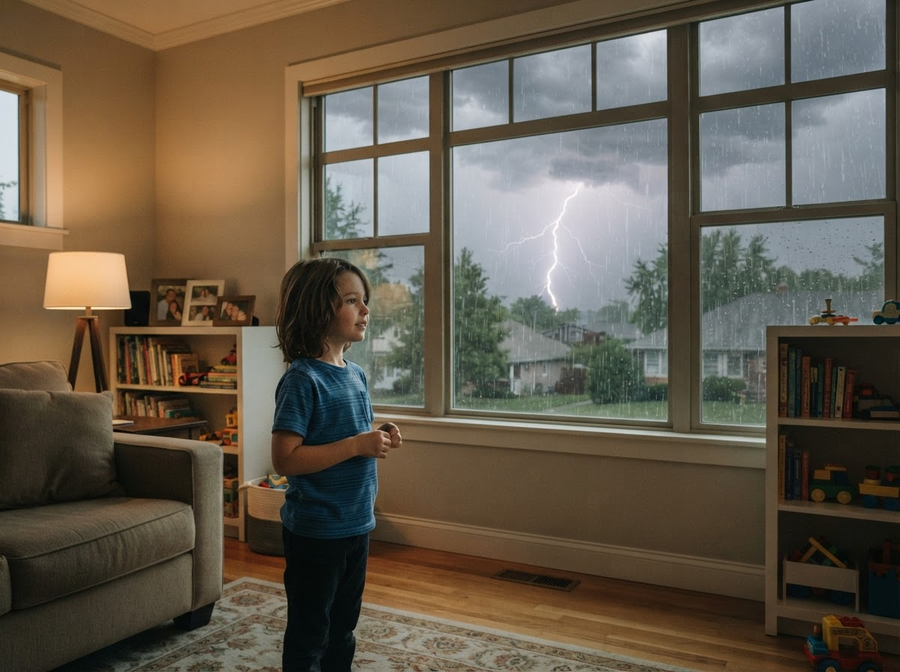
Stay away from windows: Don't stand near windows or doors during a storm.
If outside: If you can't get inside, avoid open fields, tall trees, and metal objects. Crouch down low to the ground if you are in an open area, but do not lie flat.
Wait it out: Wait at least 30 minutes after the last thunder clap before going back outside.
Understanding lightning helps us appreciate its power and beauty while also knowing how to protect ourselves and our families. It's a truly spectacular part of our planet's natural world!
Want to bring the electrifying fun of lightning indoors? You can find lots of cool storm and weather-themed coloring pages to print and enjoy right here at KidsColouringPage.com!
Educational Standards & Fact-Checking
Reviewed by KidsColouring Editorial Team
Educational References & Scientific Sources
Our curriculum and factual articles are synthesized from trusted academic encyclopedias, wildlife conservation bodies, and public science institutions:
- •Smithsonian Institution Educational Resources & National Zoo Archives — Smithsonian Institution
- •National Geographic Kids Science & Animal Encyclopedias — National Geographic Society
- •Encyclopaedia Britannica Academic & Elementary Learning Reference — Encyclopaedia Britannica


