
Amazing Cloud Science Facts for Kids! at a Glance
Topic Focus
Amazing Cloud Science Facts for Kids!
Learning Level
Ages 4–10 (Preschool to Grade 4)
Subject Area
Science Facts
Format
Verified Fun Facts & Guided Exploration
Amazing Cloud Science Facts for Kids!
Have you ever looked up at the sky and wondered about those fluffy, cotton-like shapes floating high above? Those are clouds, and they are some of nature's most magical and mysterious creations! Clouds aren't just pretty to look at; they play a super important role in our planet's weather and climate. From tiny wisps to giant towering castles, each cloud has a story to tell about what's happening in the atmosphere.
Learning about clouds is like being a detective for the sky. You can start to understand why it might rain soon, why the air feels crisp, or even why a storm is brewing, just by observing the clouds. We're going to explore some incredible cloud science facts that will make you look at the sky with new eyes. Get ready to discover how clouds are made, what they're made of, and why they come in so many different shapes and sizes!
Clouds are like nature's own giant storybooks, written across the sky!
Quick Facts
Clouds are made of tiny water droplets or ice crystals.
They form when water vapor in the air cools down and condenses.
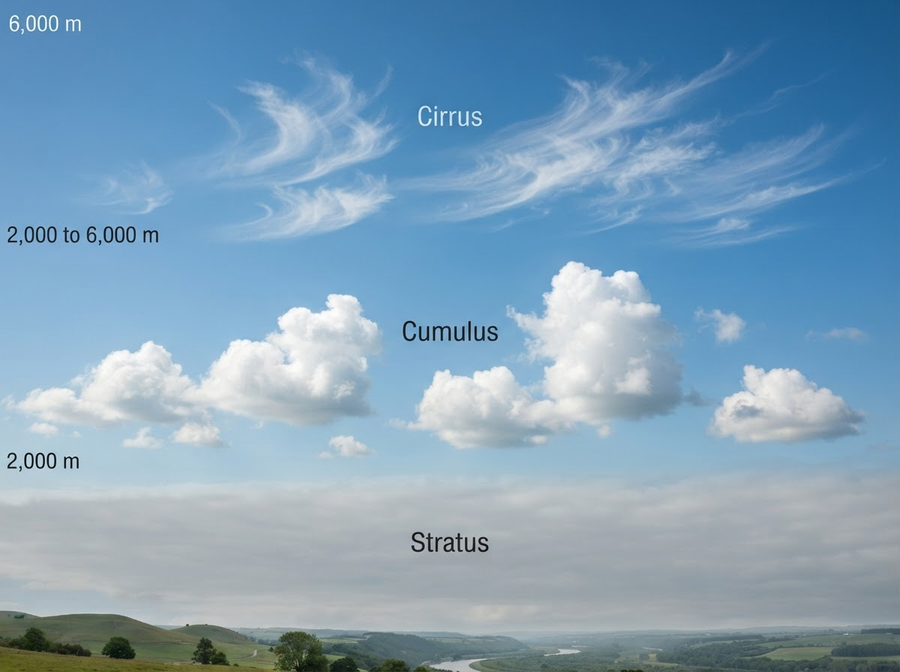
The three main types of clouds are Stratus, Cumulus, and Cirrus.
Clouds help tell us what kind of weather to expect.
Clouds can be found at different heights in the sky.
Some clouds are so big, they can stretch for many miles!
Fog is actually a cloud that forms very close to the ground.
How Do Clouds Form? The Water Cycle's Magic!
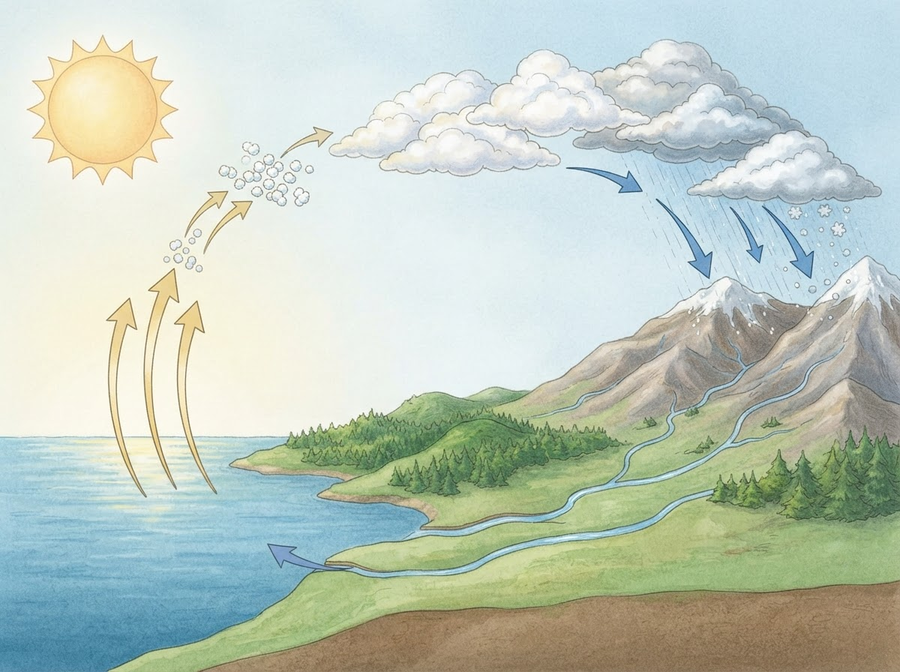
It might seem like magic, but cloud formation is pure science, all thanks to something called the water cycle. Imagine a giant, never-ending journey for water on Earth. It starts with water on the ground, in oceans, lakes, and rivers. When the sun shines, it heats this water, turning some of it into an invisible gas called water vapor. This process is called evaporation.
Once it's water vapor, it's very light and floats up, up, up into the sky. As it goes higher, the air gets colder. This cold air makes the water vapor change back into tiny, tiny liquid water droplets or even small ice crystals. This change is called condensation. These tiny droplets or crystals need something to hold onto, like microscopic dust particles or pollen floating in the air. When millions of these tiny droplets or crystals gather together around these little particles, they become big enough for us to see them as a cloud!
What Are Clouds Made Of?
When you look at a cloud, it looks like a soft, fluffy pillow you could just float on. But if you could reach out and touch one, you'd find it's not solid at all! Clouds are mostly made of either incredibly tiny liquid water droplets or super small ice crystals. The temperature of the air where the cloud forms determines if it will be water or ice.
Think about a cold glass of water on a warm day. See those tiny beads of water forming on the outside? That's condensation! Clouds are like that, but on a much bigger scale and high in the sky. These droplets and crystals are so light that they stay suspended in the air, floating around. It's only when they get too heavy, bumping into each other and growing bigger, that they fall to the Earth as rain, snow, or hail.
The Three Main Cloud Families: Stratus, Cumulus, and Cirrus
Just like people have families, clouds do too! Scientists classify clouds into different groups based on their appearance and how high they are in the sky. The three main family names are Stratus, Cumulus, and Cirrus. Learning these will help you become a real cloud expert!
Stratus Clouds: These are flat, sheet-like clouds that often cover the whole sky like a gray blanket. They are usually found low in the sky and can sometimes bring a light drizzle or mist. Think of them as the shy, quiet clouds.
Cumulus Clouds: These are the classic fluffy, white clouds that look like cotton balls or cauliflower. They often have flat bottoms and puffy tops and usually mean fair weather. On a sunny day, you'll see lots of cumulus clouds drifting by. Sometimes, if they grow very big, they can turn into storm clouds!
Cirrus Clouds: These are thin, wispy clouds that look like feathers or brush strokes high up in the sky. They are made of ice crystals because they are so high where the air is very cold. Cirrus clouds usually mean fair weather for now, but they can sometimes be a sign that weather changes are on the way.
Clouds and Weather: Nature's Forecast
Clouds are like Earth's own weather reporters! By looking at the clouds, you can often get a good idea of what the weather will be like. For example, if you see big, dark, towering clouds called cumulonimbus clouds, you know a thunderstorm is likely coming. These are giant versions of cumulus clouds that have grown very tall and heavy with water.
If you see those thin, wispy cirrus clouds, it usually means the weather will be nice for a while. But if they start to thicken and lower, it could mean a warm front is approaching, bringing rain later. Learning to 'read' the clouds is a skill that meteorologists (weather scientists) use every day, and you can start practicing it too!
Beyond the Big Three: Other Cool Cloud Types
While Stratus, Cumulus, and Cirrus are the main families, there are many other fascinating cloud types, often combinations of these. For example, 'Altocumulus' clouds are mid-level clouds that look like small, puffy rows or patches, sometimes called a 'mackerel sky' because they resemble fish scales. 'Nimbostratus' clouds are dark, widespread clouds that bring steady, continuous rain or snow.
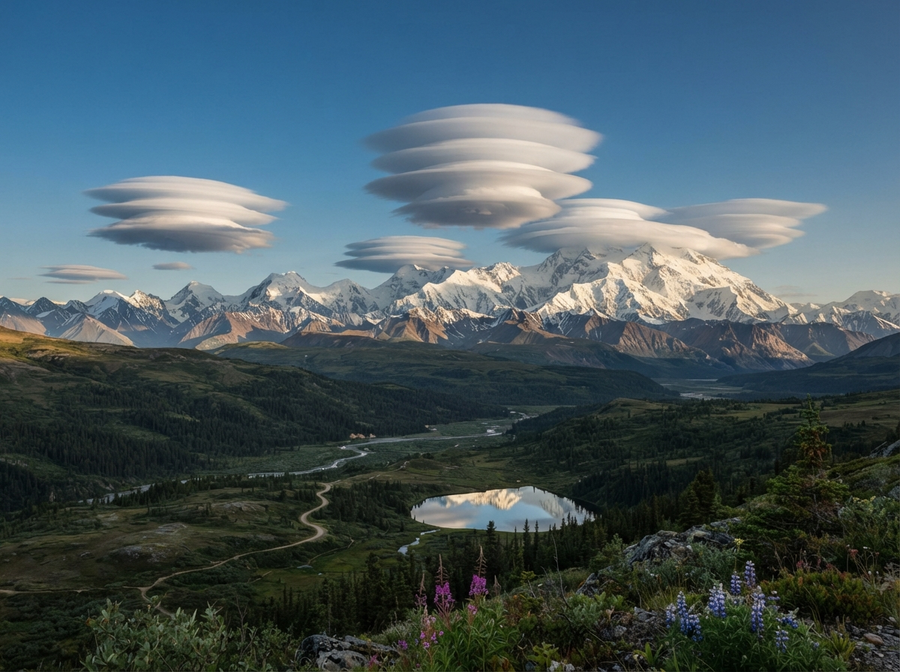
There are even very rare and unusual clouds, like 'lenticular clouds' that look like stacks of pancakes or flying saucers, often forming over mountains. Or 'mammatus clouds' which have bubbly, pouch-like formations hanging underneath, often associated with severe thunderstorms. The world of clouds is incredibly diverse and always changing!
Isn't it amazing how much there is to learn just by looking up? Every cloud tells a story about the air around us, the temperature, and the water cycle. So next time you're outside, take a moment to observe the sky. You might just become a cloud expert yourself!
If you're fascinated by these sky wonders, why not bring them to life with colors? You can find lots of free cloud coloring pages online or print them out to color at home!
Educational Standards & Fact-Checking
Reviewed by KidsColouring Editorial Team
Educational References & Scientific Sources
Our curriculum and factual articles are synthesized from trusted academic encyclopedias, wildlife conservation bodies, and public science institutions:
- •Smithsonian Institution Educational Resources & National Zoo Archives — Smithsonian Institution
- •National Geographic Kids Science & Animal Encyclopedias — National Geographic Society
- •Encyclopaedia Britannica Academic & Elementary Learning Reference — Encyclopaedia Britannica


