
Volcano Facts for Kids: Earth's Fiery Wonders Explored! at a Glance
Topic Focus
Volcano Facts for Kids: Earth's Fiery Wonders Explored!
Learning Level
Ages 4–10 (Preschool to Grade 4)
Subject Area
Science Facts
Format
Verified Fun Facts & Guided Exploration
Volcano Facts for Kids: Discover Earth's Fiery Mountains!
Have you ever wondered about Earth's most spectacular and powerful natural wonders? Imagine mountains that can breathe fire and molten rock! These incredible formations are called volcanoes, and they are like giant safety valves for our planet, letting out heat and pressure from deep inside. While they can be awe-inspiring and sometimes a little scary, volcanoes are also super important for shaping our world and even creating new land.
From towering peaks to underwater vents, volcanoes come in many shapes and sizes, each with its own story to tell about Earth's dynamic geology. In this article, we'll journey deep into the heart of volcanoes, exploring how they work, what makes them erupt, and the fascinating things they leave behind. Get ready to uncover the fiery secrets of our planet's most dramatic geological features!
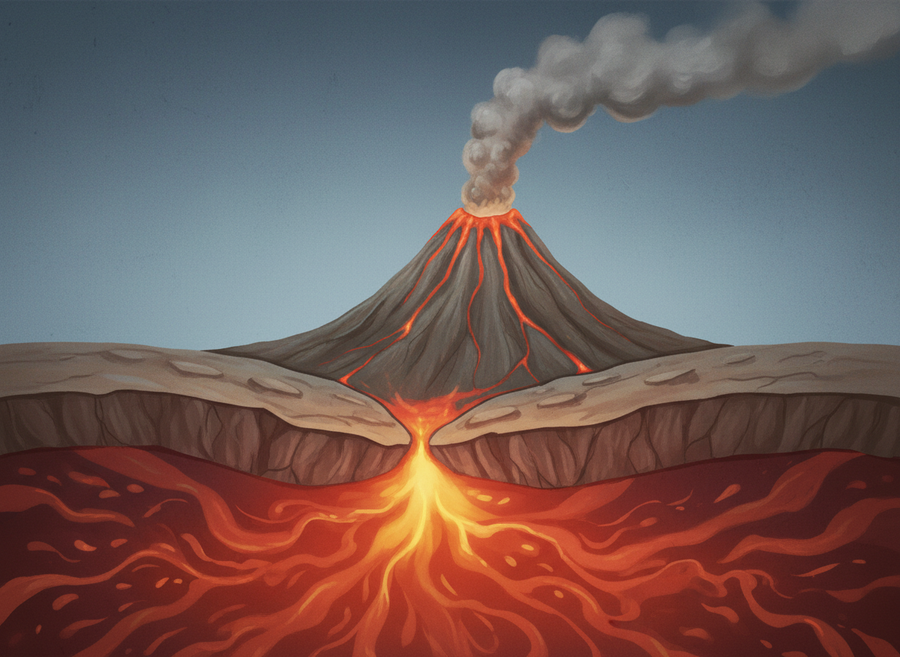
Volcanoes are Earth's way of showing us the incredible power bubbling just beneath our feet!
Quick Facts
There are over 1,500 active volcanoes on land around the world.
The 'Ring of Fire' in the Pacific Ocean is home to most of Earth's volcanoes.
Lava can be hotter than 2,000 degrees Fahrenheit (1,200 degrees Celsius).
Volcanoes can form islands, like the Hawaiian Islands.
Some volcanoes erupt quietly, while others explode with tremendous force.
The word 'volcano' comes from 'Vulcan,' the Roman god of fire.
What Exactly is a Volcano?
At its simplest, a volcano is an opening in the Earth's crust that allows molten rock, ash, and gases to escape from below the surface. Think of our planet like a giant peach. The very outside is the thin skin, which is the Earth's crust. Beneath that is the juicy part, which is like the Earth's mantle, a thick layer of very hot, gooey rock. Even deeper is the pit, which is the Earth's core, incredibly hot and under immense pressure.
Sometimes, cracks or weaknesses appear in the Earth's crust. When this happens, the superheated, molten rock from the mantle, called magma, can push its way up through these openings. When magma reaches the surface, it changes its name to lava. Along with lava, volcanoes also release ash, gas, and rocks during an eruption. Over many eruptions, this material builds up around the vent, forming the cone-shaped mountain we recognize as a volcano.
How Do Volcanoes Form and Erupt?
Most volcanoes form along the edges of giant pieces of Earth's crust called tectonic plates. These plates are always slowly moving, bumping into each other, pulling apart, or sliding past one another. When plates collide or pull apart, they create pathways for magma to rise.
Divergent Plate Boundaries: When two plates pull apart, like at the Mid-Atlantic Ridge, magma rises to fill the gap, creating new crust and often forming volcanoes. This is common under the ocean.
Convergent Plate Boundaries: When plates crash together, one plate can slide beneath the other in a process called subduction. As the sinking plate goes deeper, it melts into magma, which then rises to the surface, creating a line of volcanoes, like the ones found in the Andes Mountains.
Hot Spots: Some volcanoes form in the middle of a plate, far from plate boundaries. These are called hot spots, where a plume of superheated magma rises from deep within the Earth's mantle, burning a hole through the crust. The Hawaiian Islands are a perfect example of volcanoes formed over a hot spot.
When enough pressure builds up from the magma and gases trapped beneath the surface, an eruption occurs. This can be a gentle flow of lava, or a massive explosion sending ash and rocks high into the sky!
Different Types of Volcanoes
Just like people, volcanoes come in many different shapes and sizes, each with its own personality:
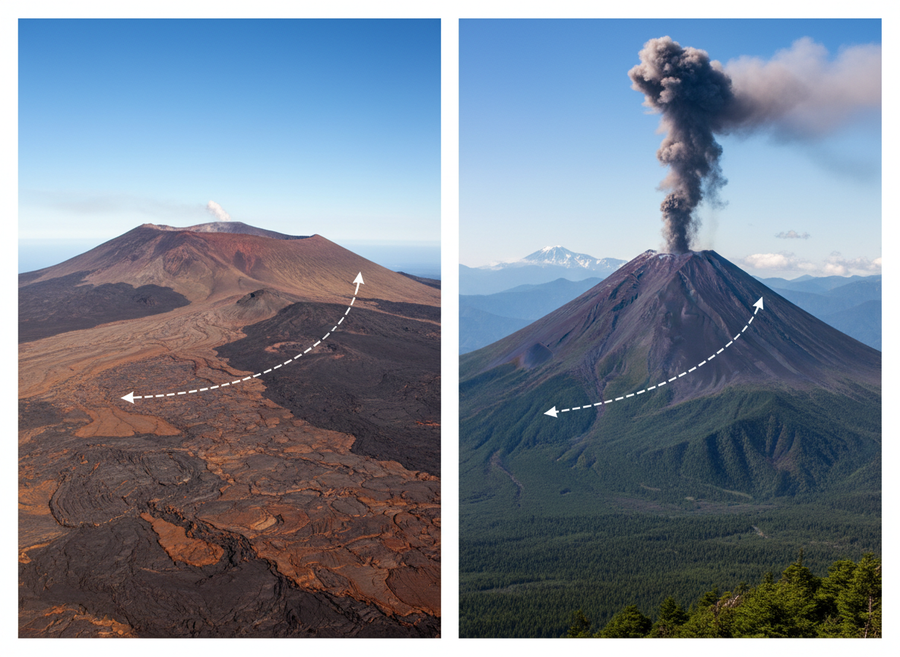
Shield Volcanoes: These volcanoes have a broad, gently sloping shape, like a warrior's shield lying on the ground. They are formed by very fluid, runny lava that flows easily and spreads out over a large area. Mauna Loa in Hawaii is a famous shield volcano.
Stratovolcanoes (or Composite Volcanoes): These are the classic cone-shaped volcanoes you often see in pictures, with steep sides. They are built up by layers of hardened lava, ash, and rock fragments from many different eruptions. Mount Fuji in Japan and Mount St. Helens in the USA are examples of stratovolcanoes. They often have explosive eruptions.
Cinder Cone Volcanoes: These are the smallest and simplest type of volcano, usually cone-shaped with a bowl-like crater at the top. They are built from blobs of congealed lava and ash that are ejected from a single vent. They rarely grow very large.
Lava Domes: These are formed when very thick, sticky lava slowly oozes out of a vent and piles up around it, creating a dome shape. The lava is so thick it doesn't flow far.
Life Around Volcanoes: Danger and Benefits
Living near a volcano can be dangerous. Eruptions can cause lava flows that destroy everything in their path, ash clouds that block out the sun and damage engines, and mudslides called lahars. However, there are also many benefits to volcanic activity. Volcanic soil is incredibly rich and fertile, making it excellent for farming. Many valuable minerals are found in volcanic regions, and the heat from underground magma can be used to generate geothermal energy, providing clean electricity.
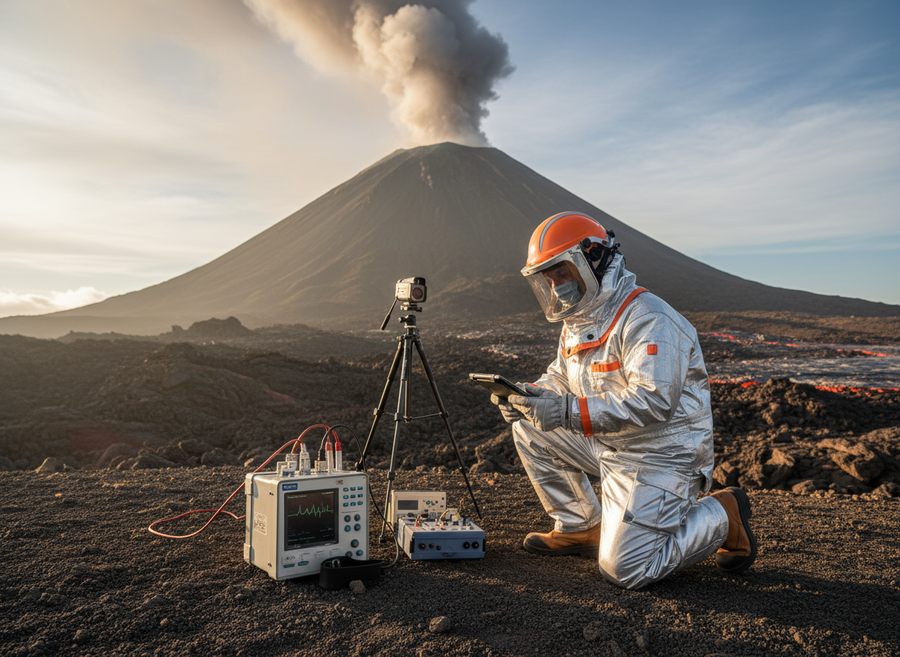
Scientists called volcanologists study volcanoes to understand how they work and to predict when they might erupt, helping to keep people safe. They use special tools to monitor ground movement, gas emissions, and temperature changes. This research helps us learn more about our amazing planet and how to live safely alongside its powerful forces.
Ready to bring some color to these fiery wonders? You can find lots of fun volcano coloring pages to print or color online right here!
Educational Standards & Fact-Checking
Reviewed by KidsColouring Editorial Team
Educational References & Scientific Sources
Our curriculum and factual articles are synthesized from trusted academic encyclopedias, wildlife conservation bodies, and public science institutions:
- •Smithsonian Institution Educational Resources & National Zoo Archives — Smithsonian Institution
- •National Geographic Kids Science & Animal Encyclopedias — National Geographic Society
- •Encyclopaedia Britannica Academic & Elementary Learning Reference — Encyclopaedia Britannica


