
Kangaroo Facts for Kids: Hopping Wonders of Australia! at a Glance
Topic Focus
Kangaroo Facts for Kids: Hopping Wonders of Australia!
Learning Level
Ages 4–10 (Preschool to Grade 4)
Subject Area
Animal Facts
Format
Verified Fun Facts & Guided Exploration
Amazing Kangaroo Facts: Hopping Wonders Down Under!
Imagine an animal that can hop faster than a car on a school zone street, carry its baby in a pouch, and has feet so big they're part of its name! That's right, we're talking about kangaroos! These incredible creatures are famous for living in Australia, a continent far, far away, known for its unique wildlife.
Kangaroos are not just any animal; they are marsupials, which means their babies (called joeys!) are born very tiny and continue to grow inside a special pouch on their mother's belly. From their powerful tails to their amazing jumping abilities, there's so much to learn about these gentle giants of the Australian outback. Get ready to hop into a world of fun facts about kangaroos!
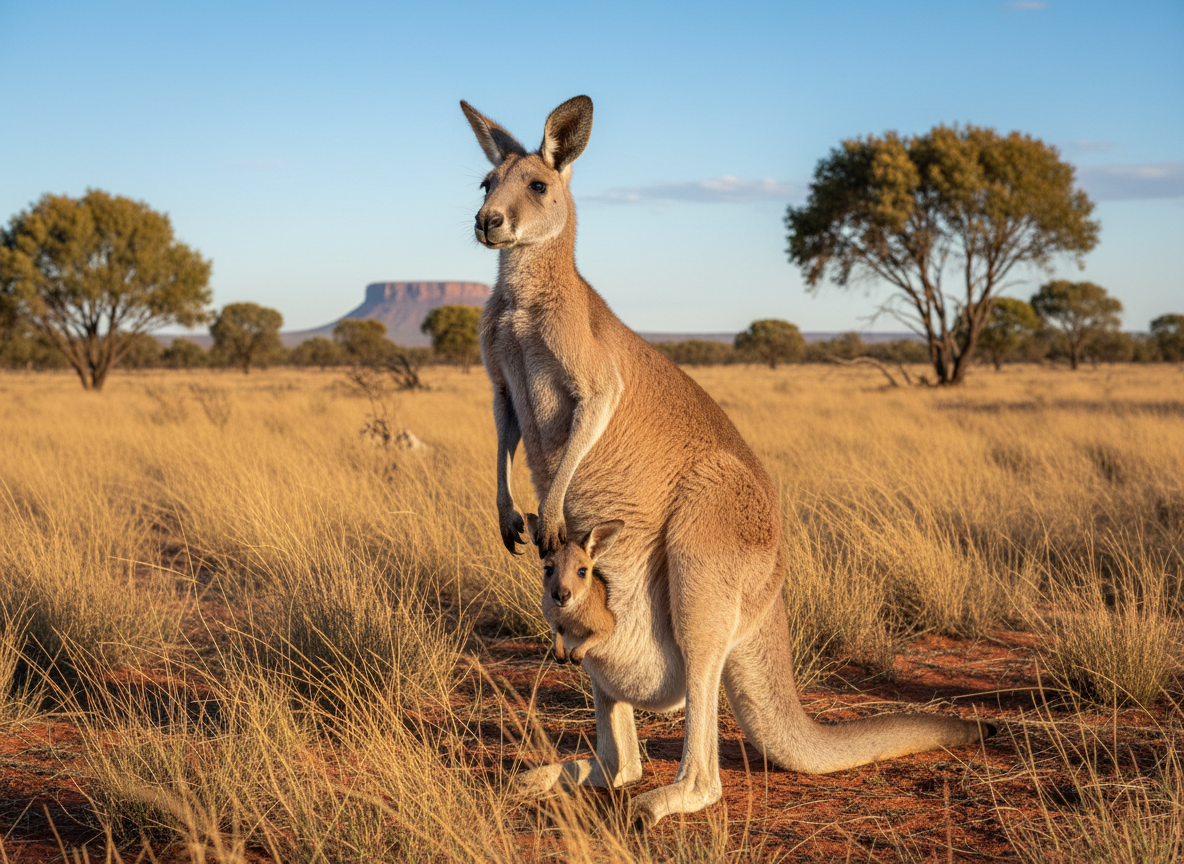
Kangaroos are like nature's super jumpers, with a built-in baby carrier!
Quick Facts
Kangaroos are marsupials, meaning their babies develop in a pouch.
They are native to Australia and New Guinea.
Kangaroos use their strong hind legs for hopping and powerful tails for balance.
A baby kangaroo is called a 'joey'.
There are four main species of kangaroos.
They are herbivores, eating mostly grasses and plants.
Kangaroos can jump incredibly high and far.
A group of kangaroos is called a 'mob' or 'troop'.
What Makes a Kangaroo a Kangaroo?
Kangaroos are truly one-of-a-kind animals, easily recognized by their powerful hind legs, long muscular tails, and small front paws. These features are perfectly designed for their unique way of moving: hopping! Unlike most animals that run on four legs, kangaroos primarily use their two strong back legs to propel themselves forward in giant leaps. Their tail acts like a counterbalance, helping them stay steady, especially when they're moving at high speeds or standing tall to look around.
There are four main types, or species, of kangaroos:
Red Kangaroo: The largest of all marsupials, known for its reddish-brown fur.
Antilopine Kangaroo: Found in northern Australia, often mistaken for an antelope due to its slender build.
Eastern Grey Kangaroo: Common in eastern Australia, known for its grey fur.
Western Grey Kangaroo: Lives in southern and western Australia, also grey but with different markings.
Each species has adapted to its specific environment, but they all share the incredible traits that make a kangaroo so special. Their large feet, which give them their name (from an Aboriginal word), are also crucial for their powerful jumps. They are truly fascinating creatures!
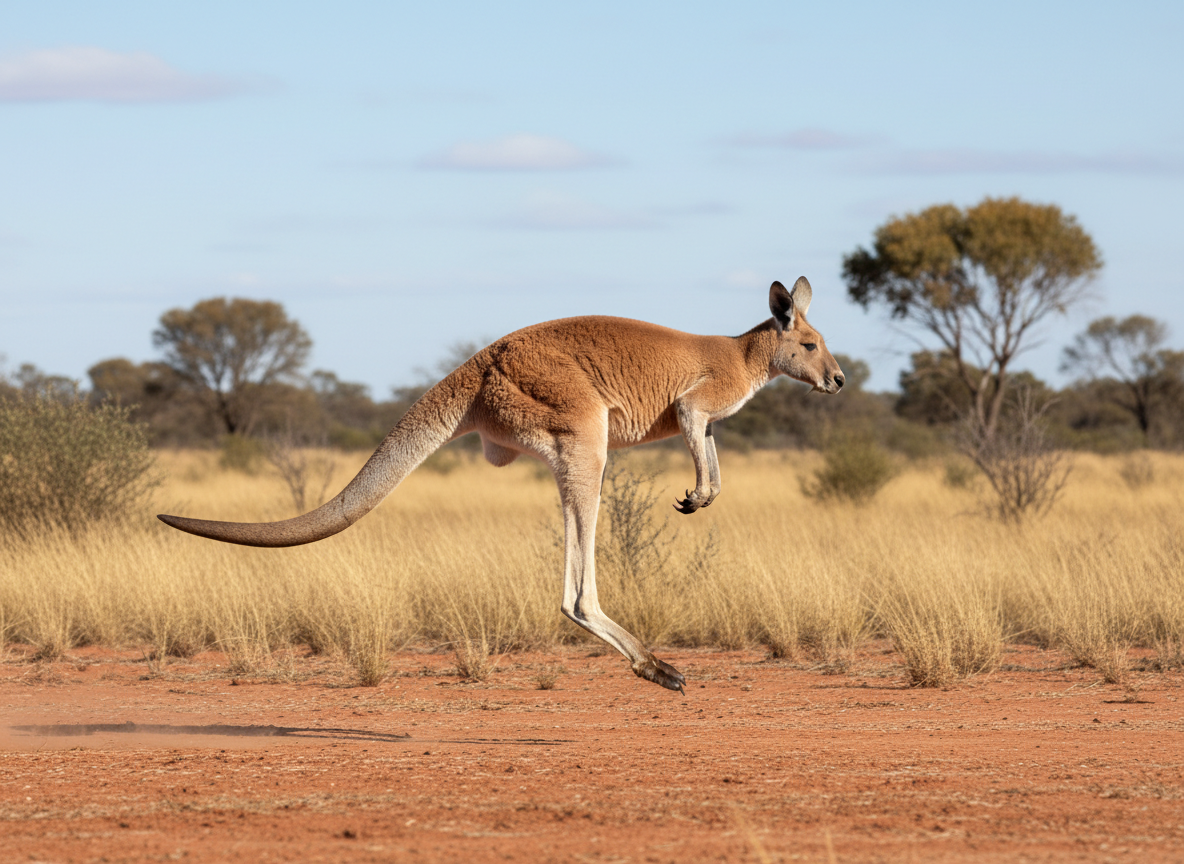
The Amazing Joey: Life in the Pouch
One of the most extraordinary facts about kangaroos is how they raise their young. Kangaroos are marsupials, and this means their babies, called joeys, are born very underdeveloped. Imagine a baby the size of a jelly bean! That's how tiny a newborn joey is. At birth, it's blind, hairless, and relies completely on its instincts to crawl from the birth canal all the way up its mother's fur into her pouch.
Once inside the warm, safe pouch, the joey latches onto a nipple, which swells in its mouth to keep it securely attached. It will stay in the pouch, drinking milk and growing, for several months. Different species have different pouch times, but it's usually around 6 to 10 months. During this time, the joey is protected from predators and the harsh Australian weather. As it grows, it will start to poke its head out, then eventually hop out for short explorations, always ready to jump back in at the first sign of danger. It's like having a built-in nursery on the go!
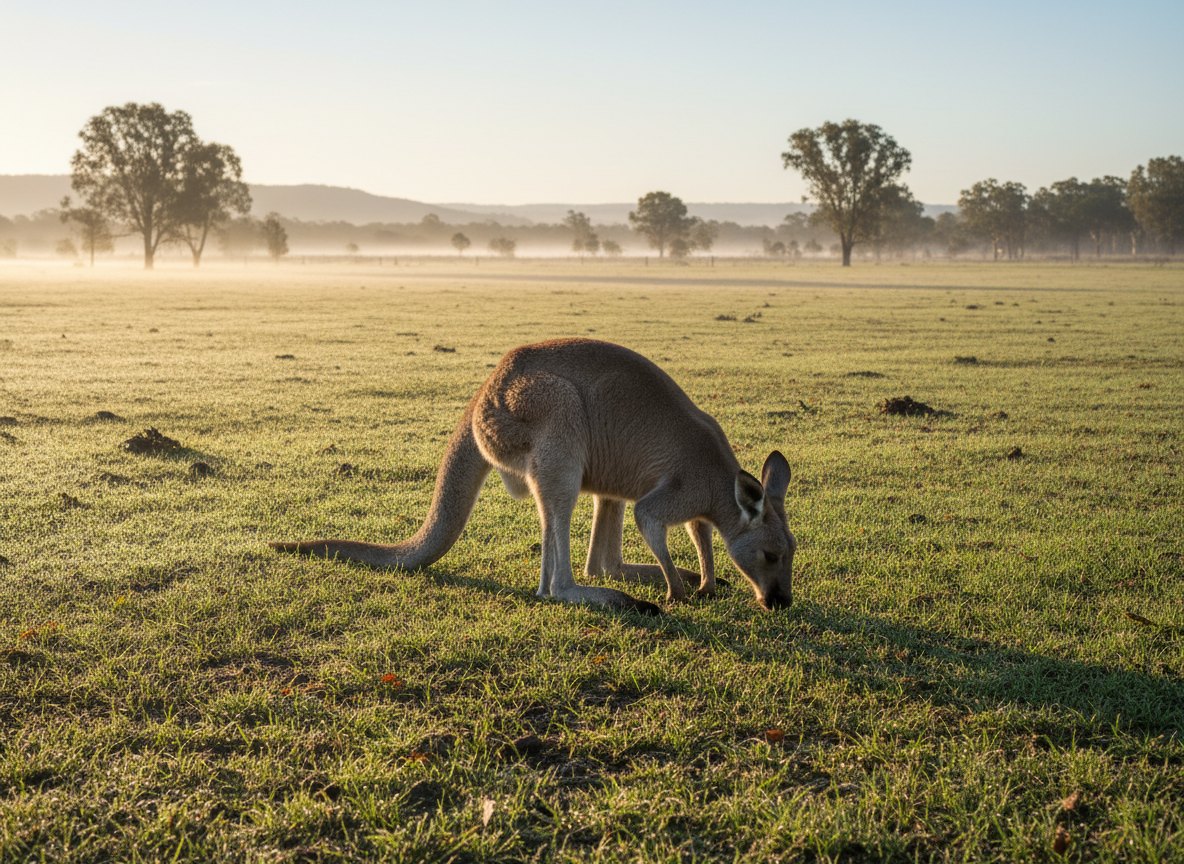
Hopping High and Far: Kangaroo Movement
Kangaroos are champions of hopping! This unique way of moving is called saltation. They can cover incredible distances with each leap, sometimes jumping over 25 feet (about 8 meters) in a single bound. When they need to move quickly, they can reach speeds of up to 40 miles per hour (64 kilometers per hour) over short distances. That's faster than many cars can go in a neighborhood!
Their powerful hind legs work like springs, storing energy as they land and releasing it to propel them forward. Their strong tail isn't just for balance; it also acts as a fifth limb when they're standing still, forming a sturdy tripod with their two hind legs. This allows them to stand upright and get a better view of their surroundings, or even use their legs to kick if they feel threatened. Hopping is also a very efficient way for them to travel long distances, especially in the dry, open landscapes of Australia, as it uses less energy than running for animals of their size.
What Do Kangaroos Eat? A Herbivore's Diet
Kangaroos are herbivores, which means their diet consists entirely of plants. They are primarily grazers, preferring to eat grasses, but they will also munch on leaves, flowers, and even some types of fungi. They have special digestive systems, similar to cows, that help them break down tough plant material and extract all the nutrients they need.
Because they live in often dry environments, kangaroos are very efficient at conserving water. They can go for long periods without drinking, getting most of their moisture from the plants they eat. They often graze in the cooler parts of the day, like dawn and dusk, to avoid the intense heat of the Australian sun. Their diet plays a crucial role in the Australian ecosystem, helping to keep grasslands healthy by preventing overgrowth.
Kangaroos in the Wild: Where They Live and Their Social Lives
Kangaroos are found across Australia, from the arid outback to grassy plains and even some forest areas. Each species has adapted to different habitats. They are generally crepuscular, meaning they are most active during dawn and dusk, when temperatures are cooler. During the hottest parts of the day, they often rest in the shade of trees or shrubs.
Kangaroos are social animals and often live in groups called 'mobs' or 'troops.' These groups can vary in size, from a few individuals to many. Living in a mob offers protection, as more eyes and ears can spot predators like dingoes (wild dogs) or eagles. If danger is sensed, a kangaroo will thump its powerful hind foot on the ground to warn the others. While they are generally peaceful, male kangaroos (bucks or boomers) can engage in 'boxing' matches to establish dominance or compete for females. These fights involve powerful kicks and pushes, but rarely result in serious injury.
Kangaroos are an iconic part of Australia's wildlife, and learning about them helps us appreciate the amazing diversity of animals on our planet. They are truly magnificent creatures!
Ready to bring these hopping wonders to life with your own colors? You can find lots of free kangaroo coloring pages to print or color online right here!
Educational Standards & Fact-Checking
Reviewed by KidsColouring Editorial Team
Educational References & Scientific Sources
Our curriculum and factual articles are synthesized from trusted academic encyclopedias, wildlife conservation bodies, and public science institutions:
- •Smithsonian Institution Educational Resources & National Zoo Archives — Smithsonian Institution
- •National Geographic Kids Science & Animal Encyclopedias — National Geographic Society
- •Encyclopaedia Britannica Academic & Elementary Learning Reference — Encyclopaedia Britannica


