
Unraveling the Mystery: Why Do Cats and Dogs Sometimes Fight? at a Glance
Topic Focus
Unraveling the Mystery: Why Do Cats and Dogs Sometimes Fight?
Learning Level
Ages 4–10 (Preschool to Grade 4)
Subject Area
Animal Facts
Format
Verified Fun Facts & Guided Exploration
The Great Pet Puzzle: Why Do Cats and Dogs Sometimes Fight?
Have you ever seen a cat hiss at a dog, or a dog bark loudly at a cat? It might seem like cats and dogs are natural enemies, always ready for a chase or a spat. For centuries, stories and cartoons have shown them as rivals. But is this always true? Do they really dislike each other, or is there something else going on?
The truth is, cats and dogs are two very different kinds of animals, even though they both live in our homes and are often our beloved pets. They have different ways of seeing the world, different ways of talking to each other, and different instincts that guide their actions. Understanding these differences is like cracking a secret code that helps us understand why they sometimes fight, and how they can often become the best of friends!
In this article, we'll explore the fascinating reasons behind those occasional disagreements, from their ancient wild ancestors to the way they move their tails. Get ready to become an expert in cat and dog communication!
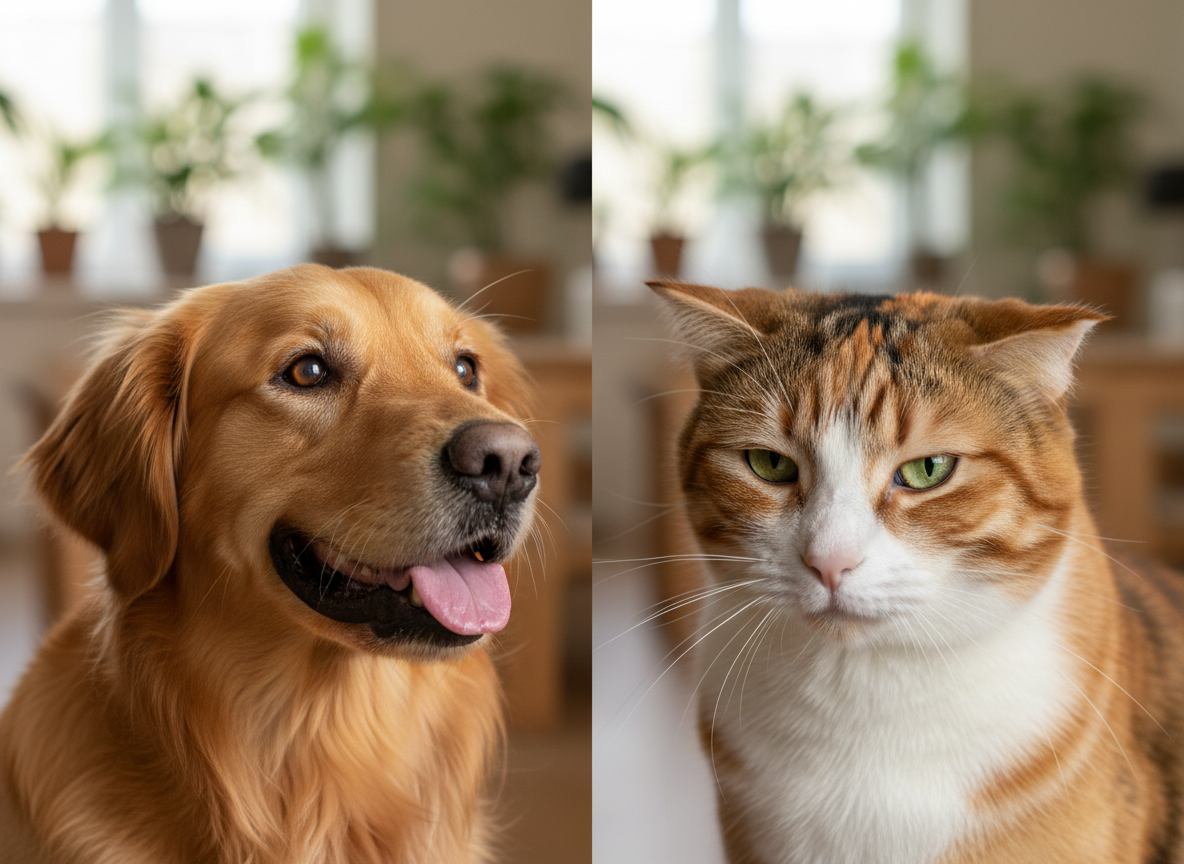
Cats and dogs speak different languages, and sometimes, misunderstandings lead to a little rumble!
Quick Facts
Dogs are often pack animals, while cats are more solitary hunters.
A wagging dog tail means 'happy,' but a flicking cat tail can mean 'annoyed.'
Dogs often chase things that run; cats often run when scared.
Cats show dominance by staring; dogs show it with body posture.
Early introductions (when they are young) can help them become friends.
Both animals can be taught to live peacefully together.
Their wild ancestors had very different hunting and social habits.
Different Ways of Talking: Body Language Breakdown
Imagine you're trying to talk to someone who speaks a completely different language. That's a bit like what happens when a cat and a dog try to understand each other! Their body language, which is how animals communicate without words, is often opposite. What one animal means as friendly, the other might see as a threat.
Tail Tales: For dogs, a wagging tail usually means they are happy, excited, and want to play. But for a cat, a tail that's twitching or thumping back and forth can mean they are annoyed, agitated, or about to pounce! A cat's happy tail is often held high with a slight curve.
Eye Spy: Dogs often make direct eye contact as a sign of confidence or even a challenge. Cats, however, usually see direct, prolonged eye contact as threatening. A slow blink from a cat, on the other hand, is a sign of trust and affection!
Sounds and Growls: Dogs communicate with barks, growls, and whines. A dog's playful bark might sound alarming to a cat. Cats have a wide range of sounds too, like purrs, meows, hisses, and growls. A cat's hiss is a clear warning sign, often meaning 'stay away!'
These communication mix-ups can easily lead to a misunderstanding, where one animal thinks the other is being aggressive when they're really just trying to say hello in their own way.

Instincts and Ancestors: Hunters and Hunted
To really understand our pets, we need to think about their wild ancestors. Dogs are descended from wolves, which are pack animals and predators. They are used to hunting in groups and chasing down prey. Cats are descended from wild felines, which are often solitary hunters, relying on stealth and quick pounces. These ancient instincts still influence their behavior today.
Think about it: a dog's natural instinct is to chase things that run. If a cat gets scared and runs away, the dog's hunting instinct might kick in, making it want to chase. The cat, seeing a large, chasing animal, will then feel even more threatened and might hiss, scratch, or try to escape. It's not that the dog wants to hurt the cat; it's just following a very old, very strong instinct.
Also, cats often prefer high places where they can observe their surroundings safely. This comes from their wild past, where being high up helped them spot prey and avoid danger. Dogs, being more ground-oriented, might not understand why a cat wants to be on top of the refrigerator!
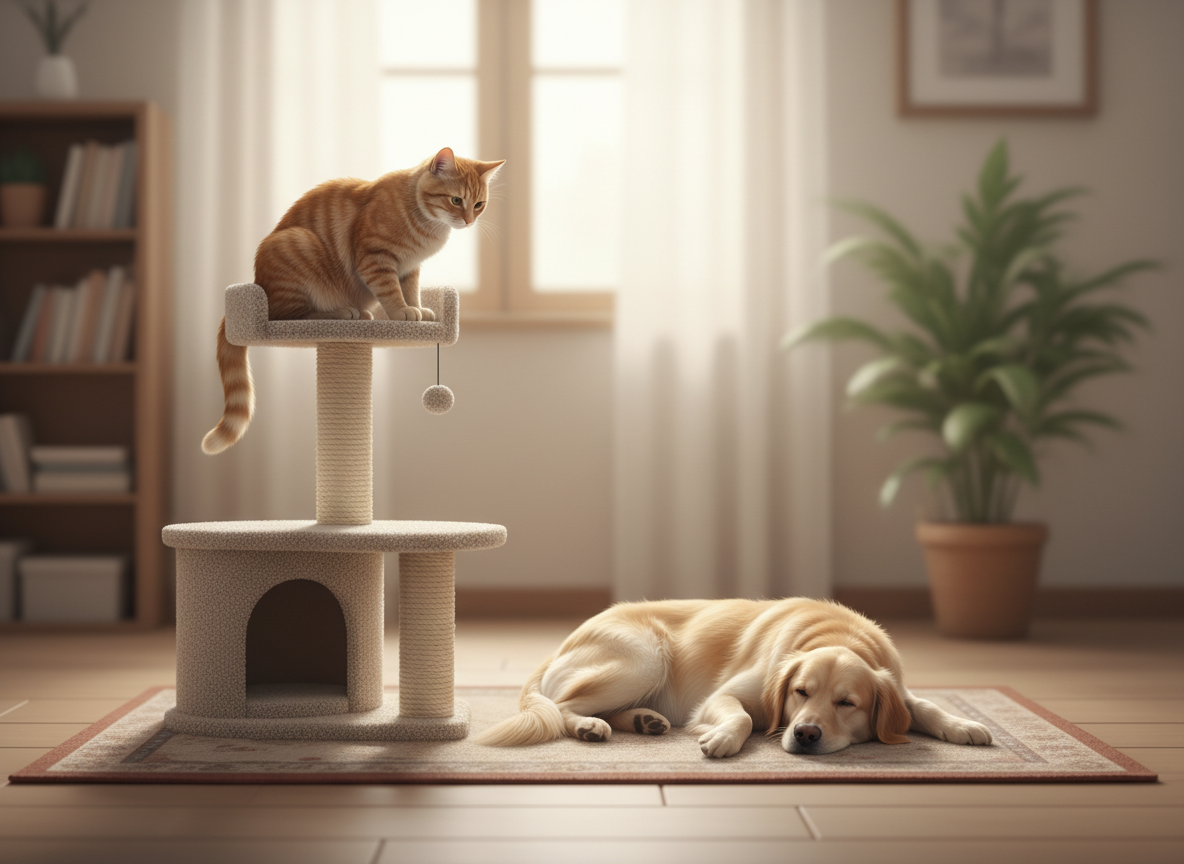
Personal Space and Territory: My Spot, Not Yours!
Just like people, animals need their own space. Cats, especially, are very particular about their territory. They have special places where they like to sleep, eat, and feel safe. If a dog invades a cat's personal space too quickly or too often, the cat can become stressed and defensive. This is why you might see a cat swat at a dog that gets too close while it's eating or resting.
Dogs also have a sense of territory, but they might express it differently. They might guard their toys, food, or even their human family members. When a cat approaches these 'guarded' items, a dog might bark or growl to warn the cat away. It's not always about being mean; it's about protecting what they see as theirs.
Providing separate spaces for feeding, sleeping, and playing can help reduce tension between cats and dogs, giving each animal the security of their own territory.
Fear and Stress: When Animals Feel Unsafe
When animals are scared or stressed, they might react in ways that seem aggressive, but are actually just trying to protect themselves. A cat that feels trapped by a curious or boisterous dog might hiss, scratch, or even bite to make the dog back off. This is often called a 'fight or flight' response.
Similarly, a dog that feels threatened by a cat's sudden movements or hissing might bark loudly or lunge. These reactions are not always about wanting to hurt the other animal, but about feeling unsafe and trying to regain control of the situation. Loud noises, new environments, or even changes in routine can contribute to stress in pets, making them more likely to react defensively towards each other.
Building Bridges: How Cats and Dogs Can Become Friends
Even with all these differences, it's very common for cats and dogs to live happily together and even become the best of friends! The key is often in how they are introduced and raised. If a puppy and a kitten grow up together, they learn each other's signals from a young age and often become very comfortable with one another. They learn to 'speak' each other's language.
For older pets, slow and supervised introductions are super important. This means letting them get used to each other's scent first, then seeing each other through a gate, and finally, having short, calm interactions while supervised. Positive experiences, like getting treats when they are calm around each other, can help them associate the other animal with good things.
Patience, understanding their unique needs, and providing safe spaces for both animals are the best ways to help our feline and canine friends live in harmony. Many families have both cats and dogs that cuddle, play, and even nap together, proving that differences can be overcome with a little understanding!
Educational Standards & Fact-Checking
Reviewed by KidsColouring Editorial Team
Educational References & Scientific Sources
Our curriculum and factual articles are synthesized from trusted academic encyclopedias, wildlife conservation bodies, and public science institutions:
- •Smithsonian Institution Educational Resources & National Zoo Archives — Smithsonian Institution
- •National Geographic Kids Science & Animal Encyclopedias — National Geographic Society
- •Encyclopaedia Britannica Academic & Elementary Learning Reference — Encyclopaedia Britannica


