
Flamingo Facts for Kids: Discover These Pink Wonders! at a Glance
Topic Focus
Flamingo Facts for Kids: Discover These Pink Wonders!
Learning Level
Ages 4–10 (Preschool to Grade 4)
Subject Area
Bird Facts
Format
Verified Fun Facts & Guided Exploration
Fabulous Flamingo Facts for Curious Kids!
Have you ever seen a bird that looks like it's straight out of a fairy tale? With their long, skinny legs, graceful necks, and bright pink feathers, flamingos are some of the most eye-catching birds on Earth! They stand out in a crowd and have many amazing secrets waiting to be discovered.
Flamingos are not just pretty faces; they are truly unique creatures with incredible adaptations that help them survive in their watery homes. From how they get their famous pink color to their special way of eating, there's so much to learn about these magnificent birds. Get ready to explore the wonderful world of flamingos!
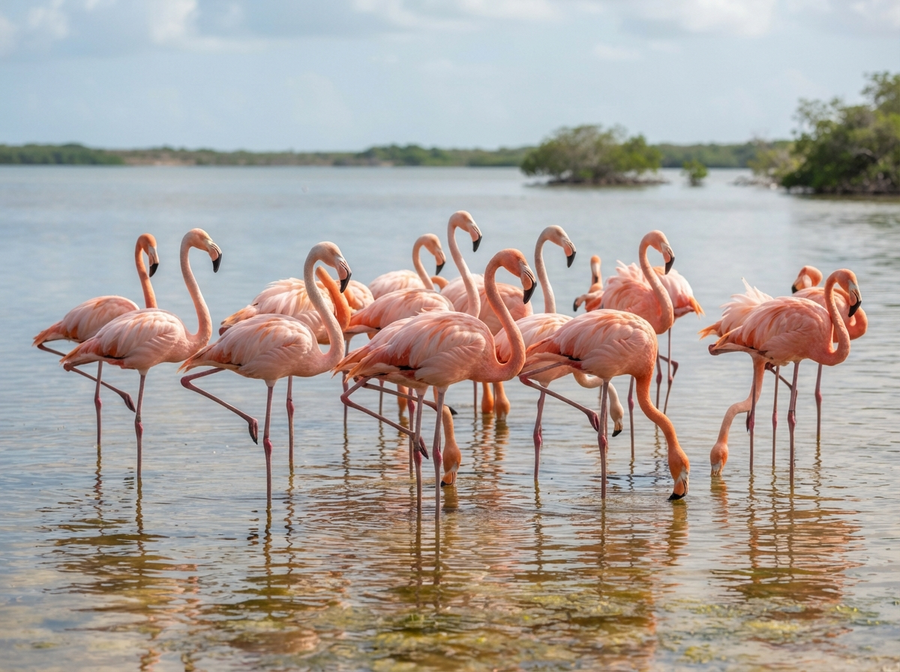
Flamingos are nature's pink masterpieces, standing tall and proud in their watery homes!
Quick Facts
There are six different species of flamingos.
Their pink color comes from the food they eat.
Flamingos often stand on one leg.
They live in large groups called colonies.
Flamingo beaks are specially shaped for filtering food.
They can live for a very long time, sometimes over 50 years!
Flamingos build tall, cone-shaped nests out of mud.
Where Do Flamingos Live?
Flamingos are found in many parts of the world, but they all prefer warm, watery places. You can find them in parts of North and South America, Africa, Asia, and Europe. They love shallow lakes, lagoons, and estuaries, which are places where rivers meet the sea. These watery habitats are perfect because they provide plenty of food and protection.
Different types of flamingos live in different areas. For example, the Greater Flamingo, which is the tallest species, can be found across Africa, Asia, and Europe. The American Flamingo (sometimes called the Caribbean Flamingo) lives in Central and South America, including the Caribbean islands. Each species has adapted to its specific environment, but they all share a love for shallow, often salty, water.
Why Are Flamingos Pink?
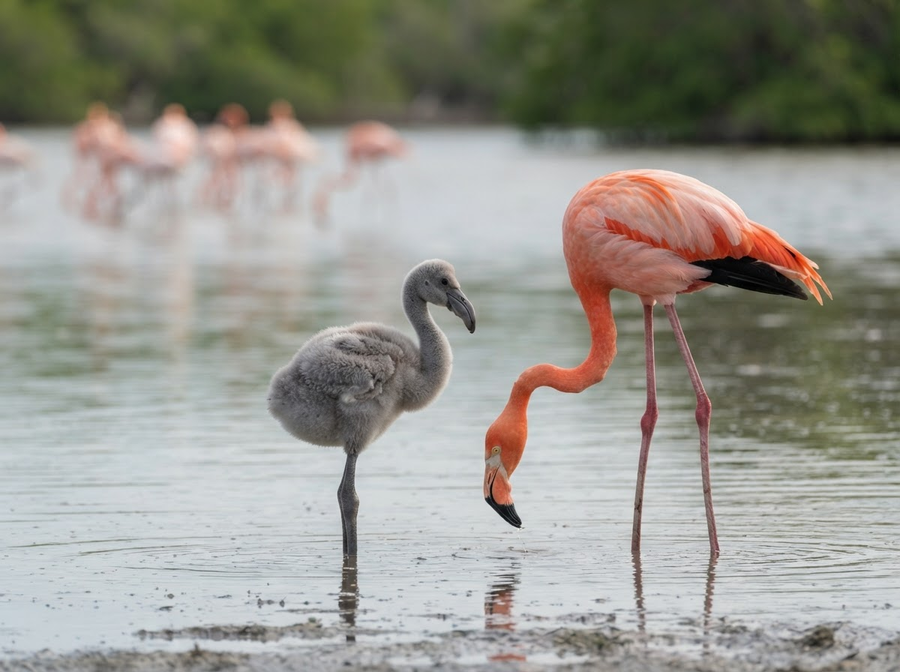
This is one of the most famous flamingo facts! Flamingos aren't born pink; they start life with dull, greyish feathers. Their beautiful pink, orange, or even reddish color comes entirely from their diet! They eat tiny plants and animals found in the water, like brine shrimp and algae. These foods contain special natural color pigments called carotenoids.
When flamingos eat these foods, their bodies process the carotenoids, and these pigments are then deposited into their feathers, skin, and even their eggs! The more carotenoids a flamingo eats, the brighter and more vibrant its pink color will be. If a flamingo doesn't eat enough of these colorful foods, its feathers will fade back to a pale white or grey. So, a healthy, well-fed flamingo is a very pink flamingo!
The Mystery of Standing on One Leg
Have you ever wondered why flamingos often stand on just one leg? Scientists have a few ideas about this curious behavior! One popular theory is that it helps them save body heat. Flamingos spend a lot of time in cold water, and by tucking one leg up against their warm body, they reduce the amount of heat lost through their long, bare legs.
Another idea is that standing on one leg helps them conserve energy. It might be less tiring to stand on one leg for long periods than to constantly shift their weight or keep both legs active. It's also thought that this stance helps them stay stable in muddy or soft lake bottoms. Whatever the exact reason, it's a unique and elegant posture that makes flamingos even more fascinating!
How Do Flamingos Eat?
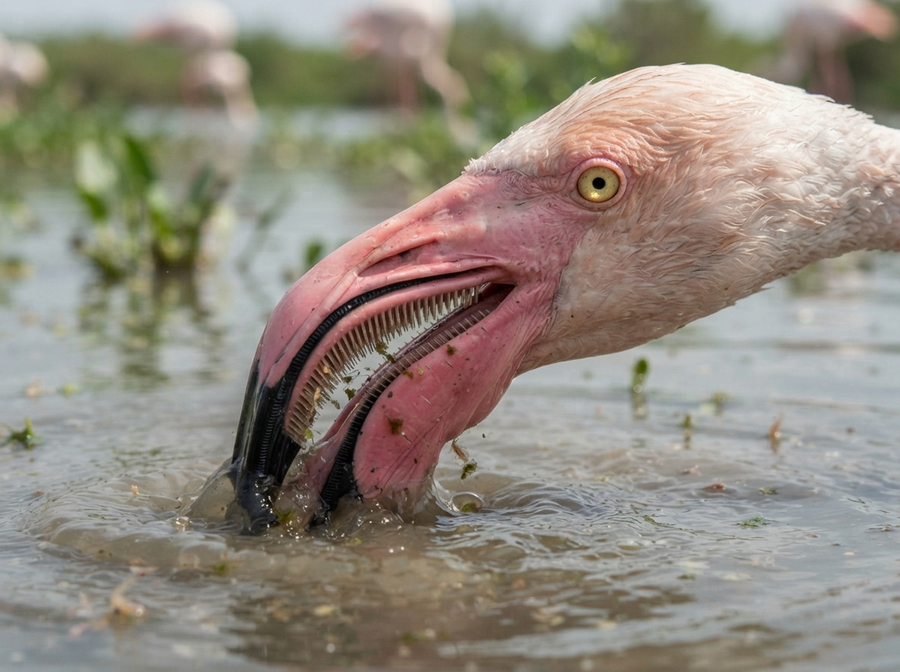
Flamingos have one of the most unusual beaks in the bird world, and it's perfectly designed for how they eat. Their beak is large, chunky, and curves downwards in the middle. When a flamingo wants to eat, it dips its head into the water, often upside down, and uses its beak like a filter.
Inside their beak are tiny, comb-like plates called lamellae. They pump water and mud through these lamellae, trapping tiny organisms like algae, diatoms, and small insects. It's like having a built-in strainer! This special feeding method is called filter-feeding, and it's how they get all the nutrients (and those famous pink pigments!) they need from their watery homes. They can even filter food while walking or swimming!
Flamingo Families and Flocks
Flamingos are very social birds and love to live in large groups called colonies or flocks. These colonies can sometimes have thousands of birds! Living in a big group helps them stay safe from predators, find food more easily, and even find a mate.
When it's time to have babies, flamingos build unique nests. They make tall, cone-shaped mounds out of mud, sometimes as high as two feet! The female flamingo lays just one egg at a time on top of this mud cone. Both parents take turns incubating the egg, keeping it warm until the chick hatches. Once hatched, the baby flamingo, called a chick, is covered in soft, grey down and has a straight beak, which will only curve as it grows older. The parents feed their chick a special 'crop milk' that they produce, which is full of nutrients.
Conservation and Protecting Flamingos
While flamingos are beautiful and amazing, some species face challenges in the wild. Things like pollution, loss of their wetland homes, and changes in water levels can threaten their populations. Many people and organizations work hard to protect flamingos and their habitats. This includes setting up protected areas, monitoring their numbers, and educating people about these wonderful birds.
By learning about flamingos, we can all help appreciate and protect them. Every creature, big or small, plays an important role in our world. So next time you see a picture of a flamingo, remember all the incredible things you've learned about these fabulous pink birds!
Want to bring these pink beauties to life? You can find free flamingo coloring pages online to color and learn even more!
Educational Standards & Fact-Checking
Reviewed by KidsColouring Editorial Team
Educational References & Scientific Sources
Our curriculum and factual articles are synthesized from trusted academic encyclopedias, wildlife conservation bodies, and public science institutions:
- •Smithsonian Institution Educational Resources & National Zoo Archives — Smithsonian Institution
- •National Geographic Kids Science & Animal Encyclopedias — National Geographic Society
- •Encyclopaedia Britannica Academic & Elementary Learning Reference — Encyclopaedia Britannica


