
Uncovering the Spooky Fun: Fascinating Facts About Halloween for Kids at a Glance
Topic Focus
Uncovering the Spooky Fun: Fascinating Facts About Halloween for Kids
Learning Level
Ages 4–10 (Preschool to Grade 4)
Subject Area
Country Facts
Format
Verified Fun Facts & Guided Exploration
Uncovering the Spooky Fun: Fascinating Facts About Halloween for Kids
Have you ever wondered why we dress up in costumes, carve pumpkins, and go trick-or-treating every Halloween? This holiday, celebrated on October 31st each year, is much more than just a night for candy and spooky decorations! Halloween has a super long and interesting history, stretching back thousands of years to ancient times. It's a holiday filled with traditions that have changed and grown over centuries, bringing together different cultures and beliefs.
Get ready to unwrap the mysteries behind this exciting celebration! We'll journey through time to discover where Halloween really comes from, why certain symbols like black cats and ghosts are so popular, and how people around the world celebrate this special day. From ancient festivals to modern-day fun, prepare to learn some amazing facts that will make your next Halloween even more magical!
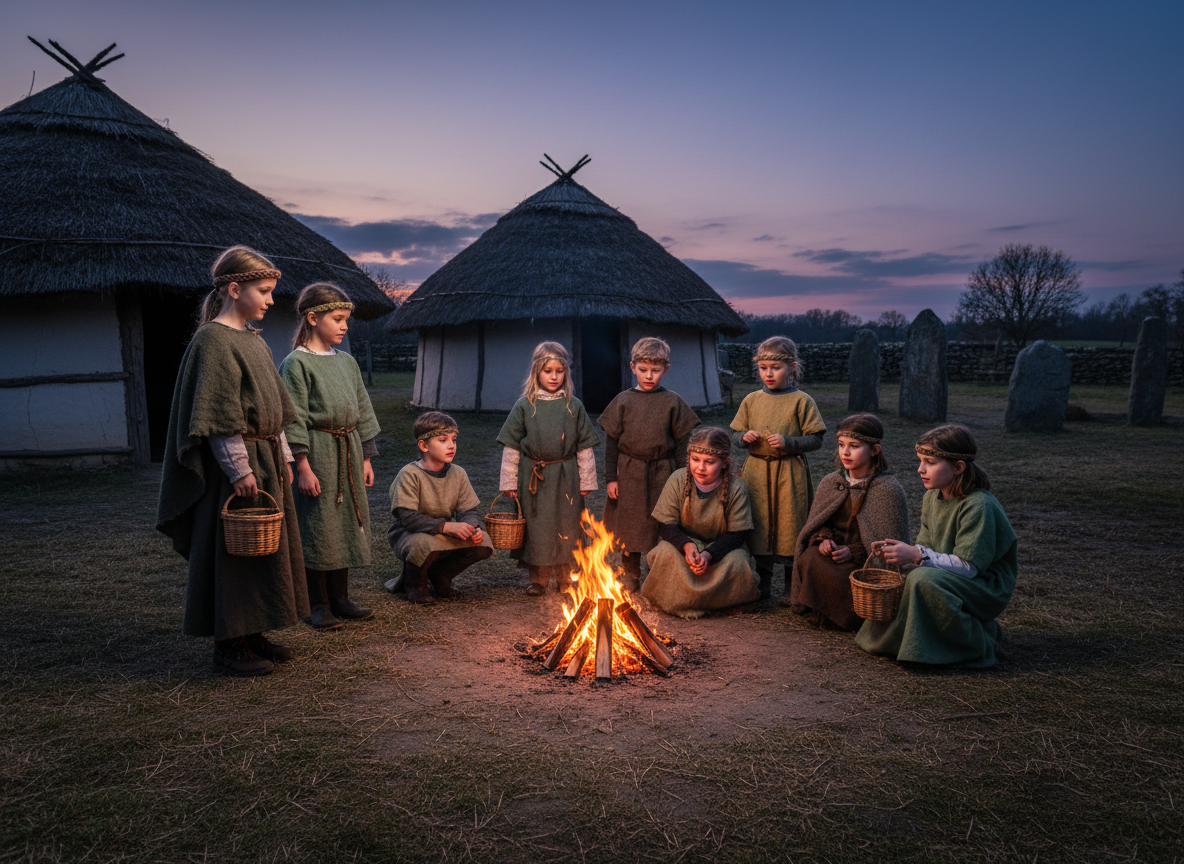
Halloween is a magical night where history, mystery, and a whole lot of fun come together!
Quick Facts
Halloween is celebrated on October 31st every year.
Its origins trace back over 2,000 years to the ancient Celtic festival of Samhain.
The name 'Halloween' comes from 'All Hallows' Eve'.
Carving pumpkins into jack-o'-lanterns began with turnips and potatoes in Ireland.
Trick-or-treating evolved from ancient traditions of people going door-to-door for food.
Black and orange are traditional Halloween colors, symbolizing death/darkness and harvest, respectively.
Costumes were originally worn to ward off spirits or blend in with them.
Bobbing for apples is an old fortune-telling game.
Where Did Halloween Begin? The Ancient Festival of Samhain
To truly understand Halloween, we have to travel way back in time, over 2,000 years ago, to the lands now known as Ireland, the United Kingdom, and northern France. This is where a group of people called the Celts lived. The Celts celebrated their new year on November 1st. This day marked the end of summer and the harvest, and the beginning of the dark, cold winter – a time of year that was often associated with death.
The night before their New Year, October 31st, they celebrated a festival called Samhain (pronounced 'sow-in'). The Celts believed that on Samhain, the boundary between the worlds of the living and the dead became blurred. They thought that ghosts of the dead returned to Earth. To scare away evil spirits, or sometimes to blend in with them, people would light bonfires and wear costumes. They would also leave food and drinks outside their doors to appease the spirits. This ancient festival is the very root of many Halloween traditions we still enjoy today!
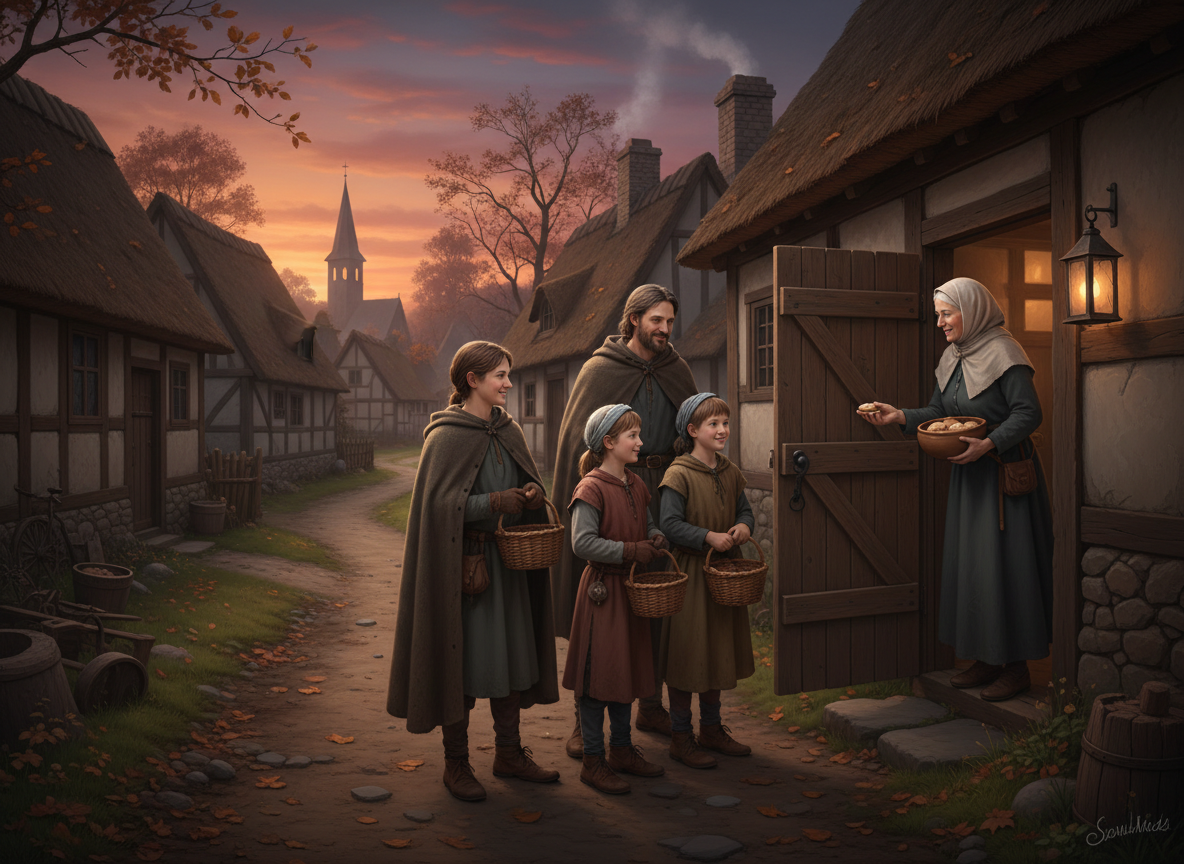
From All Hallows' Eve to Halloween: A Name with History
As Christianity spread across Europe, it influenced many ancient festivals. In the 7th century, Pope Boniface IV established All Saints' Day (also known as All Hallows' Day) on May 13th to honor saints and martyrs. Later, in the 9th century, Pope Gregory III moved All Saints' Day to November 1st. This timing meant that All Saints' Day was celebrated around the same time as the Celtic Samhain festival.
The evening before All Saints' Day, October 31st, became known as All Hallows' Eve. Over time, 'All Hallows' Eve' gradually shortened and changed into the word we use today: Halloween! So, when you say 'Halloween,' you're actually saying a shortened version of 'the evening before All Saints' Day' – pretty neat, right?
The Story Behind Costumes and Trick-or-Treating
Have you ever wondered why we dress up in funny, spooky, or heroic costumes on Halloween? This tradition also has its roots in Samhain. The Celts believed that spirits walked the Earth on Samhain night. To avoid being recognized by these spirits, or sometimes to trick them into thinking they were spirits themselves, people would wear masks and costumes. This helped them hide from any unfriendly ghosts!
Trick-or-treating also has a long history. In medieval Europe, people (often the poor) would go door-to-door on All Hallows' Eve, asking for 'soul cakes' in exchange for prayers for the dead. This practice was called 'souling.' Later, in Scotland and Ireland, young people would go 'guising,' dressing up and going house-to-house for food or treats. When Irish and Scottish immigrants came to America, they brought these traditions with them, and over time, souling and guising evolved into the trick-or-treating we know and love today!
The Mystery of Jack-o'-Lanterns and Other Spooky Symbols
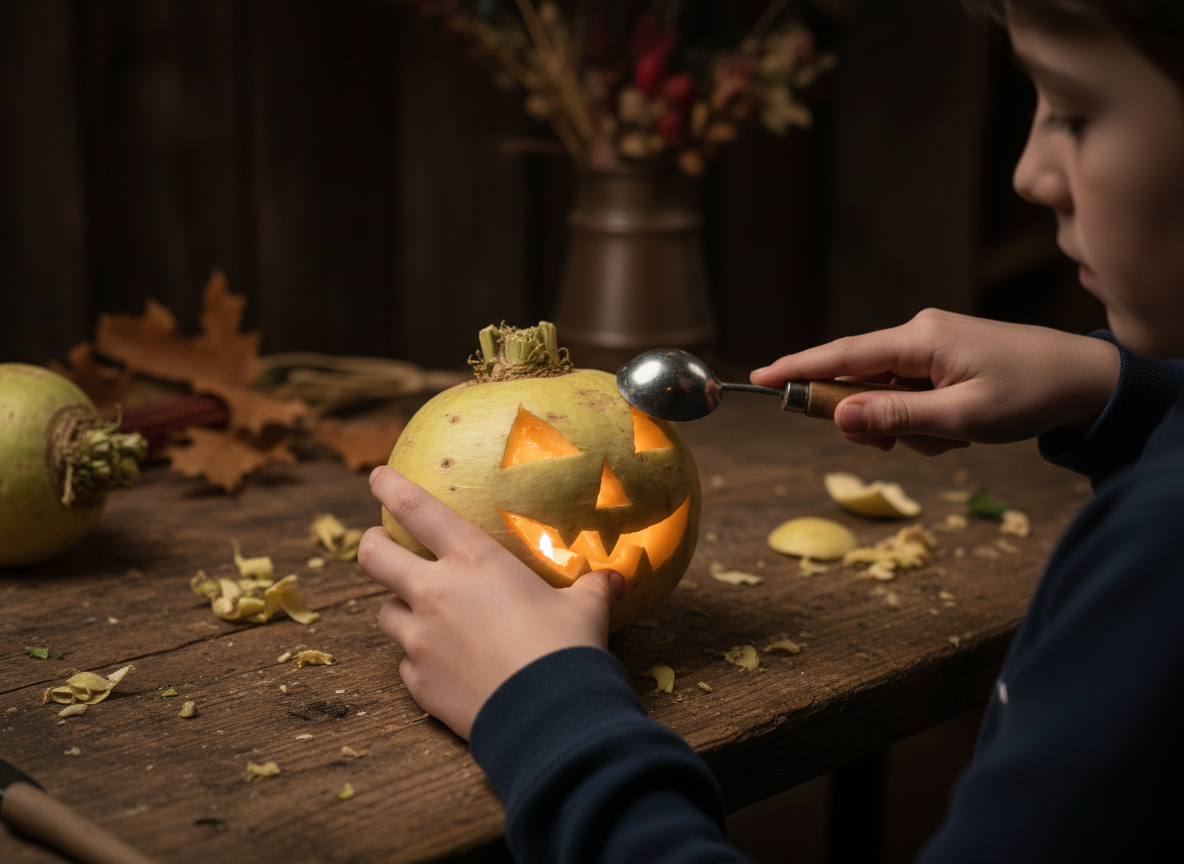
The glowing, carved pumpkins we see everywhere at Halloween are called jack-o'-lanterns. But guess what? They weren't always made from pumpkins! The tradition of carving faces into vegetables comes from an old Irish folktale about a man named Stingy Jack. Legend says Jack tricked the Devil, and when he died, he was condemned to wander the Earth forever, carrying a burning coal inside a carved turnip to light his way. People in Ireland and Scotland started carving scary faces into turnips, potatoes, or beets to ward off evil spirits and Stingy Jack himself.
When immigrants from these countries came to America, they discovered pumpkins, which were much larger and easier to carve than turnips. And so, the pumpkin became the star of the jack-o'-lantern show! Other popular Halloween symbols like black cats, bats, and spiders are often associated with darkness, mystery, and ancient beliefs about magic and the supernatural. While they might seem a little spooky, they are mostly just fun decorations today!
Halloween Around the World: Different Ways to Celebrate
While Halloween is super popular in countries like the United States, Canada, Ireland, and the United Kingdom, other cultures have their own special ways of honoring ancestors and celebrating the changing seasons around this time of year.
Día de los Muertos (Day of the Dead) in Mexico: This vibrant and beautiful holiday, celebrated on November 1st and 2nd, is a time for families to remember and honor their deceased loved ones. People build colorful altars called ofrendas, decorated with marigolds, candles, and the favorite foods of the departed. It's a joyful celebration of life and memory, not a scary one!
Chuseok in Korea: This is a major harvest festival celebrated in autumn, often in September or October. Families gather to give thanks for the harvest and honor their ancestors. They visit ancestral graves and share special foods like songpyeon (rice cakes).
Hungry Ghost Festival in China: Celebrated in late summer or early autumn, this festival involves offering food and burning incense and joss paper to appease hungry ghosts who are believed to visit the living world.
These examples show that while the traditions might look different, many cultures share a common thread of remembering ancestors and celebrating the cycle of life and harvest around the same time of year. It's a wonderful reminder that we're all connected through history and tradition!
We hope you've enjoyed learning these amazing facts about Halloween! It's incredible how much history and culture are packed into one fun night. Now that you're a Halloween history expert, why not celebrate by bringing some of these spooky (or not-so-spooky) symbols to life with color? You can find lots of free Halloween coloring pages to print or color online right here on KidsColouringPage.com!
Educational Standards & Fact-Checking
Reviewed by KidsColouring Editorial Team
Educational References & Scientific Sources
Our curriculum and factual articles are synthesized from trusted academic encyclopedias, wildlife conservation bodies, and public science institutions:
- •Smithsonian Institution Educational Resources & National Zoo Archives — Smithsonian Institution
- •National Geographic Kids Science & Animal Encyclopedias — National Geographic Society
- •Encyclopaedia Britannica Academic & Elementary Learning Reference — Encyclopaedia Britannica


