
Dinosaur Facts for Kids: Roar-some Discoveries! at a Glance
Topic Focus
Dinosaur Facts for Kids: Roar-some Discoveries!
Learning Level
Ages 4–10 (Preschool to Grade 4)
Subject Area
Dinosaur Facts
Format
Verified Fun Facts & Guided Exploration
Dinosaur Facts for Kids: Roar-some Discoveries!
Imagine a time long, long ago, even before your great-great-great-grandparents were born. A time when giant creatures roamed the Earth, some with long necks, some with sharp teeth, and others covered in plates! These amazing animals were dinosaurs, and their story is one of the most exciting tales in Earth's history. For millions of years, they were the kings and queens of our planet.
But how do we know about creatures that lived so long ago? Scientists called paleontologists are like super-sleuths, digging up clues left behind in rocks. These clues, called fossils, are like nature's time capsules, preserving bones, footprints, and even sometimes skin impressions of these ancient giants. Join us on an adventure to uncover some roar-some dinosaur facts!
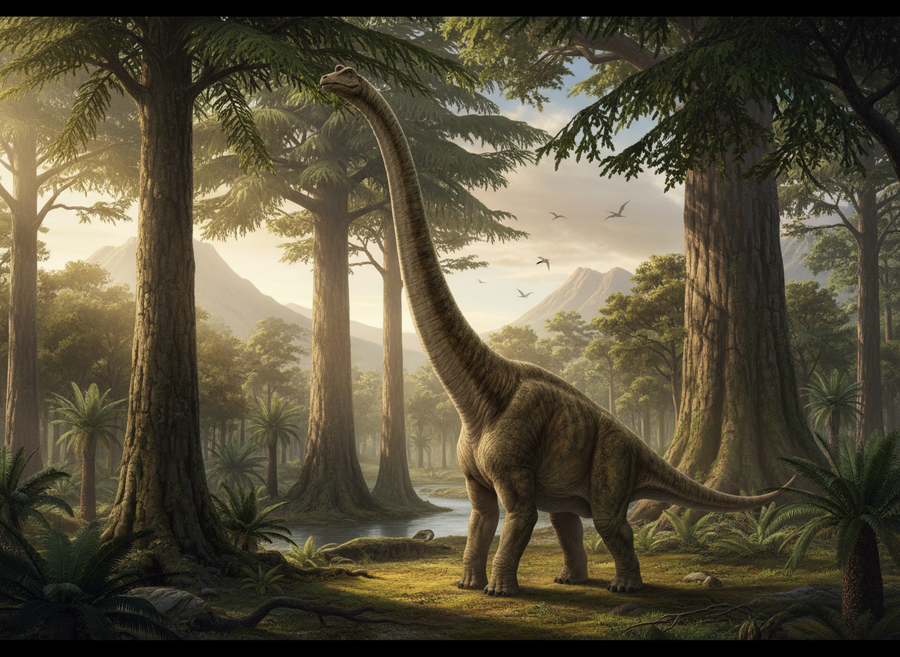
Dinosaurs were the original giants of Earth, leaving behind clues for us to discover millions of years later!
Quick Facts
Dinosaurs lived on Earth for over 165 million years.
The word 'dinosaur' means 'terrible lizard' in Greek.
Not all dinosaurs were huge; some were as small as chickens!
The <em>Stegosaurus</em> had a brain about the size of a walnut.
Some dinosaurs ate plants (herbivores), others ate meat (carnivores), and some ate both (omnivores).
Birds alive today are actually modern descendants of dinosaurs.
The longest dinosaur was likely the <em>Supersaurus</em>, estimated to be over 110 feet long.
What Exactly is a Dinosaur?
When we talk about dinosaurs, we're not just talking about any old ancient reptile. Dinosaurs were a special group of reptiles that lived during the Mesozoic Era, which is divided into three periods: the Triassic, Jurassic, and Cretaceous. What made them unique? Well, for one, their legs were positioned directly under their bodies, like mammals, rather than splayed out to the sides like most modern reptiles. This allowed them to stand tall and move much more efficiently.
Think about a crocodile or a lizard; their legs stick out. Now imagine a chicken or an elephant; their legs are underneath. Dinosaurs were more like the chicken or elephant in how they stood and walked! This special leg structure is one of the key things paleontologists look for when deciding if an ancient animal was a true dinosaur.
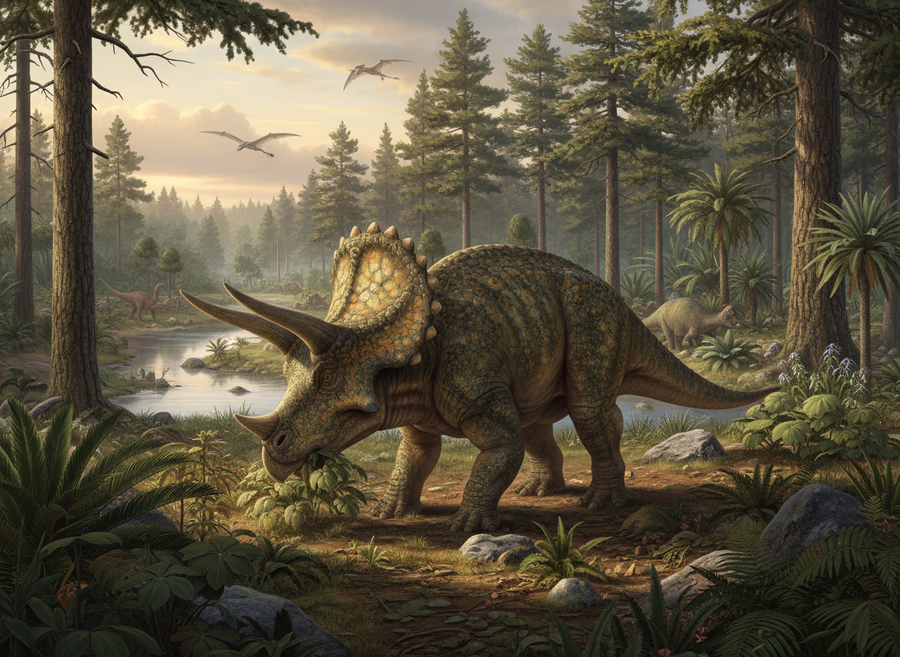
Giants of the Land: Meet the Herbivores
Many of the most famous dinosaurs were plant-eaters, also known as herbivores. These gentle giants spent their days munching on leaves, ferns, and other ancient plants. Imagine a creature so tall it could nibble leaves from the tops of trees! That's what long-necked dinosaurs like the Brachiosaurus and Diplodocus did. They were some of the largest animals to ever walk the Earth, with necks that could stretch over 30 feet long!
Other herbivores had different ways of protecting themselves. The Triceratops, for example, had three powerful horns on its face and a large frill around its neck, perfect for defending against predators. The Stegosaurus had plates along its back and a spiky tail called a 'thagomizer' (a funny word for a serious weapon!) to ward off attackers. These plant-eaters played a vital role in the dinosaur ecosystem, much like cows or elephants do today.
Fierce Hunters: The Carnivores
Of course, where there are plant-eaters, there are also meat-eaters! These powerful predators, known as carnivores, hunted other dinosaurs for food. The most famous carnivore is undoubtedly the Tyrannosaurus Rex, or T-Rex for short. With its massive jaws, banana-sized teeth, and incredible strength, T-Rex was one of the most fearsome hunters of its time. But it wasn't the only one!
Other carnivores included the speedy Velociraptor, known for its sharp claws and intelligence, and the sail-backed Spinosaurus, which might have spent a lot of its time hunting fish in ancient rivers. These predators were built for hunting, with keen eyesight, strong muscles, and often sharp claws and teeth. They helped keep the dinosaur world in balance, just like wolves or lions do in modern ecosystems.
How Do We Know About Dinosaurs? The Amazing World of Fossils
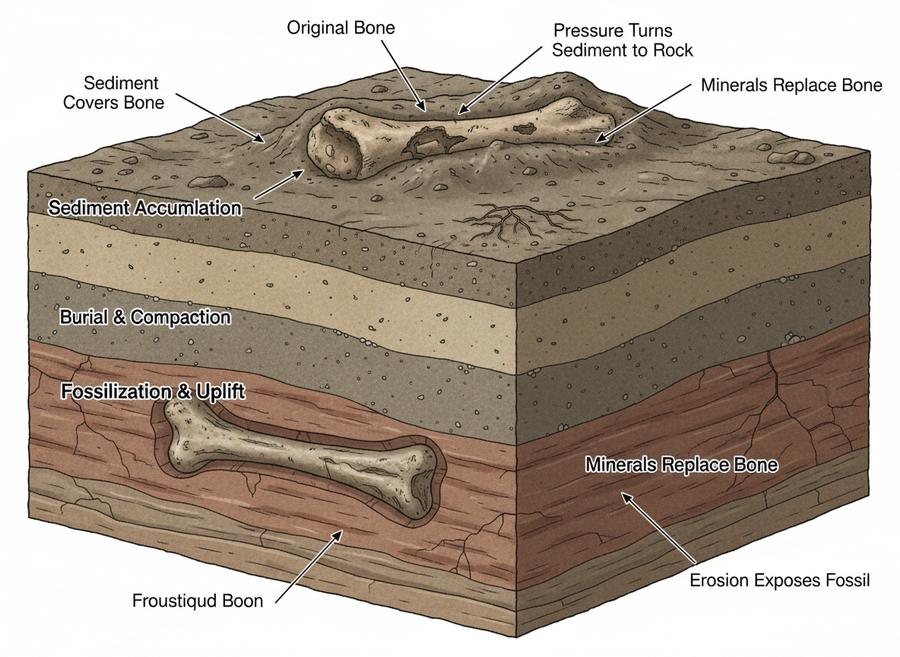
Since no human ever saw a living dinosaur, how do we know so much about them? The answer lies in fossils! When a dinosaur died, sometimes its bones would be covered by mud or sand before they could rot away. Over millions of years, minerals in the water would seep into the bones, slowly turning them into rock. These preserved bones are what we call fossils.
Paleontologists carefully dig up these fossils, piece them together like a giant puzzle, and learn incredible things. They can tell how big a dinosaur was, what it ate, how it walked, and even if it had feathers! Footprints, eggs, and even fossilized poop (called coprolites!) can also tell us a lot about dinosaur life. Each fossil discovery is like finding a new page in Earth's ancient storybook.
The Mystery of Their Disappearance
After ruling the Earth for over 165 million years, dinosaurs suddenly disappeared about 66 million years ago. This event is known as the Cretaceous-Paleogene (K-Pg) extinction event, and it wiped out not just the dinosaurs (except for birds), but also many other forms of life on Earth. So, what happened?
The most widely accepted scientific theory is that a giant asteroid, about 6 miles wide, crashed into Earth near what is now the Yucatán Peninsula in Mexico. This impact would have caused massive tsunamis, wildfires, and sent huge amounts of dust and debris into the atmosphere, blocking out the sun. Without sunlight, plants couldn't grow, leading to a collapse of the food chain. Many scientists believe this catastrophic event was the main reason dinosaurs, and so many other creatures, became extinct. It was a truly world-changing day!
Educational Standards & Fact-Checking
Reviewed by KidsColouring Editorial Team
Educational References & Scientific Sources
Our curriculum and factual articles are synthesized from trusted academic encyclopedias, wildlife conservation bodies, and public science institutions:
- •Smithsonian Institution Educational Resources & National Zoo Archives — Smithsonian Institution
- •National Geographic Kids Science & Animal Encyclopedias — National Geographic Society
- •Encyclopaedia Britannica Academic & Elementary Learning Reference — Encyclopaedia Britannica


