
Amazing Ocean Facts for Kids: Dive into the Deep Blue! at a Glance
Topic Focus
Amazing Ocean Facts for Kids: Dive into the Deep Blue!
Learning Level
Ages 4–10 (Preschool to Grade 4)
Subject Area
Ocean Facts
Format
Verified Fun Facts & Guided Exploration
Amazing Ocean Facts for Kids: Dive into the Deep Blue!
Imagine a world so big, so mysterious, and so full of life that we've only explored a tiny part of it! This incredible place is our ocean, and it covers more than 70% of our planet. From the tiniest plankton to the biggest whales, the ocean is home to an astonishing variety of plants and animals. It's a place of incredible beauty, powerful forces, and endless discovery.
The ocean plays a super important role in keeping our Earth healthy. It helps regulate our weather, produces much of the air we breathe, and provides food for millions of people. But what makes the ocean so special? How deep does it go? What kind of amazing creatures live there? Get ready to embark on an exciting underwater adventure as we uncover some truly amazing ocean facts!
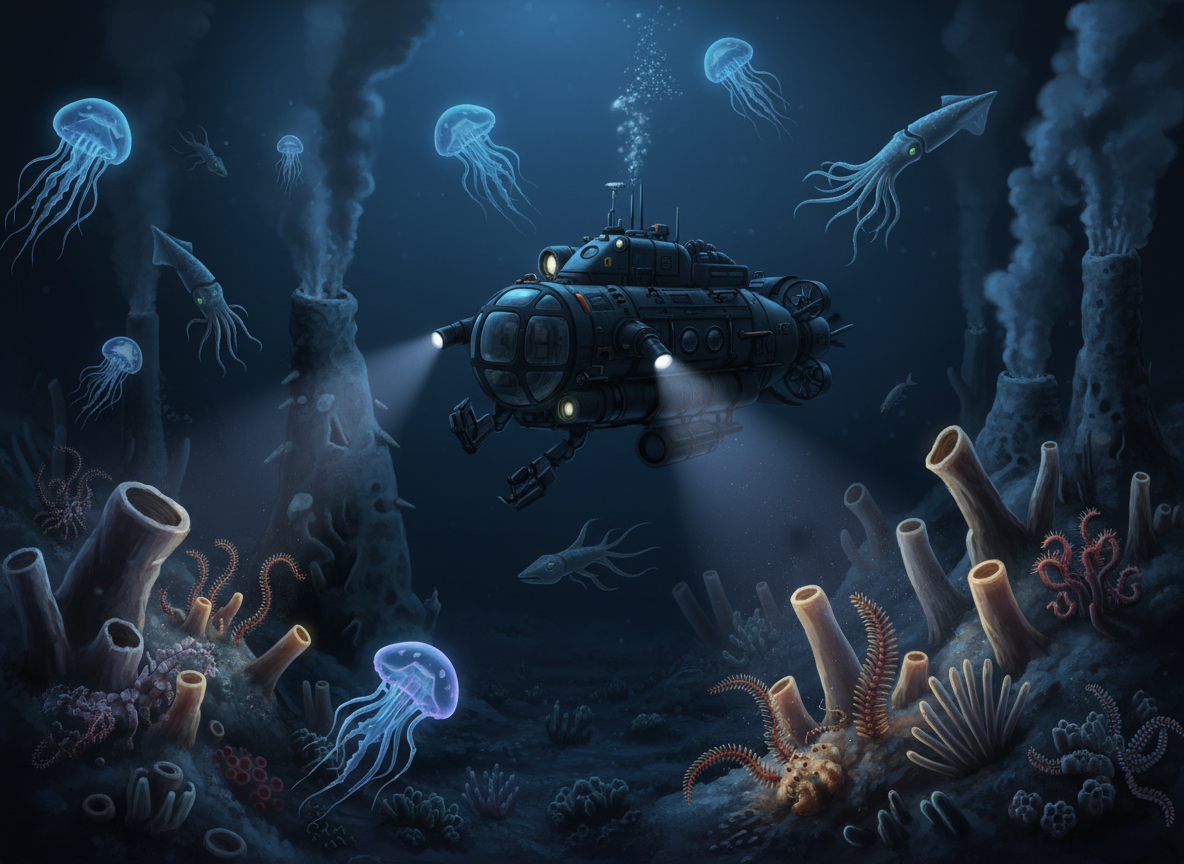
The ocean is a giant, watery wonderland, full of secrets waiting to be discovered!
Quick Facts
Oceans cover over 70% of Earth's surface.
The deepest part of the ocean is the Mariana Trench, deeper than Mount Everest is tall.
More than 90% of Earth's living space is found in the ocean.
The ocean produces over half of the world's oxygen.
Coral reefs are sometimes called the 'rainforests of the sea' because they are so full of life.
There are five main oceans: the Pacific, Atlantic, Indian, Southern (Antarctic), and Arctic.
Ocean currents act like giant rivers, moving warm and cold water around the globe.
How Big and Deep is Our Ocean?
When we talk about the ocean, we're actually talking about one huge, connected body of saltwater that stretches all around the Earth! While we often divide it into five main oceans - the Pacific, Atlantic, Indian, Southern (Antarctic), and Arctic - they are all part of the same global ocean. The Pacific Ocean is the largest and deepest of them all, covering about one-third of the planet's surface.
But how deep does it go? Imagine stacking more than 20 Empire State Buildings on top of each other – that's how deep the Mariana Trench in the Pacific Ocean is! It’s the deepest known part of the ocean, plunging down nearly 11,000 meters (about 7 miles). Exploring these extreme depths is incredibly challenging, and scientists use special submersibles to withstand the immense pressure. Each layer of the ocean, from the sunlit surface to the pitch-black deep, has its own unique conditions and amazing creatures adapted to survive there.
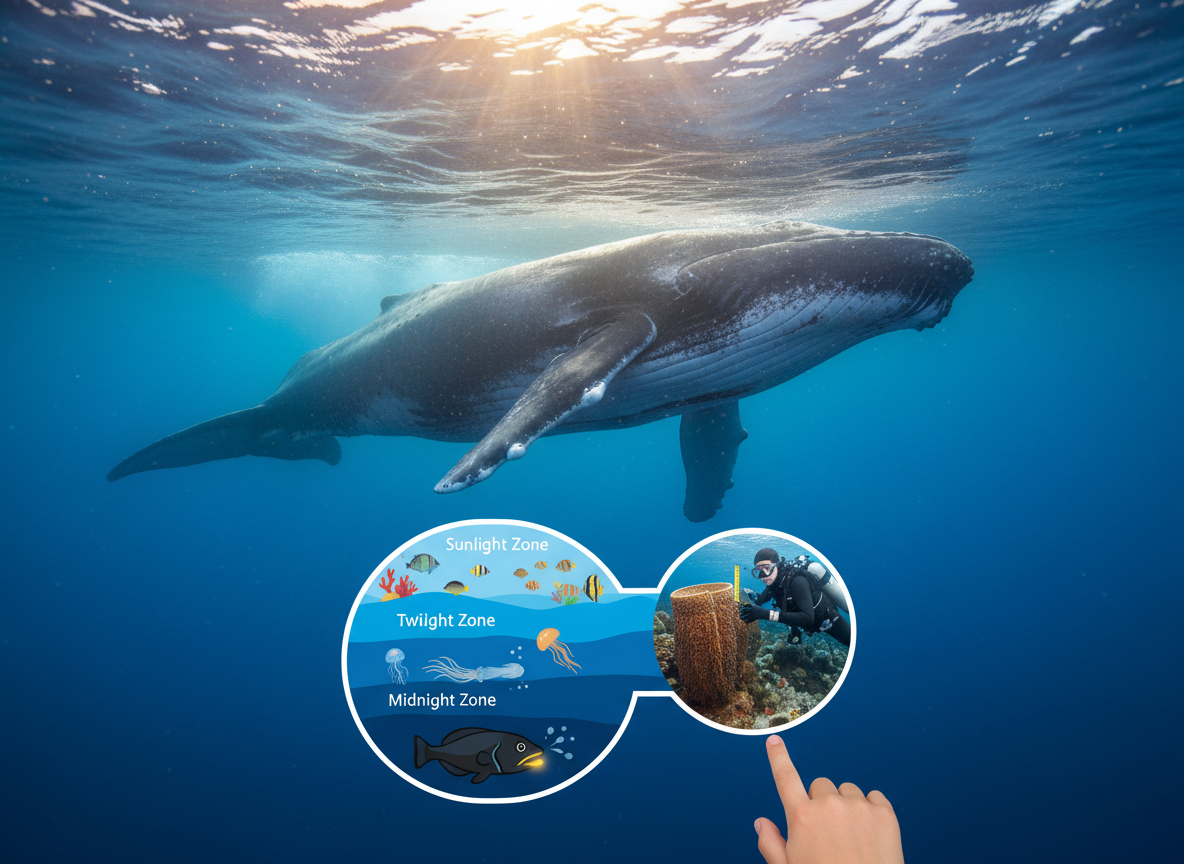
The Ocean: Earth's Breathing Lung
Did you know that the ocean produces more than half of the oxygen we breathe? That's right! While trees and plants on land are important, tiny ocean plants called phytoplankton are super oxygen-makers. These microscopic organisms float near the surface of the ocean and use sunlight to create food and release oxygen, just like plants on land. So, every time you take a breath, thank the ocean!
The ocean also plays a huge role in controlling Earth's climate. It absorbs a lot of heat from the sun and moves it around the globe through giant currents. These currents are like conveyor belts, carrying warm water from the equator towards the poles and cold water back towards the equator. This helps to keep temperatures on Earth from getting too hot or too cold, making our planet a comfortable place to live.
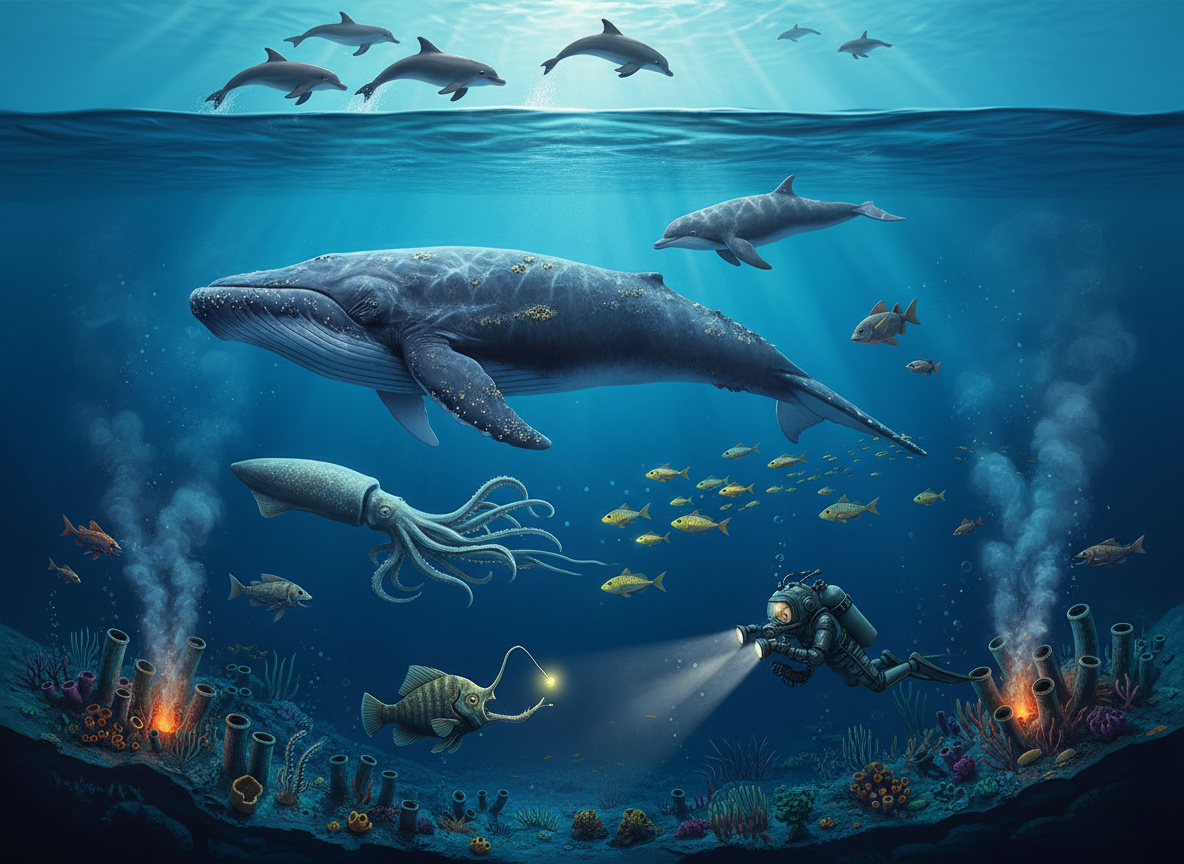
Amazing Ocean Animals: A World of Diversity
The ocean is home to an incredible variety of life, from the smallest bacteria to the largest animal on Earth, the blue whale. Each creature has found its own special way to survive and thrive in this underwater world. Here are just a few examples of the amazing animals you might find:
Fish: There are tens of thousands of different types of fish, from colorful clownfish darting through coral to speedy tuna swimming in open waters.
Mammals: Whales, dolphins, seals, and manatees are all ocean mammals. They breathe air, just like us, and are often very intelligent and social.
Invertebrates: This group includes animals without backbones, like jellyfish, octopuses, crabs, and sea stars. They come in all shapes, sizes, and colors!
Sharks: These powerful predators are often misunderstood. There are many different kinds of sharks, and most are not dangerous to humans. They play a vital role in keeping the ocean ecosystem healthy.
Scientists are still discovering new species in the ocean all the time, especially in the deep, unexplored areas. Imagine what other amazing creatures are waiting to be found!
Coral Reefs: Underwater Cities
Coral reefs are some of the most beautiful and important ecosystems in the ocean. Often called the 'rainforests of the sea,' they are built by tiny animals called polyps. These polyps create hard, stony skeletons that grow over many years, forming massive structures that provide homes and food for countless other ocean creatures. From small fish and crabs to larger sharks and sea turtles, many animals depend on coral reefs for survival.
Reefs also protect coastlines from strong waves and storms. However, coral reefs are very delicate and face many threats, including pollution and climate change. It's super important to protect these amazing underwater cities so that all the creatures that call them home can continue to thrive.
The Ocean's Importance to Us
Beyond providing oxygen and regulating climate, the ocean is incredibly important to humans in many other ways. It provides food for millions of people around the world, from fish and shellfish to seaweed. It's also a source of important medicines and other resources. Plus, the ocean offers endless opportunities for fun and adventure, like swimming, surfing, boating, and exploring its wonders.
However, the ocean faces many challenges, including plastic pollution, overfishing, and habitat destruction. It's up to all of us to help protect this amazing natural wonder. Simple actions like reducing plastic use, choosing sustainable seafood, and learning more about marine life can make a big difference. By taking care of our ocean, we ensure a healthy planet for ourselves and for future generations.
Educational Standards & Fact-Checking
Reviewed by KidsColouring Editorial Team
Educational References & Scientific Sources
Our curriculum and factual articles are synthesized from trusted academic encyclopedias, wildlife conservation bodies, and public science institutions:
- •Smithsonian Institution Educational Resources & National Zoo Archives — Smithsonian Institution
- •National Geographic Kids Science & Animal Encyclopedias — National Geographic Society
- •Encyclopaedia Britannica Academic & Elementary Learning Reference — Encyclopaedia Britannica


