
How Are Waves Formed? Ocean Science Facts for Kids at a Glance
Topic Focus
How Are Waves Formed? Ocean Science Facts for Kids
Learning Level
Ages 4–10 (Preschool to Grade 4)
Subject Area
Ocean Facts
Format
Verified Fun Facts & Guided Exploration
How Are Waves Formed? Ocean Science Facts for Kids
Have you ever stood at the beach, watching the mighty ocean waves crash onto the shore? It's a mesmerizing sight, but have you ever stopped to wonder, "How do these amazing waves get there?" It might seem like magic, but waves are actually a fantastic example of science in action! They're created by powerful forces, mostly wind, working tirelessly across the vast stretches of the ocean.
Understanding how waves form is like uncovering a secret language of the sea. It helps us appreciate the incredible energy that moves through our planet's waters every single day. From tiny ripples to giant tsunamis, each wave has a story of how it began. Let's embark on an exciting journey to explore the fascinating science behind ocean waves, discovering the different ways they are born and what makes them behave the way they do.
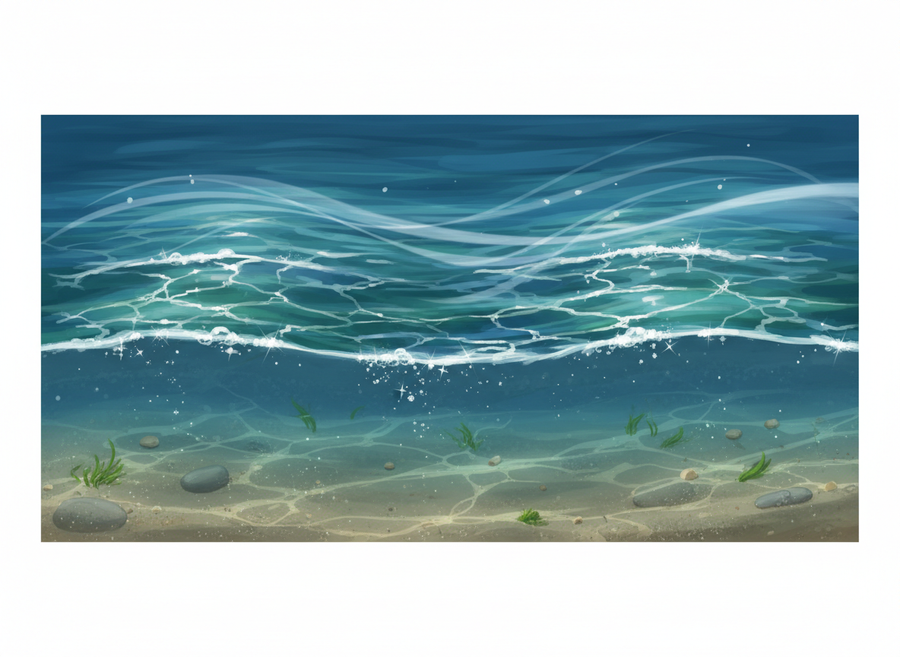
Waves are the ocean's way of dancing, powered by wind and water!
Quick Facts
Most ocean waves are made by wind blowing over the water's surface.
Waves don't carry water forward; they carry energy forward.
The size of a wave depends on wind speed, how long it blows, and the distance it travels.
Tsunamis are giant waves caused by underwater earthquakes or volcanic eruptions.
Tides, which are different from waves, are caused by the moon's gravity.
A wave's crest is its highest point, and its trough is its lowest point.
The Power of Wind: How Most Waves Begin
Imagine blowing gently across a bowl of water. What happens? Tiny ripples appear, right? This is exactly how most ocean waves start, just on a much, much bigger scale! When wind blows over the surface of the ocean, it transfers some of its energy to the water. This energy pushes the water, creating small disturbances or ripples. The longer and stronger the wind blows, and the further it travels across the water (this distance is called the 'fetch'), the more energy it transfers, and the bigger the waves become.
Think of it like pushing a swing. A small push makes it swing a little, but a strong, continuous push makes it go higher and higher. Similarly, a gentle breeze creates small, choppy waves, while a strong storm blowing for hours over thousands of miles can create enormous, powerful waves that travel across entire oceans. These wind-generated waves are the most common type you'll see at the beach and are what surfers love to catch!
What's Moving: Water or Energy?
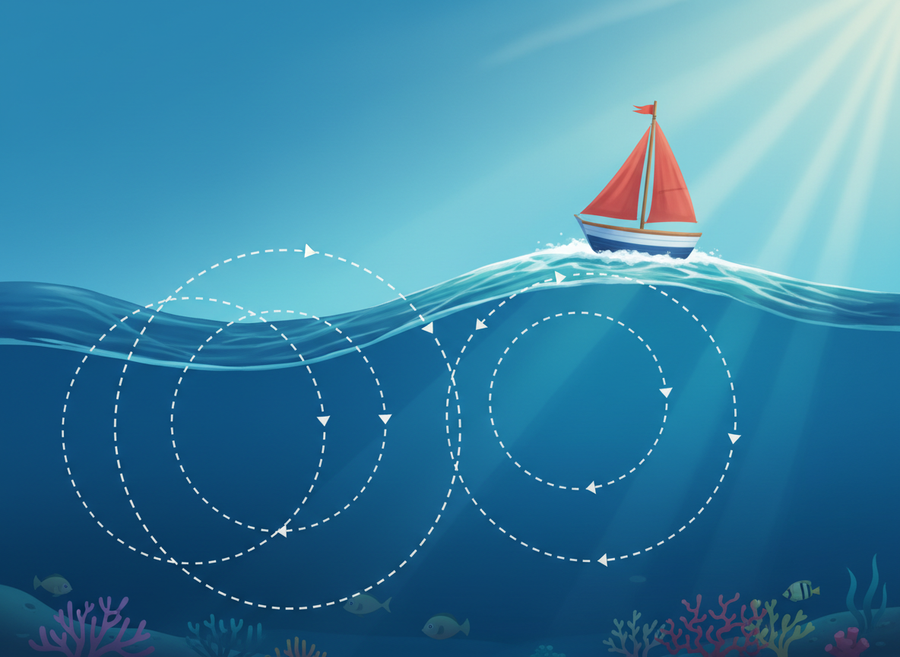
This is one of the most interesting facts about waves! When you see a wave moving towards the shore, it looks like a wall of water is traveling. But here's the cool secret: the water itself doesn't actually travel very far. Instead, it's the energy that is moving through the water. Imagine a stadium wave where people stand up and sit down in sequence. The 'wave' moves around the stadium, but the people themselves just move up and down in their seats.
Ocean waves work similarly. As the energy passes, the water particles mostly move in circles, going up, forward, down, and back to their original position. It's like a roller coaster for water molecules! This is why a boat bobbing in the open ocean will go up and down and a little bit forward and backward, but it won't be carried all the way to the shore by a single wave.
From Deep Water to the Shore: How Waves Change
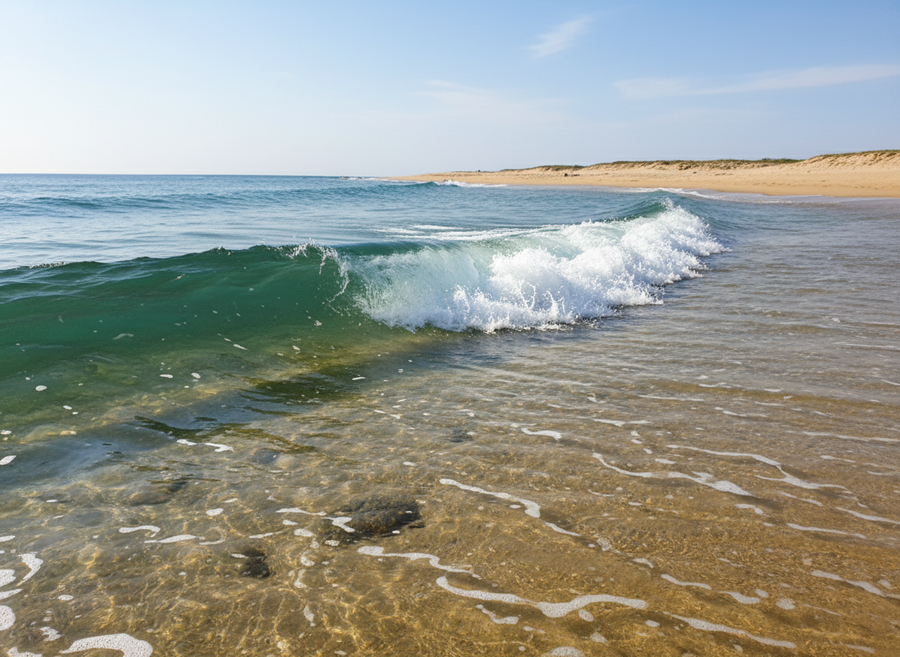
Waves are not the same everywhere. They change quite a bit as they travel from the deep ocean to the shallower water near the coast. In the deep ocean, waves are often long and smooth. But as a wave approaches the shore, the bottom of the wave starts to drag on the seabed, which is much shallower. This friction slows down the bottom part of the wave.
Wave Height Increases: As the bottom slows, the top of the wave continues at its original speed, causing the wave to get taller and steeper.
Wavelength Decreases: The distance between one wave crest and the next (called the wavelength) gets shorter.
Wave Breaks: Eventually, the top of the wave becomes too steep and unstable. It tumbles forward, creating the spectacular breaking waves we see at the beach! This is the moment when the wave's energy is finally released onto the shore.
Other Ways Waves Are Formed: Beyond the Wind
While wind is the main wave-maker, it's not the only one! There are other powerful forces that can create waves, some of them truly enormous and potentially dangerous:
Earthquakes and Volcanoes: Underwater earthquakes, volcanic eruptions, or even large landslides can suddenly displace a huge amount of water. This creates a very powerful type of wave called a tsunami. Unlike wind waves, tsunamis involve the movement of the entire water column, from the surface to the seabed. They can travel across entire oceans at incredible speeds, and when they reach shallow coastal areas, they can grow into towering walls of water.
Gravity (Tides): While not strictly a 'wave' in the same way as wind waves, tides are also movements of ocean water caused by gravitational forces. The moon's gravity pulls on the Earth's oceans, creating bulges of water on opposite sides of the planet, which we experience as high and low tides.
Boats and Objects: Even something as simple as a boat moving through water creates a wake, which is a type of wave. Dropping a stone into a pond creates ripples. These are smaller examples of how energy disturbing water can create waves.
So, the next time you see a wave, remember the amazing journey it took and the powerful forces that brought it to life. Each wave is a reminder of the dynamic and incredible world of our oceans!
Ready to explore more ocean wonders? You can find lots of fun ocean coloring pages to print or color online right here!
Educational Standards & Fact-Checking
Reviewed by KidsColouring Editorial Team
Educational References & Scientific Sources
Our curriculum and factual articles are synthesized from trusted academic encyclopedias, wildlife conservation bodies, and public science institutions:
- •Smithsonian Institution Educational Resources & National Zoo Archives — Smithsonian Institution
- •National Geographic Kids Science & Animal Encyclopedias — National Geographic Society
- •Encyclopaedia Britannica Academic & Elementary Learning Reference — Encyclopaedia Britannica


