
Earthquake Facts for Kids: What Makes the Earth Shake? at a Glance
Topic Focus
Earthquake Facts for Kids: What Makes the Earth Shake?
Learning Level
Ages 4–10 (Preschool to Grade 4)
Subject Area
Science Facts
Format
Verified Fun Facts & Guided Exploration
Earthquake Facts for Kids: Discover Why Our Earth Shakes!
Imagine you're playing outside, and suddenly, the ground beneath your feet starts to rumble and shake! What's going on? You might be experiencing an earthquake! Earthquakes are one of nature's most powerful and fascinating events, and they happen all the time, though most are so small we don't even feel them.
Here at KidsColouringPage.com, we love exploring the wonders of our planet. Today, we're going on an exciting journey deep inside the Earth to understand what makes it tremble. We'll learn about giant plates, powerful energy, and how scientists study these amazing natural occurrences. Get ready to shake things up with some incredible earthquake facts!
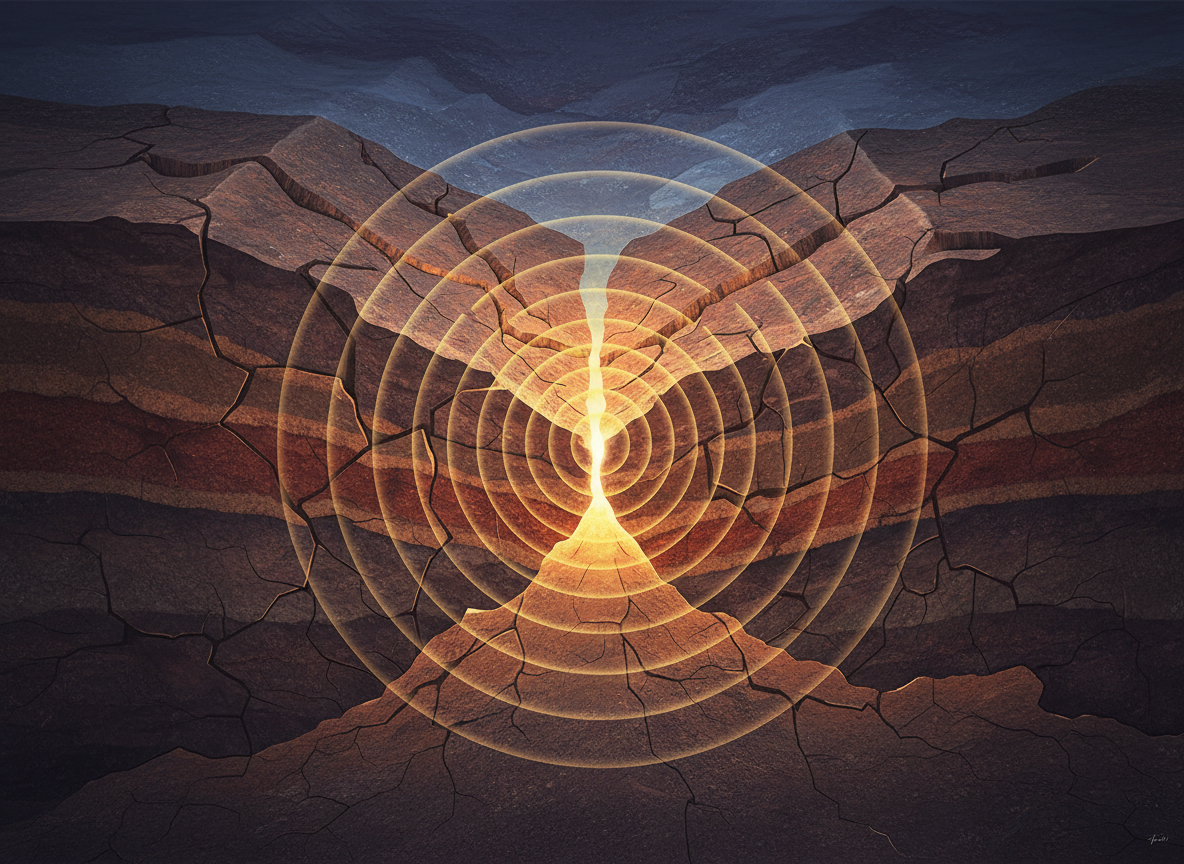
The Earth is always moving, even if we can't always feel it!
Quick Facts
Earthquakes are sudden shaking or trembling of the Earth's surface.
Most earthquakes are caused by the movement of giant pieces of the Earth's crust called tectonic plates.
The biggest earthquakes can change landscapes and even create tsunamis.
Scientists who study earthquakes are called seismologists.
The shaking can last from a few seconds to several minutes.
There are millions of earthquakes every year, but most are very small.
The Pacific Ring of Fire is where most of the world's earthquakes happen.
What Exactly is an Earthquake?
An earthquake is essentially the Earth's way of releasing built-up energy. Think of it like bending a stick. If you bend it slowly, nothing happens. But if you keep bending it, the stick will eventually snap and release all that stored energy in a sudden burst. The Earth's crust, which is the outermost layer we live on, is a bit like that stick, but much, much bigger!
When this energy is released, it travels through the Earth in waves, making the ground shake. This shaking can be gentle, like a small tremor, or incredibly powerful, causing buildings to sway and objects to fall. The point where the earthquake starts deep underground is called the hypocenter, and the spot directly above it on the Earth's surface is the epicenter. Often, you'll hear news reports talk about where the epicenter was located.
The Earth's Giant Puzzle Pieces: Tectonic Plates
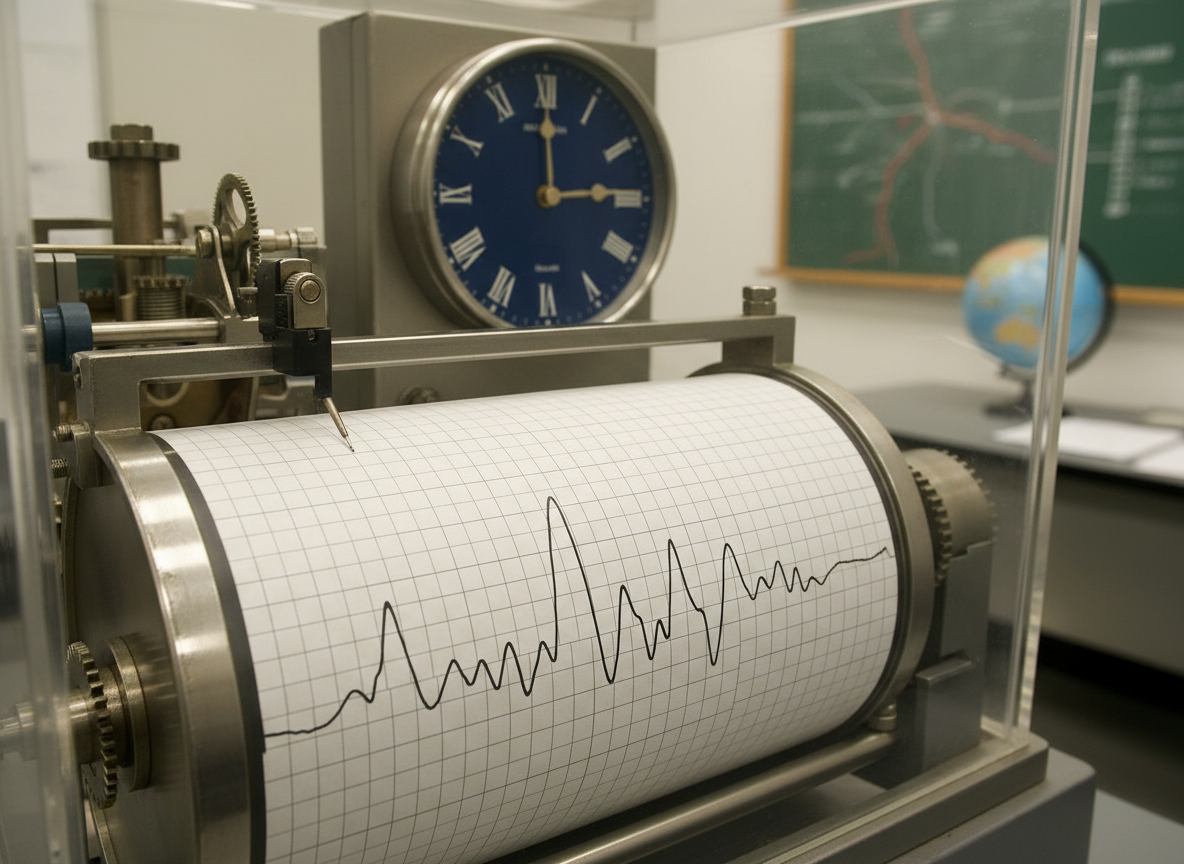
Our planet's outer shell isn't one solid piece; it's broken into many enormous sections called tectonic plates. Imagine a giant puzzle, but instead of fitting together perfectly and staying still, these puzzle pieces are always slowly, slowly moving. They float on a softer, molten layer deep inside the Earth called the mantle, kind of like rafts on a very thick, gooey ocean.
Moving and Grinding: These plates can move in different ways: they can slide past each other, bump into each other, or pull apart.
Friction and Energy: When plates try to move past each other, they often get stuck because of friction. Pressure builds up over time, and when that pressure becomes too great, the plates suddenly slip, releasing a huge amount of energy as seismic waves – that's the earthquake!
Fault Lines: The places where these plates meet and move are called fault lines. Most earthquakes happen along these fault lines.
There are about 15 major tectonic plates, and their constant, slow motion is what shapes our continents, creates mountains, and, yes, causes earthquakes!
How Do Scientists Measure Earthquakes?
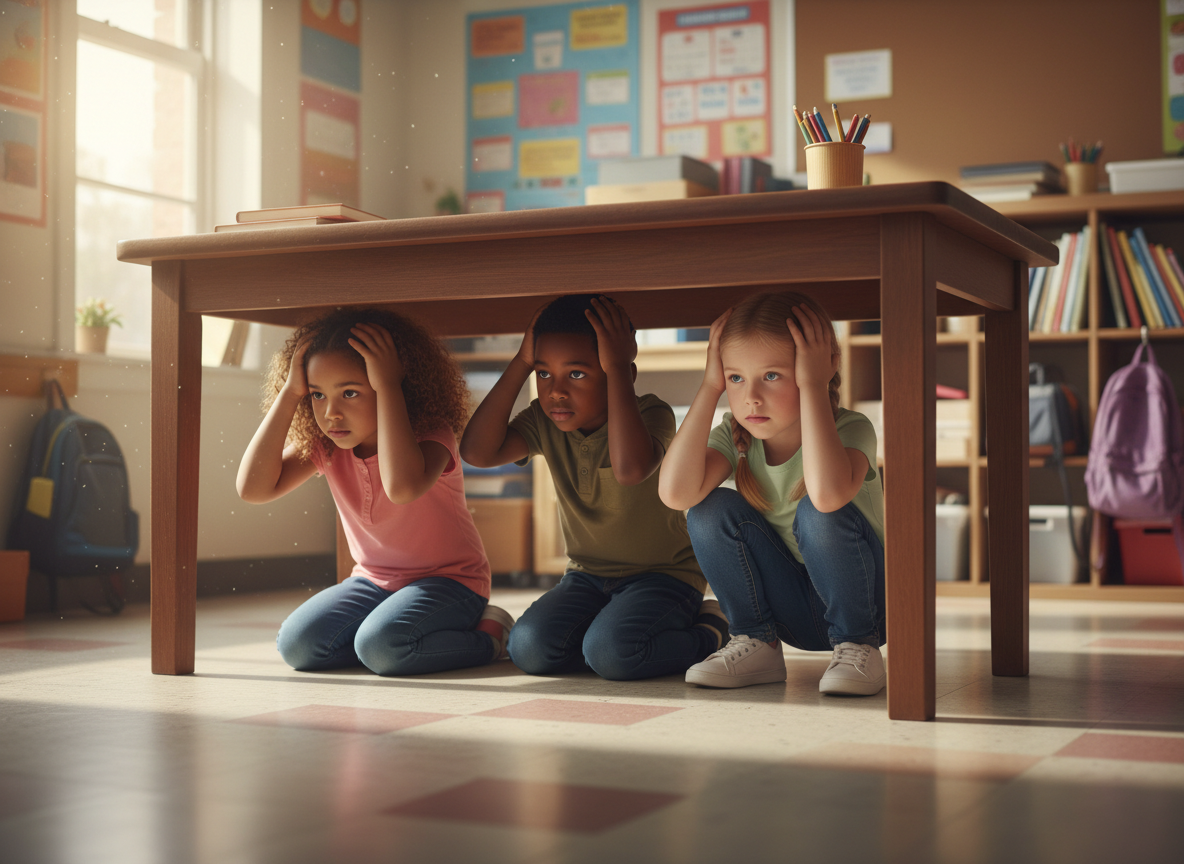
How do we know how strong an earthquake was or where it happened? Scientists use special tools! The main tool is called a seismograph (say: size-moh-graf). A seismograph is a super-sensitive instrument that can detect and record the ground's movement, even tiny tremors we can't feel.
When an earthquake happens, the seismograph draws squiggly lines on a piece of paper or records data digitally. These squiggles are called a seismogram. By looking at the seismogram, scientists, called seismologists, can figure out:
Magnitude: This is a number that tells us how much energy was released by the earthquake. The most common scale used today is the Moment Magnitude Scale. You might have heard of the Richter scale, which was an older, similar scale. A magnitude 2 earthquake is very small, while a magnitude 7 or 8 is very powerful.
Location: By comparing data from several seismographs in different places, scientists can pinpoint exactly where the earthquake started (the epicenter).
Depth: They can also figure out how deep underground the earthquake occurred.
Understanding these details helps us learn more about our Earth and how to stay safe.
Different Kinds of Shakes: Seismic Waves
When an earthquake happens, the energy travels through the Earth in different types of waves, just like ripples in a pond. These are called seismic waves. There are two main types:
Body Waves: These waves travel through the Earth's interior. There are two kinds of body waves:
P-waves (Primary waves): These are the fastest waves. They push and pull the ground in the same direction the wave is traveling, like a Slinky toy. They can travel through solids, liquids, and gases.
S-waves (Secondary waves): These are slower than P-waves and move the ground up and down or side to side, perpendicular to the direction the wave is traveling, like shaking a rope. S-waves can only travel through solids.
Surface Waves: These waves travel along the Earth's surface, much like ocean waves. They are usually slower than body waves but cause the most damage during an earthquake because they move the ground in complex ways, rolling and swaying.
Because P-waves travel faster, seismographs detect them first, giving scientists a little bit of warning before the more damaging S-waves and surface waves arrive.
Staying Safe During an Earthquake
Even though earthquakes can be scary, knowing what to do can help keep you safe. If you ever feel the ground shaking, remember these important steps:
Drop: Drop to the ground immediately.
Cover: Get under a sturdy piece of furniture, like a strong table or desk, and cover your head and neck with your arms. If there's no furniture nearby, get next to an interior wall and cover your head and neck.
Hold On: Hold on to your shelter until the shaking stops. If your shelter moves, try to move with it.
It's also a good idea to have an emergency kit ready at home with water, non-perishable food, a flashlight, and a first-aid kit. Learning about earthquakes helps us understand our world better and prepares us for natural events.
Want to explore more amazing parts of our planet? You can find lots of fun pictures to color and learn about Earth's features right here at KidsColouringPage.com. Why not try coloring some pictures of mountains or volcanoes next?
Educational Standards & Fact-Checking
Reviewed by KidsColouring Editorial Team
Educational References & Scientific Sources
Our curriculum and factual articles are synthesized from trusted academic encyclopedias, wildlife conservation bodies, and public science institutions:
- •Smithsonian Institution Educational Resources & National Zoo Archives — Smithsonian Institution
- •National Geographic Kids Science & Animal Encyclopedias — National Geographic Society
- •Encyclopaedia Britannica Academic & Elementary Learning Reference — Encyclopaedia Britannica


