
Why Do We Have Day and Night? Earth’s Rotation Explained for Kids at a Glance
Topic Focus
Why Do We Have Day and Night? Earth’s Rotation Explained for Kids
Learning Level
Ages 4–10 (Preschool to Grade 4)
Subject Area
Science Facts
Format
Verified Fun Facts & Guided Exploration
Why Do We Have Day and Night? Earth’s Amazing Rotation!
Have you ever woken up to a bright, sunny morning and then, just a few hours later, watched the sun disappear, making way for the moon and stars? It happens every single day, like clockwork! But have you ever stopped to wonder why this amazing change from day to night and back again occurs? It's not magic, it's science! The secret lies in our incredible home, Planet Earth, and a special movement it does all the time.
Imagine a giant spinning top that never stops. That's a bit like our Earth! This constant spinning is called 'rotation,' and it's the main reason we experience the comforting rhythm of day and night. In this article, we're going on an exciting journey to understand exactly how Earth's rotation works and how it gives us light, warmth, shadows, and ultimately, a perfect time for sleep.
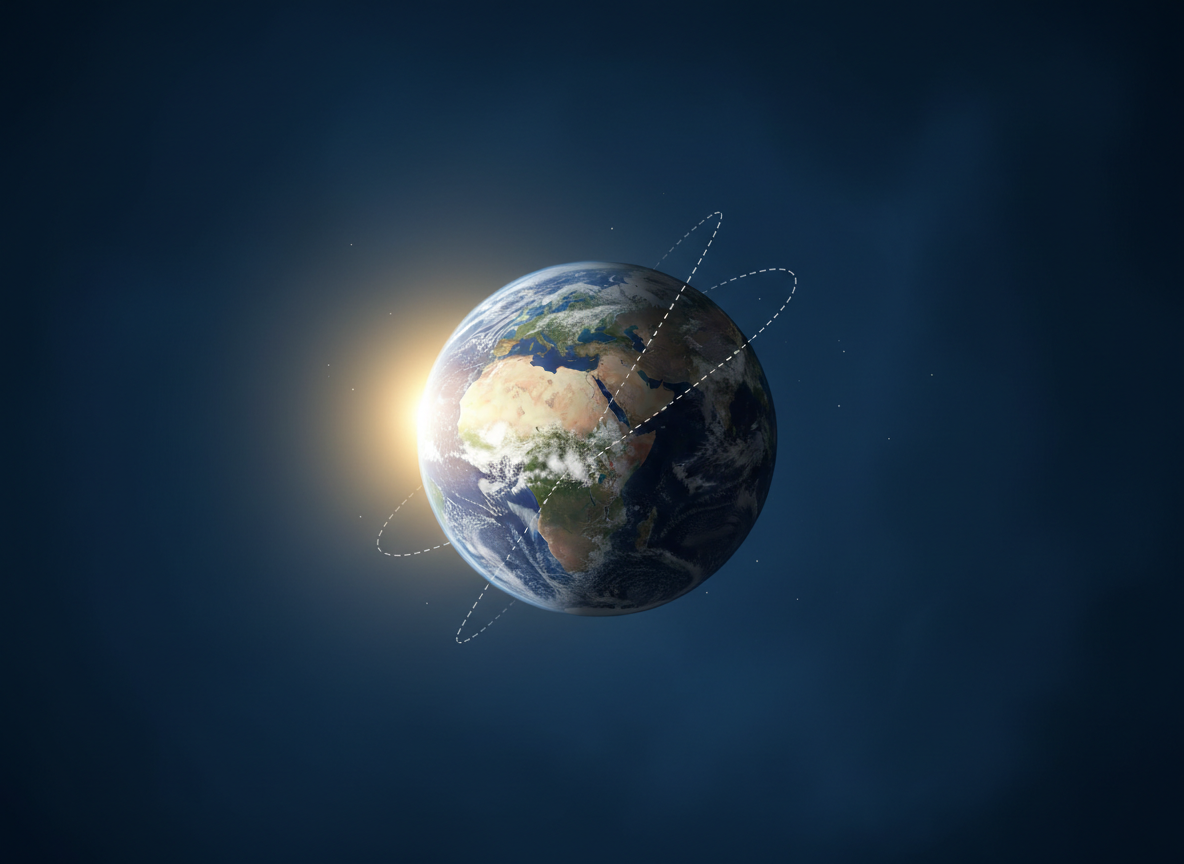
Earth is like a magnificent spinning top, constantly turning to give us day and night!
Quick Facts
Earth spins on an imaginary line called an axis.
One full spin of Earth takes about 24 hours.
This 24-hour spin is what we call a 'day'.
When your part of Earth faces the sun, it's daytime.
When your part of Earth faces away from the sun, it's nighttime.
The sun doesn't move around Earth; Earth moves around the sun while spinning.
The sun always lights up half of Earth at any given moment.
Meet Our Spinning Planet: Earth's Axis
First things first, let's talk about how Earth spins. Imagine a giant, invisible stick going right through the middle of Earth, from the North Pole to the South Pole. This imaginary stick is called Earth's axis. Our planet spins around this axis, just like a basketball spins on a player's finger or a top spins on its point. It's a continuous, graceful movement that never stops!
It's important to remember that Earth's axis isn't perfectly straight up and down compared to its path around the sun. It's actually tilted a little bit, like a leaning tower. This tilt is super important for other things, like seasons, but for day and night, the main thing to remember is that Earth is always spinning around its axis.
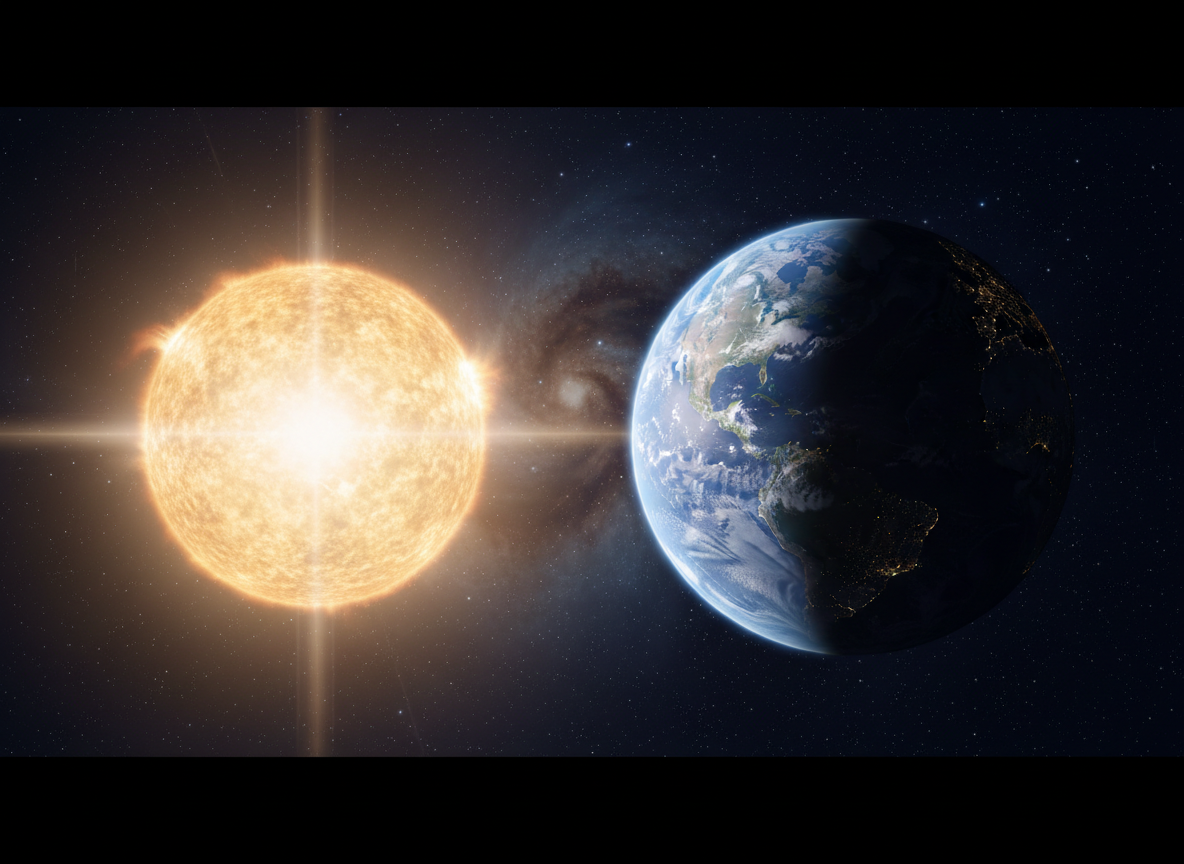
The Sun: Our Giant Light Bulb in Space
Now, let's bring in the sun! The sun is a huge, glowing star that gives us all our light and warmth. It's like an enormous, super-bright lamp in space. The sun is so big and powerful that its light travels millions of miles to reach Earth. Because the sun is so far away and so bright, it only shines on one side of Earth at a time.
Think about holding a flashlight in a dark room. When you shine the flashlight on a ball, only the side of the ball facing the flashlight gets lit up. The other side stays dark, right? The sun works just like that flashlight, and Earth is the ball. It illuminates exactly half of our planet at any moment.
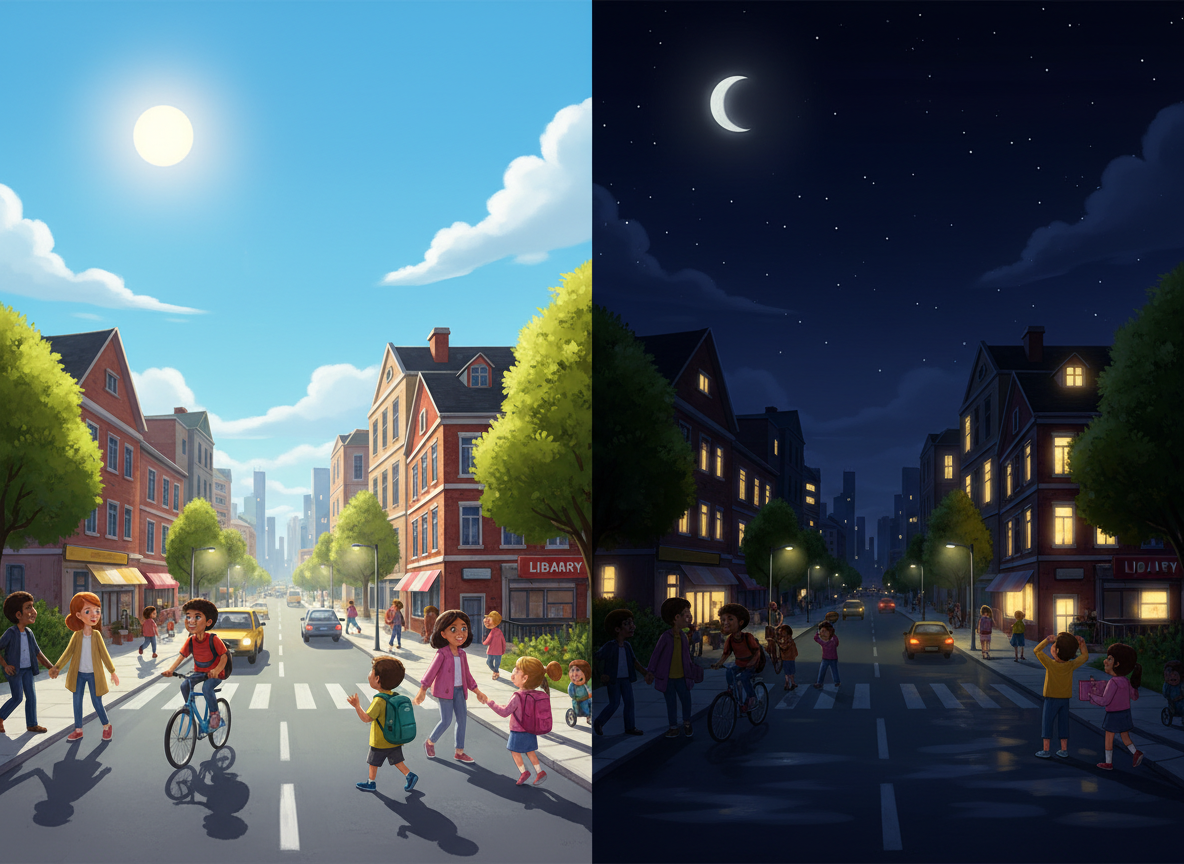
The Big Spin: How Day Becomes Night
Here's where the magic of day and night truly happens! As Earth spins on its axis, different parts of our planet take turns facing the sun. When your part of Earth is facing the sun, you get to enjoy the bright, warm sunshine – that's daytime! You can play outside, go to school, or simply enjoy the light.
But Earth keeps spinning! As your part of Earth slowly turns away from the sun, the sun's light starts to disappear from your view. This is when the sun 'sets,' and the sky gets darker. Eventually, your part of Earth is facing completely away from the sun, into the darkness of space. That's nighttime! During the night, we see the moon and stars (if it's not too cloudy), and it's the perfect time to rest and sleep.
How Long Does It Take? A Full Day!
How long does it take for Earth to make one complete spin? Exactly one full rotation takes about 24 hours. And guess what we call that 24-hour period? A day! So, a 'day' actually refers to the time it takes for Earth to spin around once, giving us a full cycle of daylight and darkness.
This constant, steady spin is why we have a predictable schedule. We know when the sun will rise and when it will set, allowing us to plan our activities, go to school, eat meals, and get enough sleep. Imagine if Earth spun super fast or super slow! Our lives would be very different.
Why We Don't Feel Earth Spinning
If Earth is spinning so fast (it's actually moving over 1,000 miles per hour at the equator!), why don't we feel it? It's a great question! The reason is that everything on Earth – you, me, houses, trees, the air – is spinning right along with it at the same speed. It's like being in an airplane that's flying smoothly. Even though you're moving very fast, you don't feel the speed because everything inside the plane is moving at the same speed as you.
If Earth suddenly stopped spinning, that would be a very different story, and thankfully, that's not going to happen! So, we can just enjoy the smooth, constant rotation that brings us our wonderful cycle of day and night.
More Than Just Day and Night: The Rhythm of Life
The cycle of day and night isn't just a cool science fact; it's essential for life on Earth! Plants use sunlight to grow, animals have routines based on light and darkness (some are active during the day, some at night!), and our own bodies have a 'body clock' that tells us when to be awake and when to sleep.
So, the next time you see the sun setting or rising, take a moment to appreciate the amazing science happening right beneath your feet. Our incredible Earth is constantly spinning, creating the perfect balance of light and darkness that makes life possible and so interesting. It’s a beautiful reminder of how connected we are to the cosmos!
Want to explore more about our amazing planet? You can find lots of fun and educational coloring pages about Earth, space, and the sun right here at KidsColouringPage.com! You can print them out or color them online.
Educational Standards & Fact-Checking
Reviewed by KidsColouring Editorial Team
Educational References & Scientific Sources
Our curriculum and factual articles are synthesized from trusted academic encyclopedias, wildlife conservation bodies, and public science institutions:
- •Smithsonian Institution Educational Resources & National Zoo Archives — Smithsonian Institution
- •National Geographic Kids Science & Animal Encyclopedias — National Geographic Society
- •Encyclopaedia Britannica Academic & Elementary Learning Reference — Encyclopaedia Britannica


