
Why Is the Ocean Blue? The Science Behind the Sea's Color at a Glance
Topic Focus
Why Is the Ocean Blue? The Science Behind the Sea's Color
Learning Level
Ages 4–10 (Preschool to Grade 4)
Subject Area
Science Facts
Format
Verified Fun Facts & Guided Exploration
Why Is the Ocean Blue? The Amazing Science of the Sea's Color
Have you ever stood by the sea and gazed out at the vast, beautiful blue water? It's one of nature's most stunning sights, stretching as far as the eye can see. But have you ever stopped to wonder, why is it blue? Is the water itself blue, like a giant swimming pool filled with blue dye? Or is there something else at play?
It's a fantastic question, and the answer involves a bit of science, a lot of light, and the incredible properties of water. It's not magic, but it's certainly magical to understand! Get ready to explore the hidden world of light and color that gives our oceans their iconic hue. We'll discover how sunlight interacts with water molecules to create the breathtaking blues we all love.
Understanding why the ocean is blue helps us appreciate our planet even more. It's a reminder that even the simplest observations often have a rich scientific story behind them. Let's dive in and unravel this colorful mystery together!
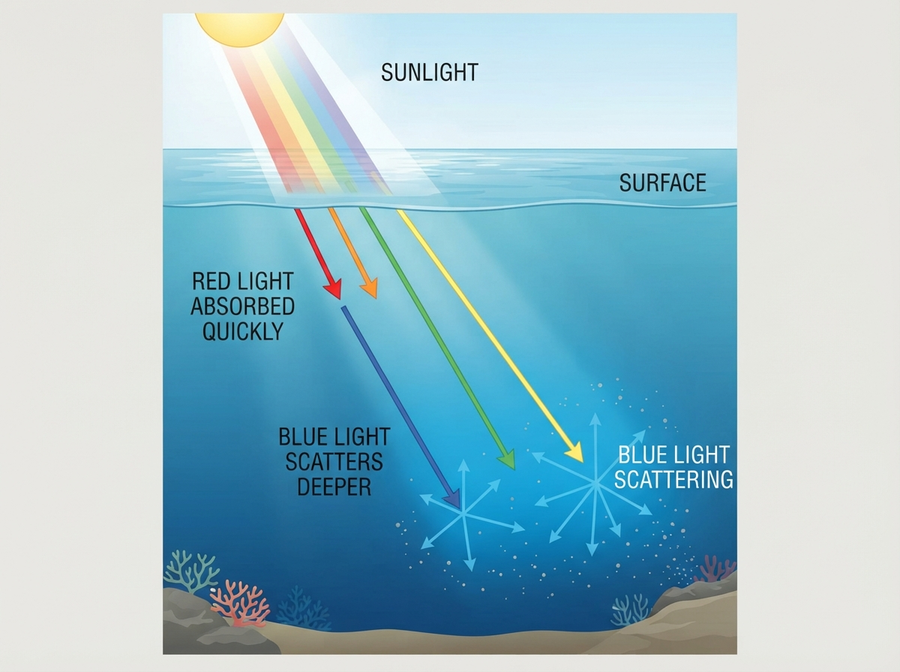
The ocean isn't blue because it reflects the sky; it's blue because of what happens when sunlight meets water!
Quick Facts
The ocean appears blue mainly because of how water absorbs and scatters sunlight.
Water molecules absorb red, orange, yellow, and green light more easily than blue light.
Blue light penetrates deeper into the water and is scattered back to our eyes.
The deeper the water, the more blue light is scattered, making it appear a richer blue.
Tiny particles and living things in the water can also affect its color.
Shallow water near the coast might look green or brown due to sediment and algae.
The sky's reflection plays a very small part, but it's not the main reason.
The Journey of Sunlight: A Rainbow of Colors
To understand why the ocean is blue, we first need to talk about sunlight. When you see sunlight, it looks white or yellowish, right? But did you know that sunlight is actually made up of all the colors of the rainbow? Think about a prism or a rainbow after a rain shower; they split white light into its individual colors: red, orange, yellow, green, blue, indigo, and violet.
Each of these colors has a different wavelength. Imagine waves in the ocean; some are long and slow, others are short and fast. Light waves are similar. Red light has a longer wavelength, while blue and violet light have shorter, faster wavelengths. When sunlight hits something, like water, different wavelengths behave in different ways. This is the key to understanding the ocean's color!
Water's Secret Superpower: Absorbing Colors
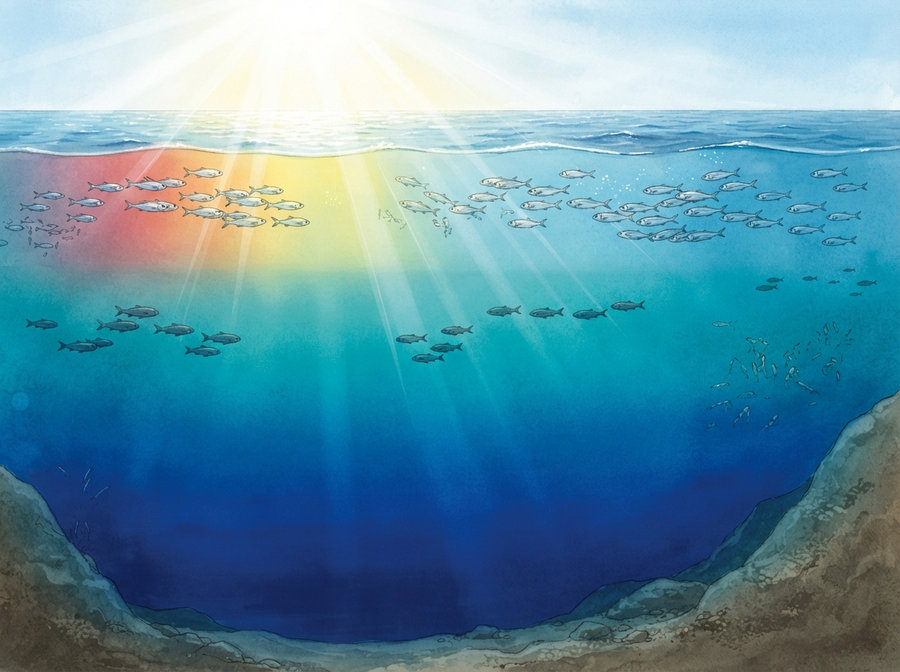
Here's where water comes into play with its amazing superpower. Water molecules are excellent at absorbing certain colors of light. As sunlight travels through the ocean, water molecules begin to absorb the longer wavelengths first. This means they soak up the red, orange, yellow, and even green light much more easily than they absorb blue light.
Think of it like this: if you have a sponge, it soaks up water. Water molecules act like tiny sponges for different colors of light. They're really good at 'sponging up' the red end of the spectrum. So, as light goes deeper into the ocean, less and less red, orange, and yellow light remains. These colors are absorbed and converted into tiny amounts of heat.
So, what's left? You guessed it: blue light! Blue light has a shorter wavelength and is not absorbed by water molecules as readily as the other colors. This allows it to penetrate much deeper into the ocean.
Scattering Blue: How We See the Color
Once the red, orange, and yellow light has been mostly absorbed, the blue light is still traveling through the water. But it doesn't just disappear! Instead, the blue light gets scattered by the water molecules. Imagine tiny little bouncy balls; when the blue light waves hit the water molecules, they bounce off in many different directions.
This scattering effect means that some of the blue light that has traveled deep into the ocean eventually bounces back up and out of the water. When this scattered blue light reaches our eyes, that's what we see! The more water there is, the more blue light gets scattered back, making the ocean appear a deeper, richer blue.
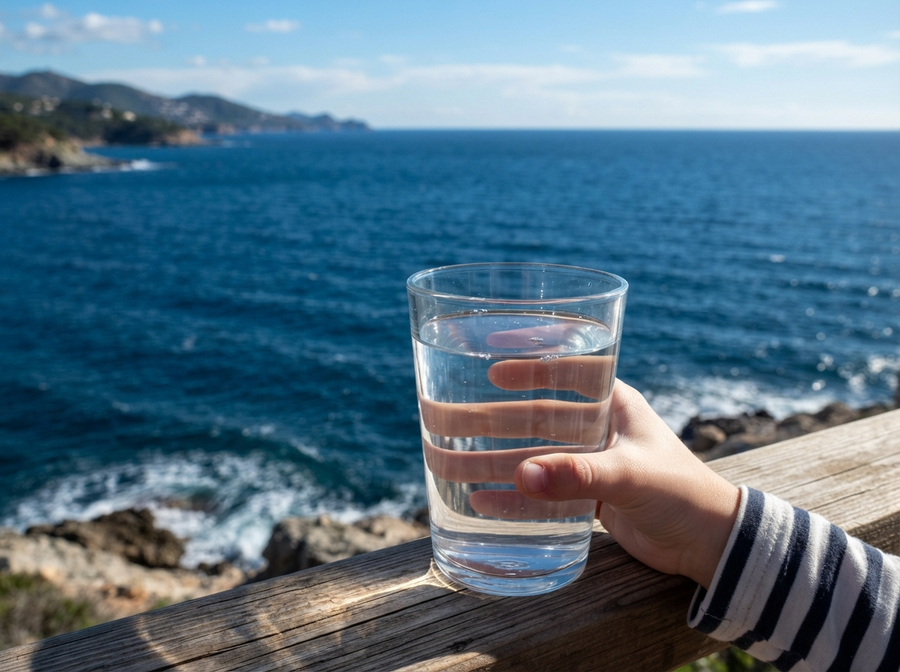
This is also why a glass of water looks clear, not blue. There aren't enough water molecules in a small glass to absorb all the other colors and scatter the blue light effectively. You need a lot of water, like in an ocean or a very deep swimming pool, to see this effect.
Beyond Blue: Other Colors of the Ocean
While blue is the most common color for the deep ocean, you might have noticed that the sea can sometimes look different. Sometimes it's green, or even brown! What causes these variations?
Green Water: If the water has a lot of tiny plants called phytoplankton (microscopic algae) or other sediments, these can reflect green light. Phytoplankton contain chlorophyll, which is the same pigment that makes land plants green. So, coastal waters or areas rich in marine life might appear green.
Brown Water: Near river mouths or after heavy storms, rivers can carry a lot of soil and mud into the ocean. These tiny particles, called sediment, can make the water look cloudy, brown, or even reddish.
Clear Water: In very pure, clear tropical waters, especially over white sand, the water can look almost colorless or a very light turquoise. This is because there are fewer particles to scatter light, and the white sand reflects a lot of the remaining light.
So, while the fundamental reason for the ocean's blue color is water's interaction with light, other things in the water can add their own splash of color to the mix!
The Sky's Reflection: A Small Part of the Story
Many people think the ocean is blue because it reflects the blue sky. It's a common idea, but it's not the main reason! While the ocean surface can act like a mirror and reflect the sky, especially on a calm day, this reflection only affects the very top layer of the water. If the ocean were only blue because of the sky, then on a cloudy day, the ocean would look gray, right? But it still looks blue!
The deep blue color we see in the vast ocean comes from the water itself, absorbing and scattering light. The sky's reflection is like a thin blue paint on top of a much deeper blue canvas. It adds a little to the overall appearance, but the true science of the ocean's color lies within the water's unique properties.
Now that you know the amazing science, you can impress your friends and family with your knowledge! The next time you see the beautiful blue ocean, you'll understand the incredible journey of light and water that makes it so.
Want to explore more colors of the deep blue sea? You can find lots of wonderful ocean-themed coloring pages to print or color online right here on KidsColouringPage.com!
Educational Standards & Fact-Checking
Reviewed by KidsColouring Editorial Team
Educational References & Scientific Sources
Our curriculum and factual articles are synthesized from trusted academic encyclopedias, wildlife conservation bodies, and public science institutions:
- •Smithsonian Institution Educational Resources & National Zoo Archives — Smithsonian Institution
- •National Geographic Kids Science & Animal Encyclopedias — National Geographic Society
- •Encyclopaedia Britannica Academic & Elementary Learning Reference — Encyclopaedia Britannica


