
Why Is the Sky Blue? The Science Explained for Kids! at a Glance
Topic Focus
Why Is the Sky Blue? The Science Explained for Kids!
Learning Level
Ages 4–10 (Preschool to Grade 4)
Subject Area
Science Facts
Format
Verified Fun Facts & Guided Exploration
Why Is the Sky Blue? The Amazing Science Explained for Kids!
Look up! What color do you see? Most of the time, the sky above us is a beautiful shade of blue. But have you ever stopped to wonder why? Is the sky really blue, or is it just playing a trick on our eyes? This question has puzzled people for thousands of years, but thanks to clever scientists, we now have a wonderful answer!
The secret to the blue sky isn't actually in the sky itself, but in something much smaller: tiny particles and light from the sun. Imagine a giant art show happening high above your head every single day, with sunlight as the paint and our Earth's air as the canvas. Let's embark on a journey to uncover the dazzling science behind our blue skies!
The sky isn't really blue, but it sure looks that way thanks to sunlight and air!
Quick Facts
Sunlight is made of all the colors of the rainbow.
Our Earth is surrounded by a blanket of air called the atmosphere.
The atmosphere is full of tiny, invisible particles.
Blue light waves are shorter and scatter more easily than other colors.
This scattering makes the sky appear blue to our eyes.
At sunrise and sunset, light travels through more atmosphere, scattering blue away.
This is why we see reds, oranges, and pinks during sunsets.
What is Light Made Of?
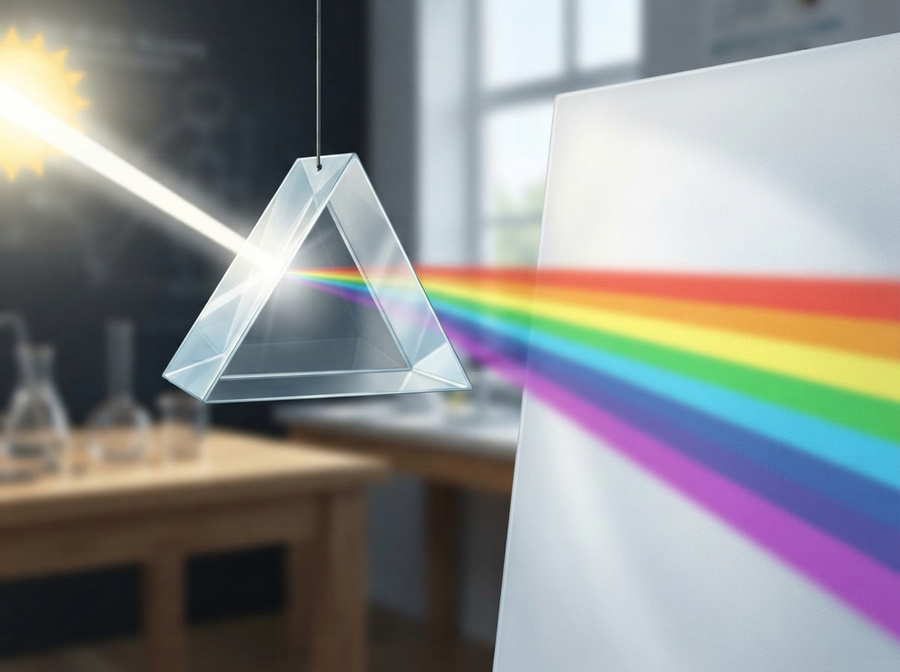
Before we can understand why the sky is blue, we need to talk about light. When you look at sunlight, it usually looks white or yellow, right? But did you know that white light is actually a mix of all the colors of the rainbow? Think about a prism or a rainbow after a rain shower. They show us that white light is made up of red, orange, yellow, green, blue, indigo, and violet light!
Each of these colors has a different wavelength. Imagine waves in the ocean: some are short and choppy, while others are long and smooth. It's the same with light! Blue and violet light have shorter, choppier wavelengths, while red and orange light have longer, smoother wavelengths. This difference in wavelength is super important for our blue sky mystery.
Earth's Amazing Atmosphere
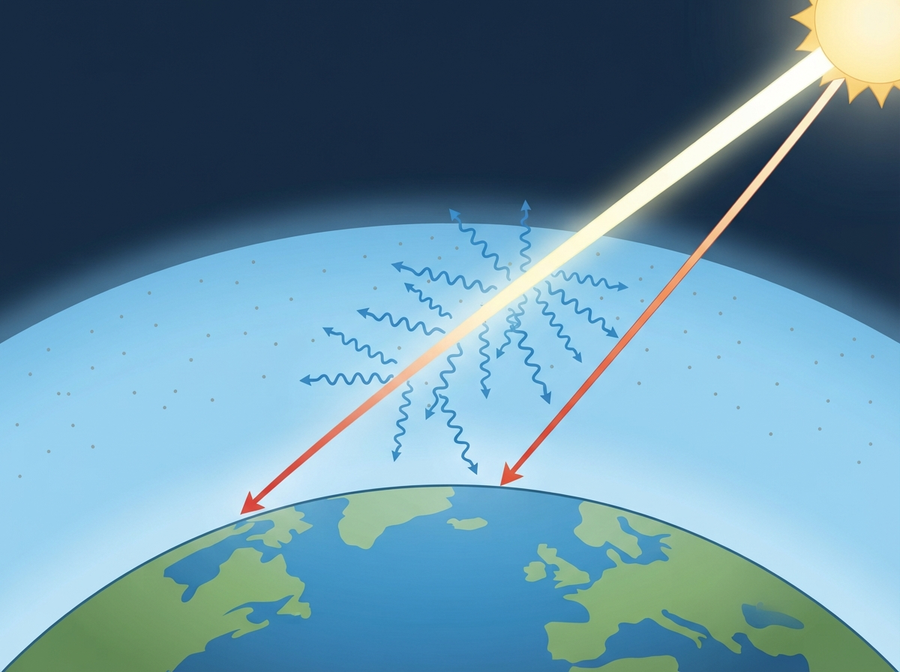
Next, let's talk about our planet's special blanket: the atmosphere. The Earth is surrounded by a thick layer of air, which we call the atmosphere. This atmosphere is made up of many different gases, like nitrogen and oxygen, along with tiny dust particles, water droplets, and other bits and pieces. Even though you can't see them, these tiny particles are everywhere in the air around us, even high up in the sky.
These tiny gas molecules and particles act like super-small obstacles for light. When sunlight travels from the sun all the way to Earth, it has to pass through this atmosphere. And just like a ball bouncing off a wall, light waves can bounce and scatter when they hit these tiny particles. This bouncing and scattering is the key to understanding the sky's color.
The Magic of Scattering: Why Blue Wins!
Now for the big reveal! When sunlight enters our atmosphere, it bumps into all those tiny gas molecules and particles. This bumping causes the light to scatter in all directions. But here's the clever part: not all colors scatter equally. Remember how blue light has shorter, choppier wavelengths?
Because blue light waves are shorter, they are much better at scattering off the tiny molecules in our atmosphere than the longer wavelengths of red, orange, or yellow light. Think of it like this: the small blue waves are easily knocked off course by the small particles, scattering all over the place. The longer red waves, however, are more likely to pass right through without much disturbance.
So, as sunlight travels through the atmosphere, a lot of the blue light gets scattered in every direction, filling the whole sky with blue. When you look up, no matter where you look, you're seeing all this scattered blue light, making the sky appear blue to your eyes!
Why Sunsets Are Red and Orange
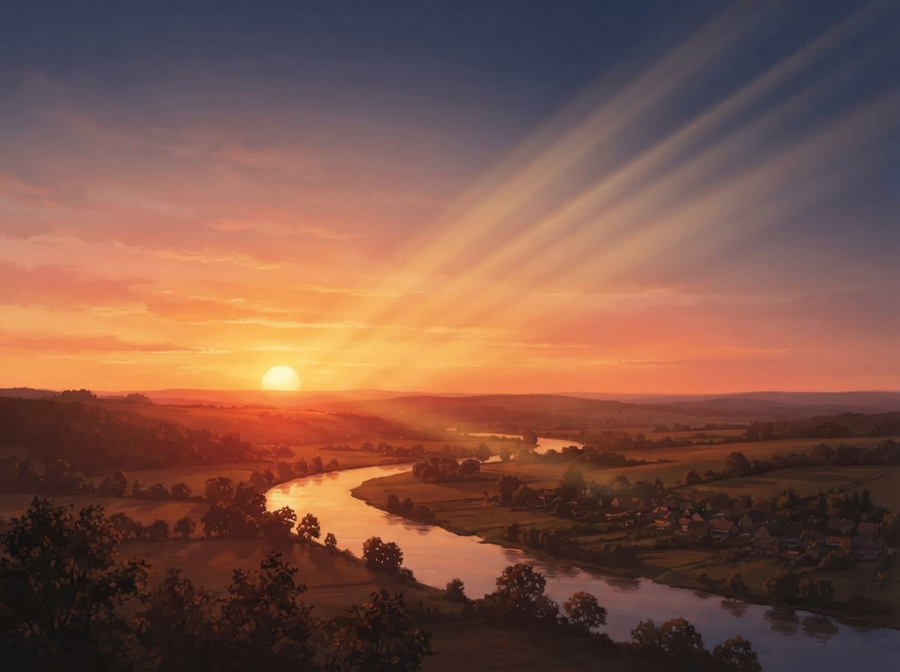
If the sky is blue during the day, why does it turn fiery red, orange, and pink at sunrise and sunset? This is another amazing trick of light scattering! When the sun is low in the sky, either in the morning or evening, its light has to travel through much more of Earth's atmosphere to reach your eyes. Imagine the light taking a very long journey through a thick fog.
During this longer journey, even more of the blue and violet light gets scattered away, far from your eyes. By the time the sunlight reaches you, most of the blue light has been scattered out of the way. What's left are the longer wavelength colors: red, orange, and yellow. This is why we see those spectacular warm colors painting the sky at dawn and dusk. It's the same science, just with a longer path for the light!
It's truly incredible how tiny particles and light waves create such a stunning show every day. The next time you look up at the blue sky or a beautiful sunset, you'll know the amazing science behind it!
To explore more of Earth's wonders, why not try coloring some related pages? You can find fun scenes of landscapes and nature to color online or print at KidsColouringPage.com.
Educational Standards & Fact-Checking
Reviewed by KidsColouring Editorial Team
Educational References & Scientific Sources
Our curriculum and factual articles are synthesized from trusted academic encyclopedias, wildlife conservation bodies, and public science institutions:
- •Smithsonian Institution Educational Resources & National Zoo Archives — Smithsonian Institution
- •National Geographic Kids Science & Animal Encyclopedias — National Geographic Society
- •Encyclopaedia Britannica Academic & Elementary Learning Reference — Encyclopaedia Britannica


