
Amazing Facts About Our Solar System for Kids! at a Glance
Topic Focus
Amazing Facts About Our Solar System for Kids!
Learning Level
Ages 4–10 (Preschool to Grade 4)
Subject Area
Space Facts
Format
Verified Fun Facts & Guided Exploration
Amazing Facts About Our Solar System for Kids!
Have you ever looked up at the night sky and wondered what’s out there? Beyond our Earth, a whole neighborhood of planets, moons, and stars is waiting to be explored! This incredible neighborhood is called our Solar System, and it’s full of mind-boggling wonders and amazing facts that will make you look at the sky with brand new eyes.
Our Solar System isn't just Earth; it's a giant cosmic dance party with the Sun at the center, pulling everything towards it with its super-strong gravity. From tiny, rocky worlds to gigantic gas giants, each planet has its own unique story and incredible features. Get ready to embark on an exciting journey as we uncover some of the most amazing facts about our very own corner of the universe!
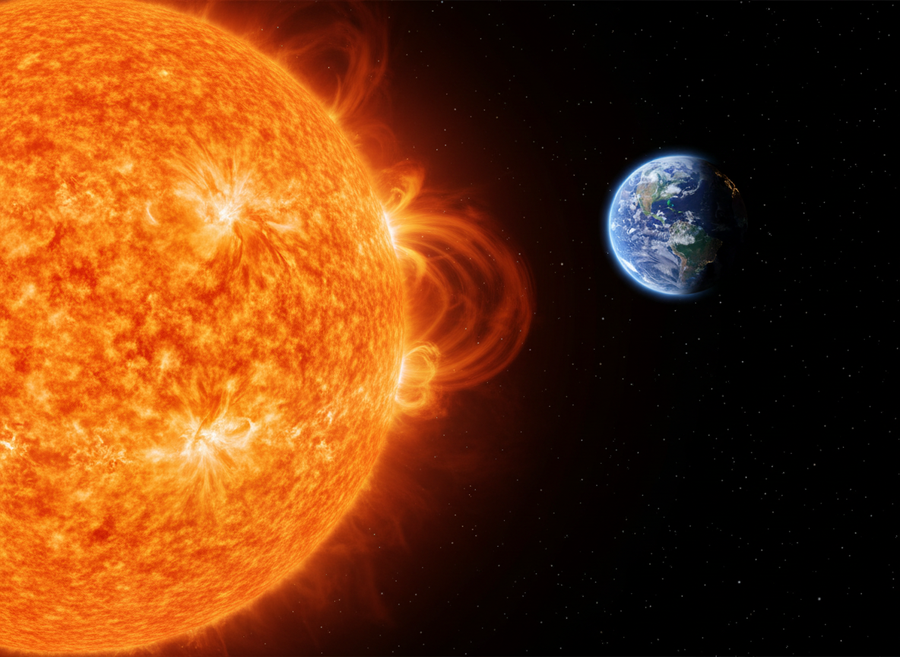
Our Solar System is a cosmic playground, with each planet a unique adventure waiting to be discovered!
Quick Facts
Our Solar System is about 4.6 billion years old!
The Sun holds 99.8% of all the mass in the Solar System.
Jupiter is so big that all the other planets in our Solar System could fit inside it.
A day on Venus is longer than its year!
Saturn's rings are made of billions of pieces of ice and rock.
Mars is known as the 'Red Planet' because of the iron oxide (rust) on its surface.
There are five recognized dwarf planets in our Solar System, including Pluto.
It takes sunlight about 8 minutes and 20 seconds to reach Earth.
Meet Our Star: The Mighty Sun!
At the very heart of our Solar System is a colossal star we call the Sun. It’s not just any star; it’s the biggest object in our entire Solar System, so huge that you could fit over a million Earths inside it! The Sun is like a giant, natural furnace, constantly burning and giving off light and heat. This energy is super important because it’s what makes life possible on Earth. Without the Sun, our planet would be a frozen, dark place.
The Sun's gravity is incredibly powerful, acting like an invisible rope that keeps all the planets, asteroids, and comets orbiting around it. Imagine swinging a ball on a string; the string is like the Sun's gravity, keeping the ball (or planet) from flying off into space. Even though it looks small from Earth, remember it's incredibly far away – about 93 million miles (150 million kilometers)!
The Rocky Planets: Inner Worlds Up Close
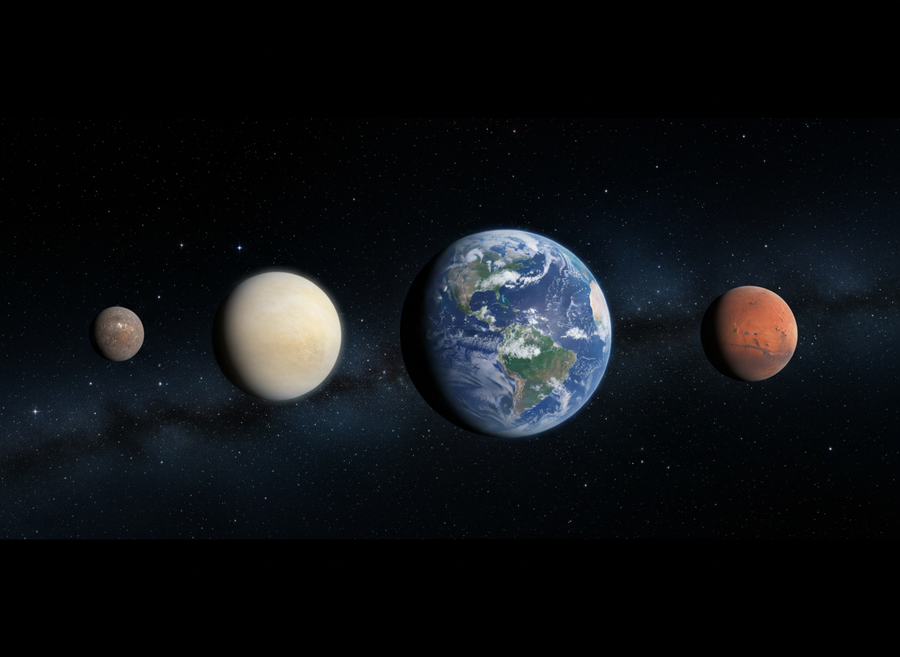
Closest to the Sun are four rocky planets: Mercury, Venus, Earth, and Mars. These are often called the 'inner planets' because they are inside the asteroid belt. Each one is a unique world:
Mercury: This is the smallest planet and the closest to the Sun. It has a very thin atmosphere, so it gets incredibly hot during the day (hot enough to melt lead!) and freezing cold at night.
Venus: Sometimes called Earth's 'sister planet' because it's similar in size, Venus is actually a super-hot, poisonous world. It has a thick atmosphere that traps heat, making it the hottest planet in our Solar System, even hotter than Mercury!
Earth: Our amazing home! Earth is the only planet we know of that has liquid water on its surface and an atmosphere perfect for breathing. It's truly special because it supports all kinds of life.
Mars: Known as the 'Red Planet,' Mars has a reddish color due to iron minerals in its soil. Scientists are very interested in Mars because it once had liquid water and might have supported life in the past. It also has two small moons, Phobos and Deimos.
The Gas Giants: Colossal Worlds Beyond the Asteroid Belt
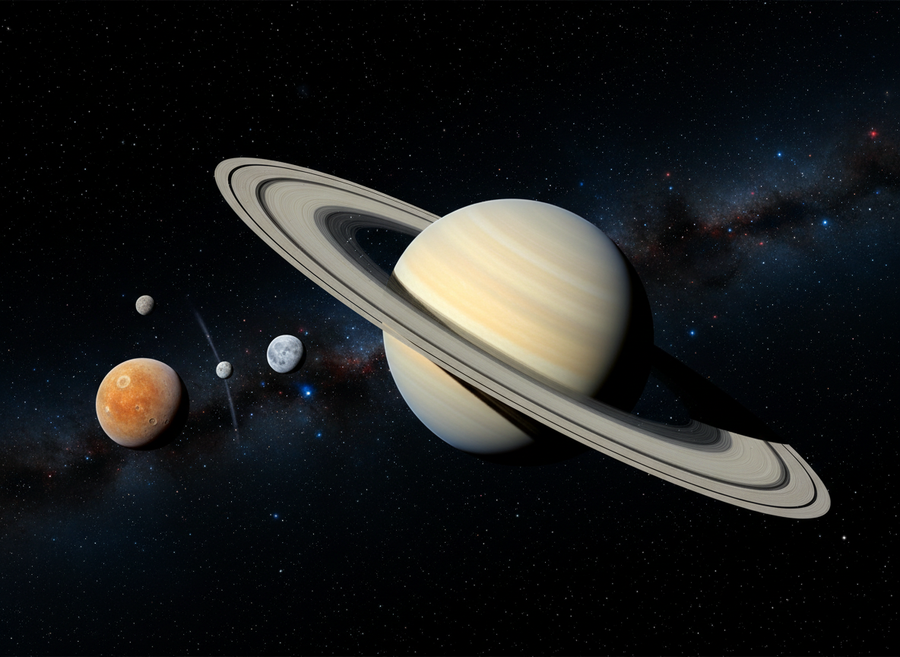
Beyond the rocky inner planets and a region filled with asteroids, we find the four gas giants: Jupiter, Saturn, Uranus, and Neptune. These planets are enormous and are mostly made of gases like hydrogen and helium, rather than solid rock. They also have many moons and often faint ring systems.
Jupiter: The largest planet in our Solar System, Jupiter is a true giant! It has a famous 'Great Red Spot,' which is a massive storm larger than Earth that has been raging for hundreds of years. Jupiter also has at least 79 moons!
Saturn: Instantly recognizable by its magnificent rings, Saturn is a stunning sight. Its rings are made of billions of tiny pieces of ice and rock, ranging from dust particles to mountain-sized chunks. Saturn also has many moons, including Titan, which is larger than the planet Mercury!
Uranus: This ice giant has a unique feature: it spins on its side, almost like a rolling ball! Scientists think a huge collision long ago might have knocked it over. Uranus also has faint rings and many moons.
Neptune: The farthest major planet from the Sun, Neptune is another ice giant. It's known for its strong winds, which are the fastest in the Solar System, and its deep blue color. Neptune also has a few faint rings and many moons, including Triton, which orbits Neptune backward!
Isn't it incredible to think about the sheer size and variety of these distant worlds? Each one is a marvel of the universe, with its own secrets and mysteries waiting to be discovered by future explorers.
Dwarf Planets, Asteroids, and Comets: More Space Neighbors!
Our Solar System isn't just about the eight main planets. There are many other fascinating objects swirling around! These include dwarf planets, asteroids, and comets, each playing a small but important role in the cosmic ballet.
Dwarf Planets: These are objects that are big enough to be round but haven't cleared their orbital path of other objects. The most famous dwarf planet is Pluto, which used to be considered the ninth planet. Other dwarf planets include Ceres (found in the asteroid belt), Eris, Makemake, and Haumea.
Asteroids: These are rocky, airless worlds that are too small to be called planets. Most asteroids in our Solar System are found in the 'asteroid belt,' a region between Mars and Jupiter. Some asteroids are very small, while others can be hundreds of miles across!
Comets: Often called 'dirty snowballs,' comets are made of ice, dust, and rock. When a comet gets close to the Sun, the ice heats up and turns into gas, creating a spectacular tail that can stretch for millions of miles. Halley's Comet is a very famous comet that visits Earth's vicinity every 75–76 years.
All these different objects, from the smallest dust particle to the largest gas giant, are part of the grand, amazing story of our Solar System. Each one helps us understand more about how our universe formed and how it continues to change.
Educational Standards & Fact-Checking
Reviewed by KidsColouring Editorial Team
Educational References & Scientific Sources
Our curriculum and factual articles are synthesized from trusted academic encyclopedias, wildlife conservation bodies, and public science institutions:
- •Smithsonian Institution Educational Resources & National Zoo Archives — Smithsonian Institution
- •National Geographic Kids Science & Animal Encyclopedias — National Geographic Society
- •Encyclopaedia Britannica Academic & Elementary Learning Reference — Encyclopaedia Britannica


