
Why is the Sun So Hot? Exploring Our Star's Amazing Power! at a Glance
Topic Focus
Why is the Sun So Hot? Exploring Our Star's Amazing Power!
Learning Level
Ages 4–10 (Preschool to Grade 4)
Subject Area
Space Facts
Format
Verified Fun Facts & Guided Exploration
Why is the Sun So Hot? The Incredible Science of Our Fiery Star!
Look up at the sky on a sunny day, and you'll see a brilliant, glowing ball of light: the Sun! It warms our planet, helps plants grow, and makes life on Earth possible. But have you ever stopped to wonder just how incredibly hot the Sun really is, and what makes it that way? It's not like a campfire or a stove burner; the Sun is a gigantic cosmic furnace, powered by amazing science!
Imagine a place so hot that even rocks would melt into a gas, and the air itself would glow brighter than anything you've ever seen. That's the Sun! Its surface temperature is around 9,940 degrees Fahrenheit (5,505 degrees Celsius), but deep inside, it's millions of degrees hotter. So, what's the secret to this incredible heat? It all comes down to something called nuclear fusion, a powerful process happening right at the Sun's heart.
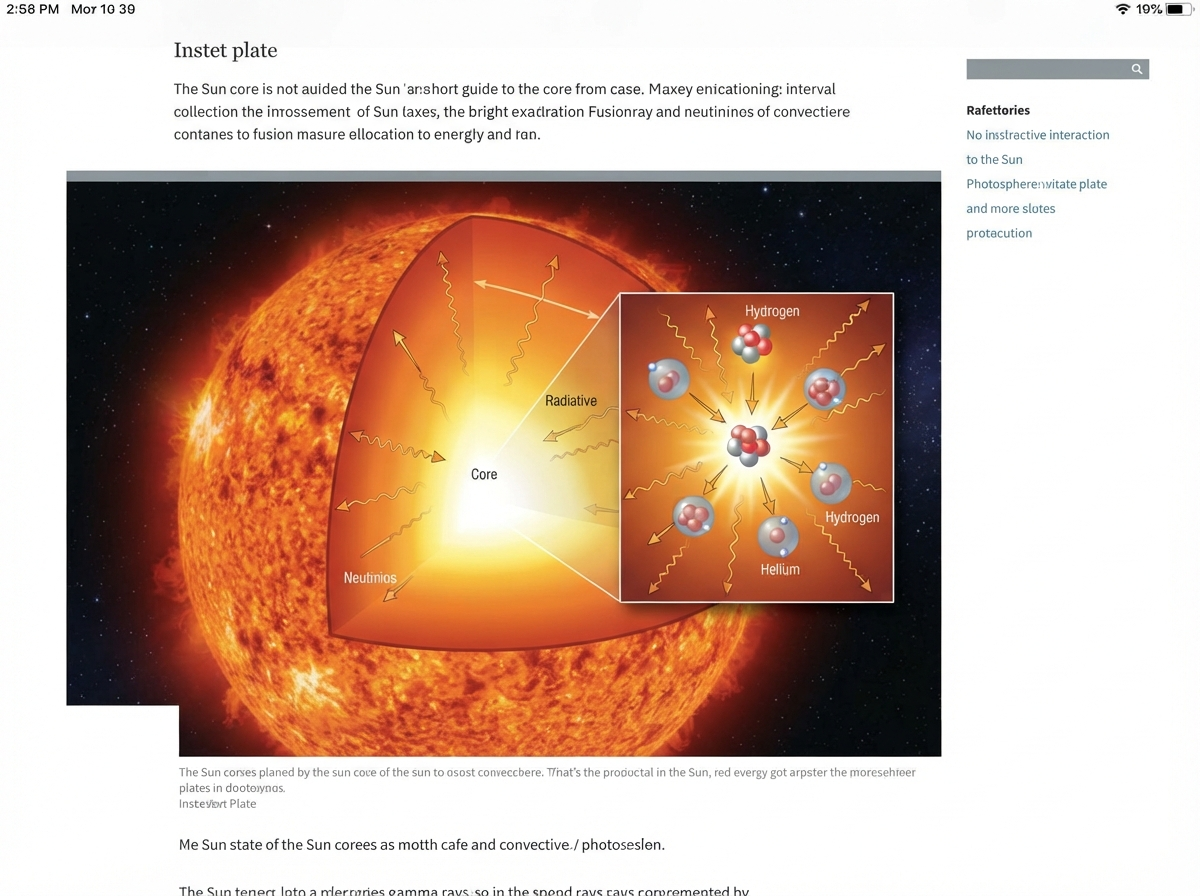
The Sun isn't just hot; it's a giant, natural nuclear fusion reactor in space!
Quick Facts
The Sun is a star, just like the twinkling lights you see at night, but much closer.
It's made mostly of two gases: hydrogen (about 75%) and helium (about 25%).
The Sun's core temperature is an astonishing 27 million degrees Fahrenheit (15 million degrees Celsius).
Light and heat from the Sun take about 8 minutes and 20 seconds to reach Earth.
The Sun is over 100 times wider than Earth and could hold over a million Earths inside it!
Its powerful gravity holds all the planets in our solar system in orbit.
The Sun's Fiery Heart: Nuclear Fusion Explained
At the very center of the Sun is its core, and this is where all the magic – or rather, the science – happens! The core is under immense pressure from all the gas above it, squeezing everything together tighter than you can imagine. This intense pressure and super-high temperature create the perfect conditions for something called nuclear fusion.
Think of nuclear fusion like a cosmic squeezing game. The Sun is mostly made of a very simple gas called hydrogen. In the core, the hydrogen atoms are squeezed so hard and are moving so fast that they crash into each other with incredible force. When they collide, they don't just bounce off; they actually fuse together to form a heavier gas called helium. This fusing process releases a tremendous amount of energy in the form of light and heat. It's like tiny explosions happening billions of times every second, all radiating outwards from the core!
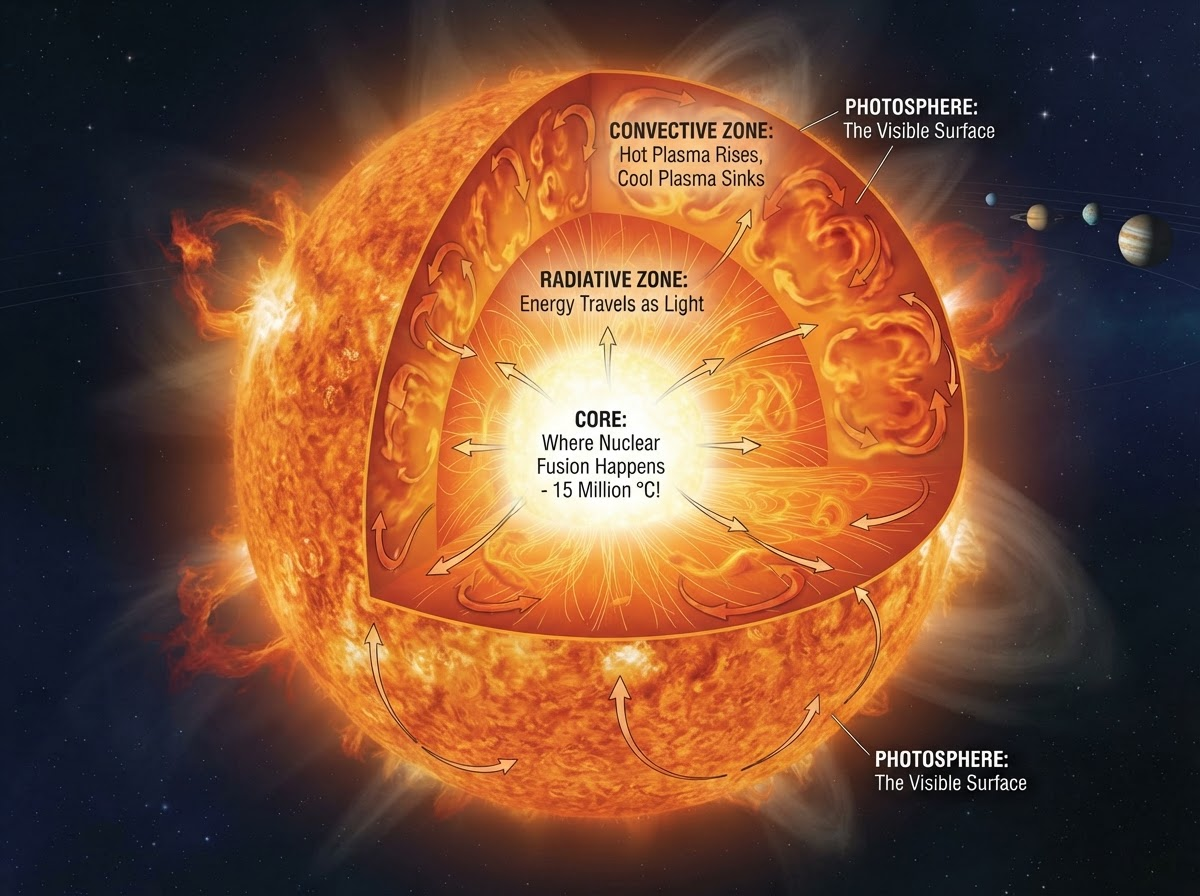
From Core to Surface: How Heat Travels Outward
Once the energy is created in the Sun's core, it doesn't just stay there. It has to travel outwards through different layers to reach the surface and eventually, space. This journey takes a long, long time!
Radiative Zone: Right outside the core is the radiative zone. Here, the energy travels as tiny packets of light called photons. But it's not a straight path! These photons bounce around, absorbed and re-emitted by atoms countless times. It can take hundreds of thousands of years for a single photon to make its way through this dense layer.
Convective Zone: Above the radiative zone is the convective zone. This layer works a bit like a boiling pot of water. Hot gas rises to the surface, cools down, and then sinks back down to get heated again. This constant movement of hot and cool gas helps carry the energy even closer to the Sun's surface.
By the time the energy reaches the Sun's outer layers, it's ready to blast off into space and warm our solar system!
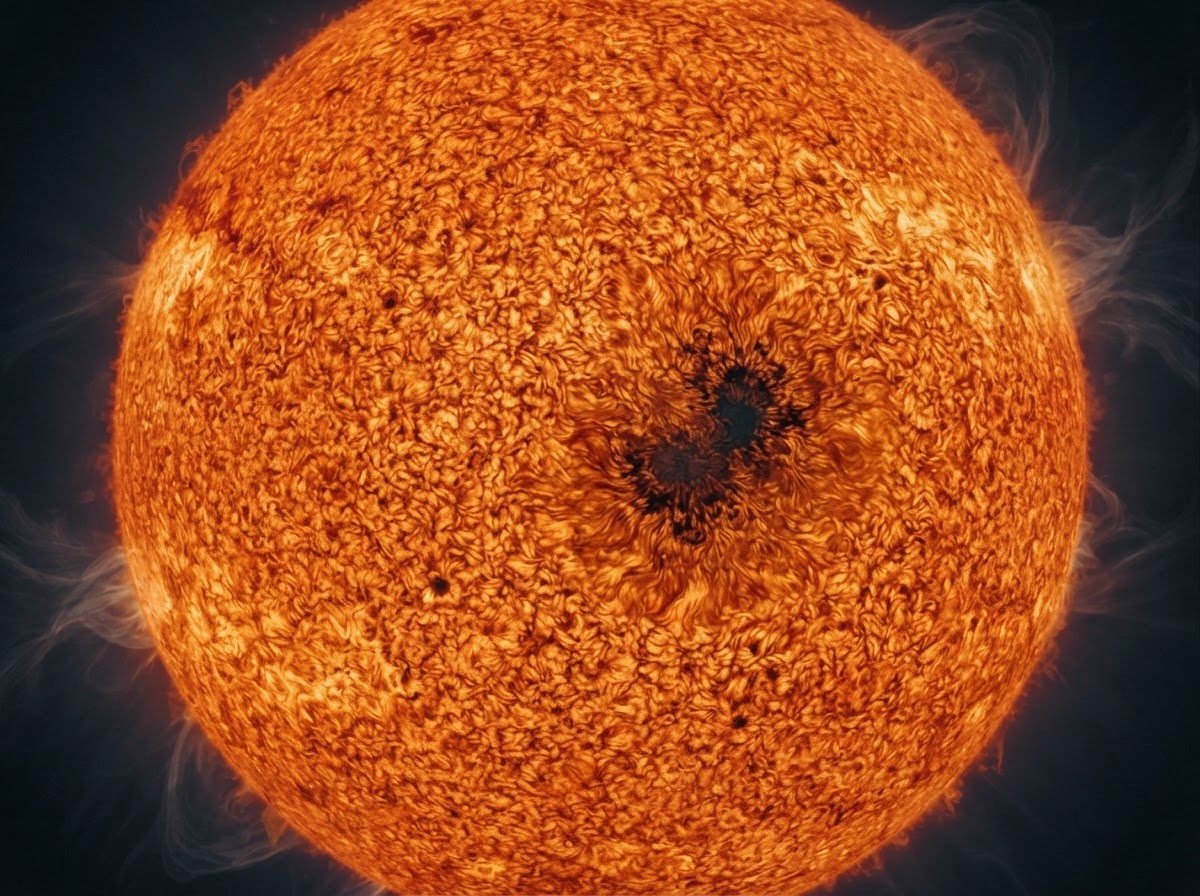
The Sun's Blazing Layers: Photosphere, Chromosphere, and Corona
When we look at the Sun, we're mostly seeing its surface, but even that has different parts! These outer layers are where the heat and light we feel on Earth are finally released.
Photosphere: This is the visible 'surface' of the Sun, the part that gives off most of the light we see. It's not a solid surface like Earth's, but a layer of very hot, dense gas. This is also where we can sometimes see darker spots called sunspots, which are cooler areas caused by the Sun's magnetic fields.
Chromosphere: Above the photosphere is the chromosphere, a reddish layer that's usually only visible during a total solar eclipse. It's hotter than the photosphere but less dense.
Corona: The outermost layer is the corona, a vast, glowing halo of extremely hot, thin gas that extends millions of miles into space. It's also usually only seen during an eclipse or with special telescopes. The corona is much, much hotter than the photosphere, but because it's so thin, it doesn't give off much light or heat that we can feel.
Why the Sun Stays Hot: A Cosmic Balancing Act
The Sun has been burning brightly for about 4.6 billion years, and it's expected to continue for another 5 billion years! How does it keep going for so long? It's all thanks to a perfect balance of forces.
On one hand, the immense gravity of the Sun is constantly trying to pull all its gas inwards, squeezing it tighter and tighter. This inward pull creates the incredible pressure needed for nuclear fusion in the core. On the other hand, the energy released by nuclear fusion creates an outward push, trying to expand the Sun. These two forces - gravity pulling in and fusion pushing out - are in a perfect balance. This balance is what keeps the Sun stable, hot, and shining steadily for billions of years, providing the warmth and light essential for life on Earth.
Isn't that amazing? The Sun is a constant, powerful reminder of the incredible forces at play in our universe! To explore more about our amazing solar system, why not try coloring some of our free space-themed coloring pages online or print them out for some creative fun!
Educational Standards & Fact-Checking
Reviewed by KidsColouring Editorial Team
Educational References & Scientific Sources
Our curriculum and factual articles are synthesized from trusted academic encyclopedias, wildlife conservation bodies, and public science institutions:
- •Smithsonian Institution Educational Resources & National Zoo Archives — Smithsonian Institution
- •National Geographic Kids Science & Animal Encyclopedias — National Geographic Society
- •Encyclopaedia Britannica Academic & Elementary Learning Reference — Encyclopaedia Britannica


