
Facts About Cows: Amazing Farm Animal Guide for Kids at a Glance
Topic Focus
Facts About Cows: Amazing Farm Animal Guide for Kids
Learning Level
Ages 4–10 (Preschool to Grade 4)
Subject Area
Farm Animal Facts
Format
Verified Fun Facts & Guided Exploration
Facts About Cows: An Amazing Farm Animal Guide for Kids
Have you ever wondered about those big, gentle animals you see grazing in fields? We're talking about cows! Cows are some of the most important and interesting animals on farms all around the world. They provide us with so much, from delicious milk to strong leather, and they even help keep pastures healthy. But there's a lot more to these incredible creatures than meets the eye.
Get ready to learn all about cows, from their unique digestive systems to how they communicate with each other. We'll explore where they came from, what makes them special, and why they are such a big part of farm life. So, put on your explorer hat, and let's moo-ve into the wonderful world of cows!
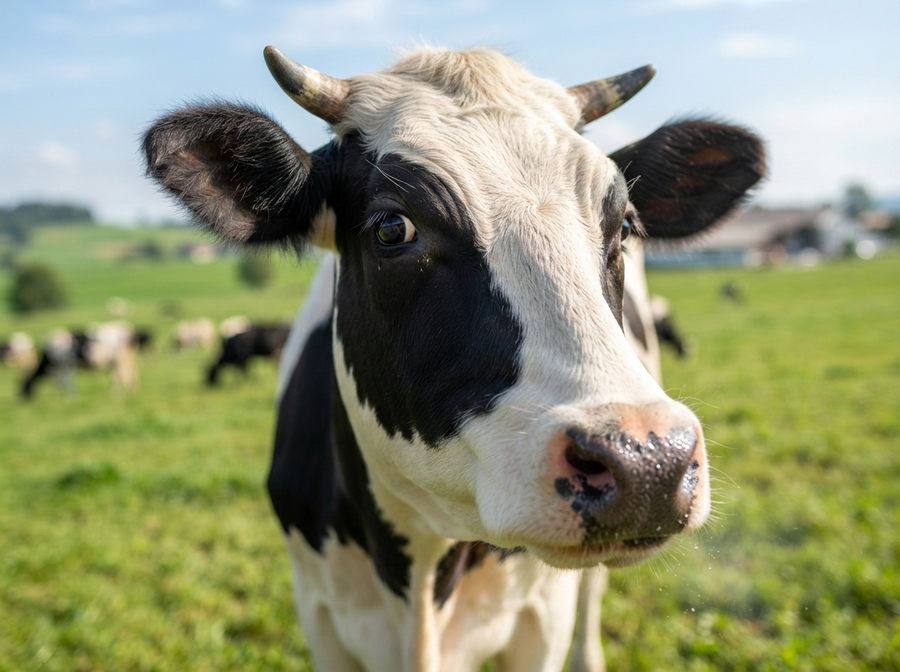
Cows are more than just farm animals; they're gentle giants with fascinating secrets!
Quick Facts
Cows are herbivores, meaning they only eat plants.
They have four stomachs, which help them digest tough grasses.
A group of cows is called a herd.
Cows can live for about 18-22 years, but often less on farms.
They can drink up to 30 gallons of water a day.
Cows are social animals and like to stay together.
There are over 800 different breeds of cows worldwide.
Cows chew their cud, which means they re-chew their food.
What Exactly is a Cow?
When we talk about cows, we usually mean the female bovine animal. A male cow is called a bull. Baby cows are called calves. These animals belong to a family called 'Bovidae,' which also includes bison, buffalo, and goats. Cows are mammals, just like us, which means they drink milk from their mothers when they are babies and are warm-blooded. They are also known as livestock because they are raised by humans for products like milk, meat, and leather.
Cows come in many different shapes, sizes, and colors, depending on their breed. Some are black and white, like the famous Holstein cow, while others are brown, red, or even spotted. Each breed has special qualities, like producing lots of milk or growing strong for meat. No matter their color or size, all cows share some amazing traits that make them unique farm animals.
The Super Stomach: How Cows Eat
One of the most amazing things about cows is their digestive system. Unlike humans who have one stomach, cows have four! These four stomach compartments are called the rumen, reticulum, omasum, and abomasum. This special setup allows them to eat tough plants like grass and hay that other animals can't digest.
Here's how it works:
Rumen: This is the largest compartment and acts like a big fermentation vat. When a cow eats grass, it goes here first. Tiny microbes inside the rumen break down the tough plant material.
Reticulum: This compartment helps filter out larger pieces of food and sends them back to the mouth to be chewed again. This re-chewing is called 'chewing the cud.'
Omasum: This part absorbs water and nutrients from the partly digested food.
Abomasum: This is considered the 'true stomach' because it's most like our stomach. It has digestive juices that further break down the food before it moves to the intestines.
This incredible process allows cows to get all the energy and nutrients they need from a diet of plants, making them super efficient recyclers of nature's bounty!
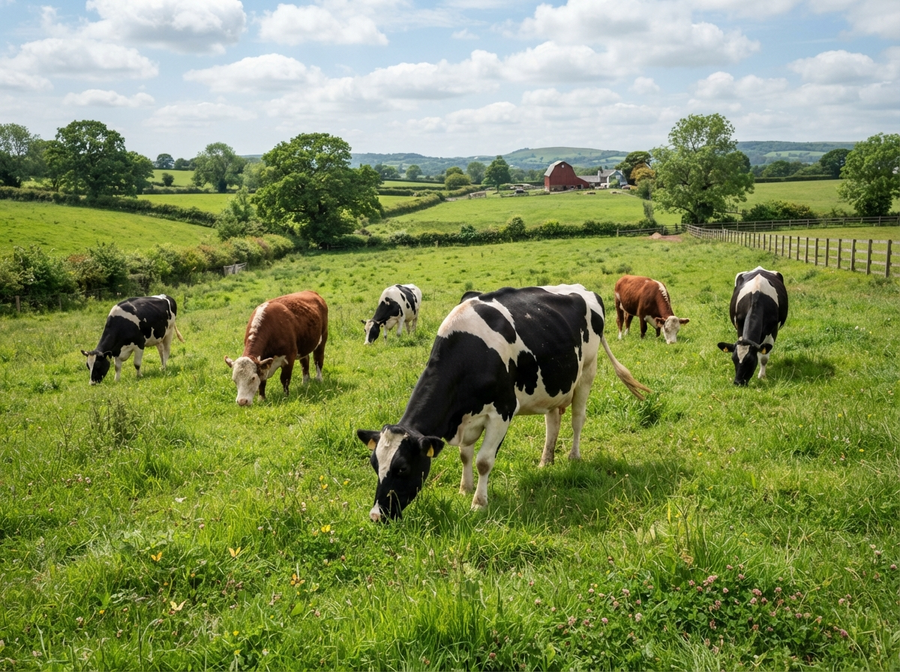
Communicating on the Farm
Cows don't just moo; they have a whole language of their own! While 'moo' is the sound most people associate with cows, they make many different noises to communicate. A soft moo might mean they are content, while a louder, more urgent moo could mean they are looking for their calf or are hungry.
Besides sounds, cows also use body language to talk to each other and to humans. The way they hold their head, the position of their ears, and even how they stand can tell you a lot about how they are feeling. For example, if a cow stands with its head low and stares at you, it might be feeling a bit protective or curious. They are social animals and often form strong bonds within their herd, showing affection by licking each other.
Different Breeds and What They Do
Just like there are many breeds of dogs, there are many breeds of cows, each with special talents! These breeds have been developed over hundreds of years to be good at different things. Here are a few examples:
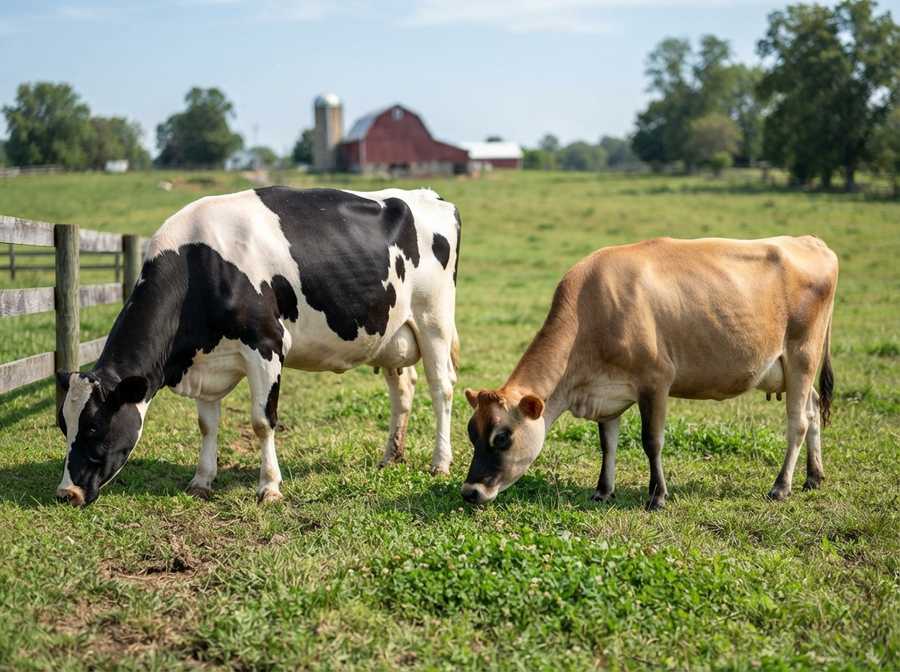
Holstein: These are the classic black and white cows you often see. They are famous for producing a lot of milk, more than any other dairy breed.
Jersey: Smaller than Holsteins, Jersey cows are usually light brown. They produce rich, creamy milk that's great for making butter and cheese.
Angus: These cows are typically black or red and are known for their high-quality beef. They are very hardy and can live in many different climates.
Galloway: These shaggy cows come from Scotland and are known for their thick, woolly coats that protect them from cold weather. They are also raised for beef.
Farmers choose different breeds based on what they want to produce, whether it's milk, meat, or even to help manage land by grazing.
Cows and the Environment
Cows play an interesting role in the environment. On one hand, they help keep pastures healthy by grazing. When cows eat grass, they prevent it from growing too tall and becoming overgrown, which can help new, fresh grass grow. Their hooves also help to aerate the soil, which means they make small holes that allow air and water to reach the plant roots better.
However, cows also produce methane gas as part of their digestion, which is a greenhouse gas. Scientists and farmers are always working on ways to make farming more sustainable and to reduce the environmental impact of raising cows. This includes developing special feeds that help cows digest their food more efficiently, which can reduce the amount of methane they produce. It's a complex balance, and learning about it helps us understand how food production connects to our planet.
Amazing Cow Senses
Cows have some pretty amazing senses that help them navigate their world. They have nearly 360-degree panoramic vision, which means they can see almost all around them without turning their heads. This helps them spot predators or other animals approaching from almost any direction. However, they don't see colors in the same way humans do; they are thought to be dichromats, meaning they see mostly blues, yellows, and greens.
Their sense of smell is also very strong, helping them find food and recognize other cows. And their hearing is excellent, allowing them to pick up sounds that we might miss. All these senses work together to help cows stay safe, find food, and communicate within their herd, making them truly remarkable animals!
Educational Standards & Fact-Checking
Reviewed by KidsColouring Editorial Team
Educational References & Scientific Sources
Our curriculum and factual articles are synthesized from trusted academic encyclopedias, wildlife conservation bodies, and public science institutions:
- •Smithsonian Institution Educational Resources & National Zoo Archives — Smithsonian Institution
- •National Geographic Kids Science & Animal Encyclopedias — National Geographic Society
- •Encyclopaedia Britannica Academic & Elementary Learning Reference — Encyclopaedia Britannica


