
Octopus Facts for Kids: Masters of the Ocean! at a Glance
Topic Focus
Octopus Facts for Kids: Masters of the Ocean!
Learning Level
Ages 4–10 (Preschool to Grade 4)
Subject Area
Ocean Facts
Format
Verified Fun Facts & Guided Exploration
Octopus Facts for Kids: Discovering the Eight-Armed Wonders!
Welcome, ocean explorers! Have you ever wondered about the incredible creatures that live deep in the sea? Today, we're diving headfirst into the mysterious world of the octopus! These amazing animals are like real-life superheroes of the ocean, with super-smart brains, incredible camouflage, and a whole lot of arms!
Octopuses are cephalopods, which means 'head-foot' in Greek – a perfect name for an animal whose arms seem to grow right out of its head! They live in every ocean around the world, from the warm, shallow coral reefs to the super-cold, deep-sea trenches. Get ready to be amazed as we uncover some of the coolest facts about these eight-legged geniuses of the deep!
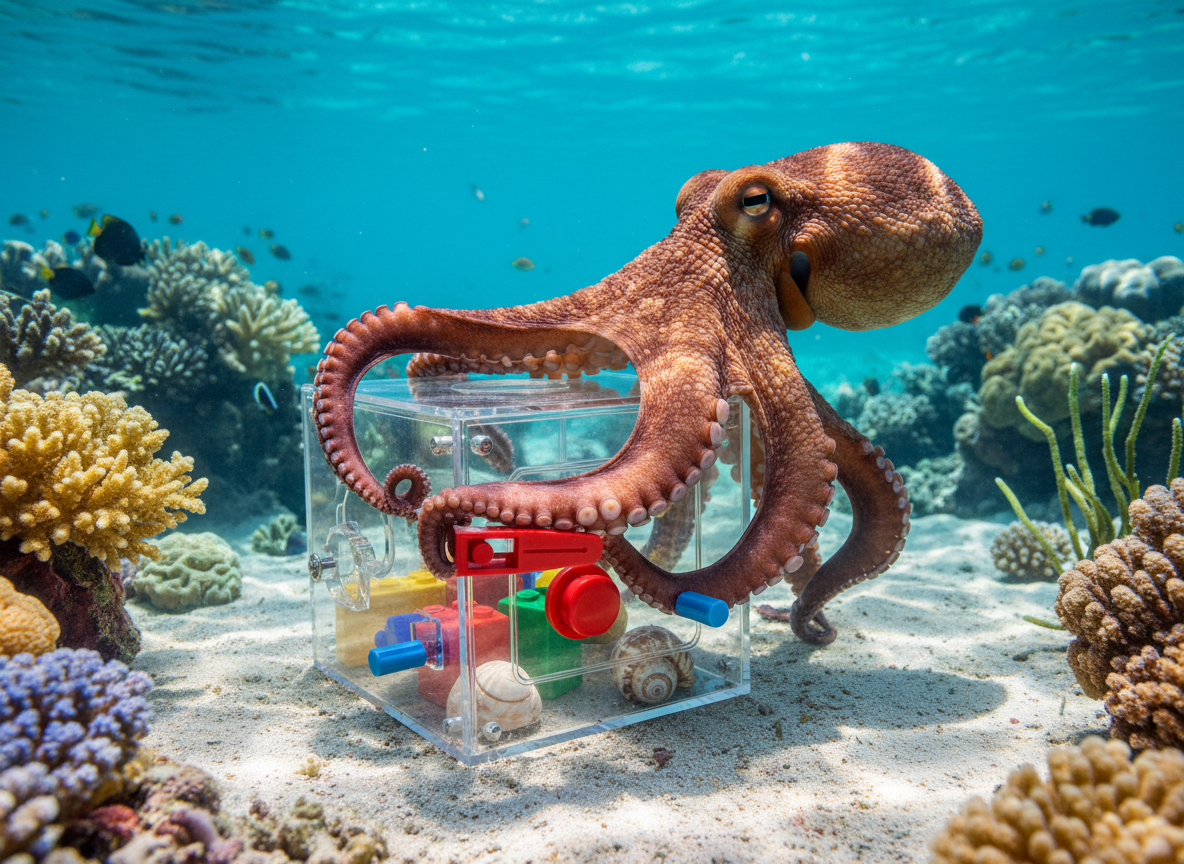
An octopus is like a puzzle solver with eight arms!
Quick Facts
Octopuses have three hearts.
They can change their skin color and texture in seconds.
Most octopuses live for only 1 to 2 years.
They are invertebrates, meaning they have no backbone.
An octopus can squeeze through very small spaces.
They are one of the smartest animals in the ocean.
Octopus blood is blue!
They use jet propulsion to move quickly.
Meet the Super-Smart Octopus Brains!
Get ready for one of the most astonishing facts about octopuses: they are incredibly intelligent! Scientists have watched octopuses do some truly mind-boggling things. For example, they can solve puzzles, navigate mazes, and even open jars with screw-on lids! Some octopuses have even been observed using tools, like stacking rocks to build a shelter or using coconut shells as a mobile home.
Their brain isn't just in their head; they have a central brain, but also mini-brains in each of their eight arms! This means each arm can act a little bit independently, helping them to explore, grab, and manipulate things all at once. Imagine if your fingers could think for themselves – that's a bit like an octopus's arms!
Masters of Disguise: Incredible Camouflage!
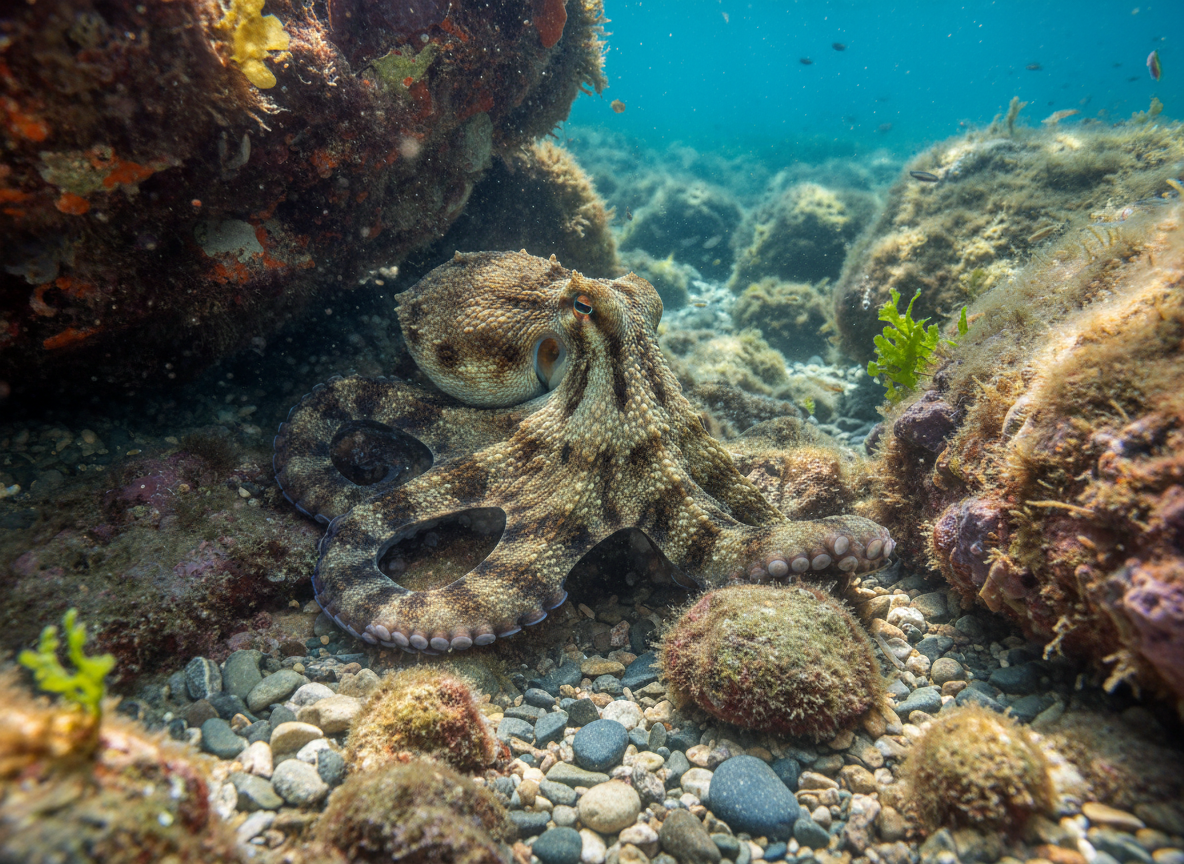
If you're playing hide-and-seek with an octopus, you're probably going to lose! Octopuses are the undisputed champions of camouflage. They can change the color, pattern, and even the texture of their skin in less than a second! This isn't just for hiding from predators like sharks; it's also how they sneak up on their prey, like crabs and fish.
How do they do it? Their skin is packed with special cells called chromatophores. These cells are like tiny bags of pigment (color) that the octopus can expand or shrink using muscles. By controlling these cells, they can blend in perfectly with rocks, sand, or coral. Some octopuses can even make their skin look bumpy and spiky to mimic seaweed or rough terrain! It's an amazing superpower that helps them survive in the vast ocean.
Eight Arms, Endless Possibilities!
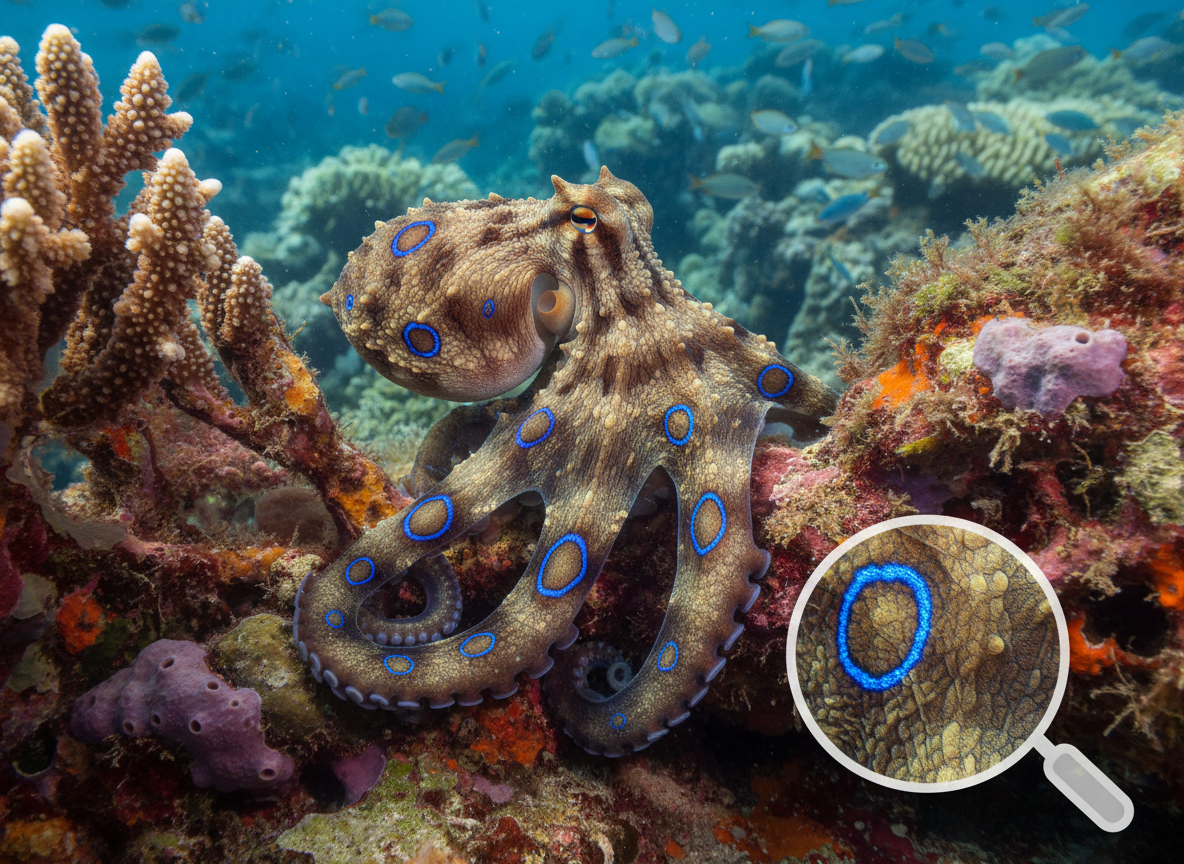
An octopus gets its name from its eight arms – 'octo' means eight. These aren't just for moving around; they are incredibly versatile tools! Each arm is covered in hundreds of suction cups, and these aren't just for sticking. The suction cups can taste what they touch, helping the octopus find food or explore its surroundings.
What do octopuses use their arms for?
Moving: They can crawl along the seafloor or use their arms to 'walk.'
Hunting: They grab prey with their powerful suckers.
Defense: They can wrap their arms around themselves to look bigger or create a barrier.
Exploring: Their arms are like super-sensitive feelers, helping them navigate dark crevices.
These arms are also incredibly strong and flexible, allowing them to squeeze into tiny spaces or hold onto slippery rocks with ease.
Blue Blood and Three Hearts: Octopus Anatomy!
Did you know an octopus has blue blood? Most animals, including humans, have red blood because of iron in our blood cells. But octopus blood contains a copper-based protein called hemocyanin, which makes their blood blue! This special blood helps them transport oxygen efficiently in the cold, deep waters where oxygen levels can be low.
Even more fascinating, octopuses have not one, not two, but three hearts! Two of their hearts pump blood through their gills (where they get oxygen), and the third, larger heart circulates blood to the rest of their body. This unique circulatory system helps them stay active and healthy in their ocean home.
Life Cycle: From Tiny Eggs to Ocean Giants
The life of an octopus is usually quite short, often lasting only one to two years, though some deep-sea species can live longer. It all begins with tiny eggs, which the female octopus carefully lays and protects. She might lay tens of thousands of eggs, attaching them to the roof of her den or to rocks in strings or clusters.
During this time, the mother octopus is incredibly dedicated. She often stops eating and spends all her time guarding her eggs, cleaning them, and blowing water over them to keep them healthy. After the eggs hatch, the tiny baby octopuses, called paralarvae, float in the ocean currents, growing rapidly. It's a tough journey, but those that survive grow into the amazing, intelligent creatures we've been learning about!
Educational Standards & Fact-Checking
Reviewed by KidsColouring Editorial Team
Educational References & Scientific Sources
Our curriculum and factual articles are synthesized from trusted academic encyclopedias, wildlife conservation bodies, and public science institutions:
- •Smithsonian Institution Educational Resources & National Zoo Archives — Smithsonian Institution
- •National Geographic Kids Science & Animal Encyclopedias — National Geographic Society
- •Encyclopaedia Britannica Academic & Elementary Learning Reference — Encyclopaedia Britannica


