
Rainbow Facts for Kids: The Science Behind Nature's Colorful Arc at a Glance
Topic Focus
Rainbow Facts for Kids: The Science Behind Nature's Colorful Arc
Learning Level
Ages 4–10 (Preschool to Grade 4)
Subject Area
Science Facts
Format
Verified Fun Facts & Guided Exploration
Rainbow Facts for Kids: The Science Behind Nature's Colorful Arc
Have you ever looked up at the sky after a rain shower and seen a magnificent arc of colors stretching across the horizon? That, of course, is a rainbow! Rainbows are one of nature's most beautiful and magical sights, but did you know they're also a fantastic example of science in action? It's true! What looks like magic is actually light, water, and air working together in a very special way.
For thousands of years, people have been fascinated by rainbows. Ancient stories often saw them as bridges to other worlds or signs from powerful gods. Today, thanks to curious scientists, we understand much more about how these dazzling displays happen. Get ready to explore the exciting world of light and water droplets as we uncover the amazing science that creates every single rainbow!
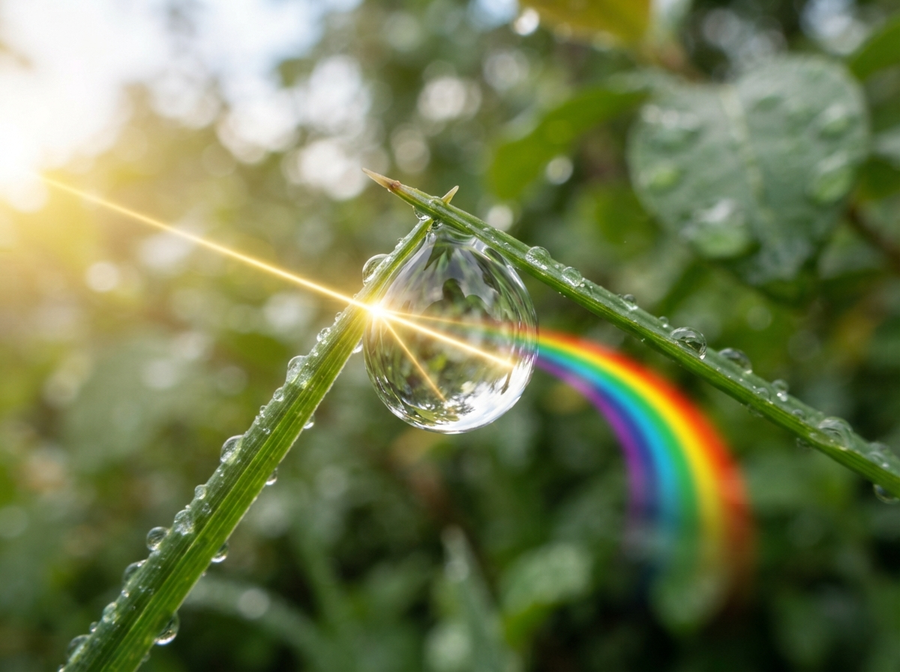
A rainbow is a beautiful reminder that even after the storm, there's always light and color to be found.
Quick Facts
Rainbows are caused by sunlight shining through raindrops.
You can only see a rainbow if the sun is behind you and rain is in front of you.
A rainbow is actually a full circle, but we usually only see half of it from the ground.
The colors of a rainbow always appear in the same order: Red, Orange, Yellow, Green, Blue, Indigo, Violet (ROY G. BIV).
No two people see exactly the same rainbow.
Sometimes, you can see a fainter 'double rainbow' above the first one.
What Makes a Rainbow Appear?
To understand rainbows, we need to talk about two very important things: sunlight and raindrops. Sunlight, which looks white to our eyes, is actually made up of all the colors of the rainbow mixed together. Think of it like a secret message hidden inside the light! Raindrops, on the other hand, act like tiny prisms. A prism is a special shape, usually made of glass, that can split white light into its individual colors.
When sunlight hits a raindrop, a few amazing things happen. First, the light bends as it enters the water. This bending is called refraction. Once inside the raindrop, the light bounces off the back inner surface of the drop. This is called reflection. Finally, as the light leaves the raindrop and comes back towards your eyes, it bends again (refracts) and spreads out even more into all its different colors. Each tiny raindrop acts like a miniature light show, sending specific colors of light back to your eyes.
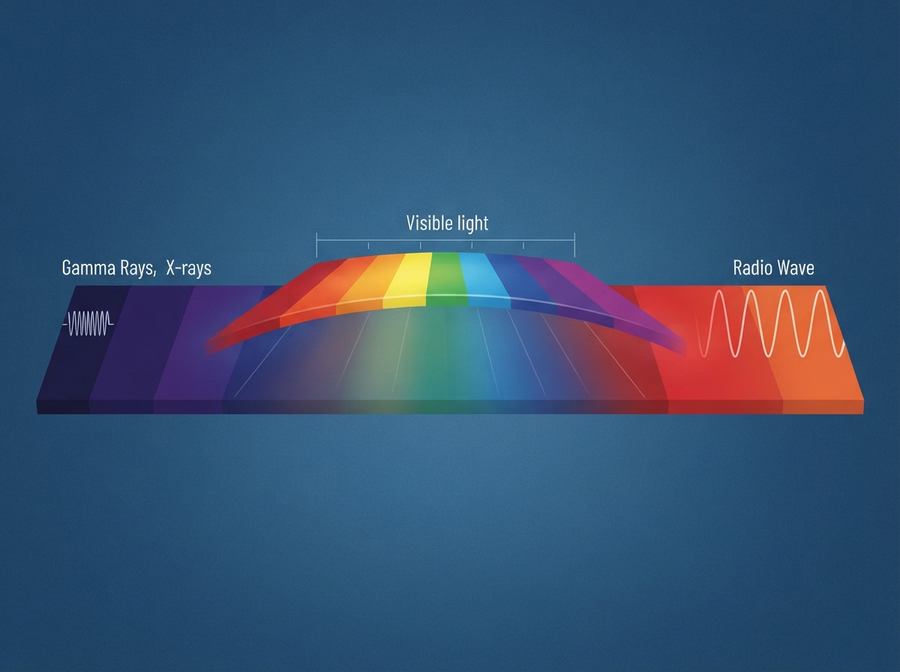
The Colors of the Rainbow: ROY G. BIV
Have you ever heard the saying 'ROY G. BIV'? It's a super helpful acronym to remember the order of rainbow colors: Red, Orange, Yellow, Green, Blue, Indigo, Violet. These colors always appear in this exact order, from the outside (red) to the inside (violet) of the rainbow arc. But why this order?
It all goes back to how light bends. Different colors of light have slightly different wavelengths, and because of this, they bend at slightly different angles when they pass through water. Red light bends the least, so it appears at the top or outside of the rainbow. Violet light bends the most, so it appears at the bottom or inside. All the other colors fall in between, creating that beautiful, orderly spectrum we see.
Here's a closer look at the order:
Red: The outermost color, bending the least.
Orange: Just inside the red.
Yellow: The bright middle color.
Green: Next to yellow, a cool color.
Blue: A deeper cool color.
Indigo: A dark blue-purple, sometimes hard to tell apart from blue or violet.
Violet: The innermost color, bending the most.
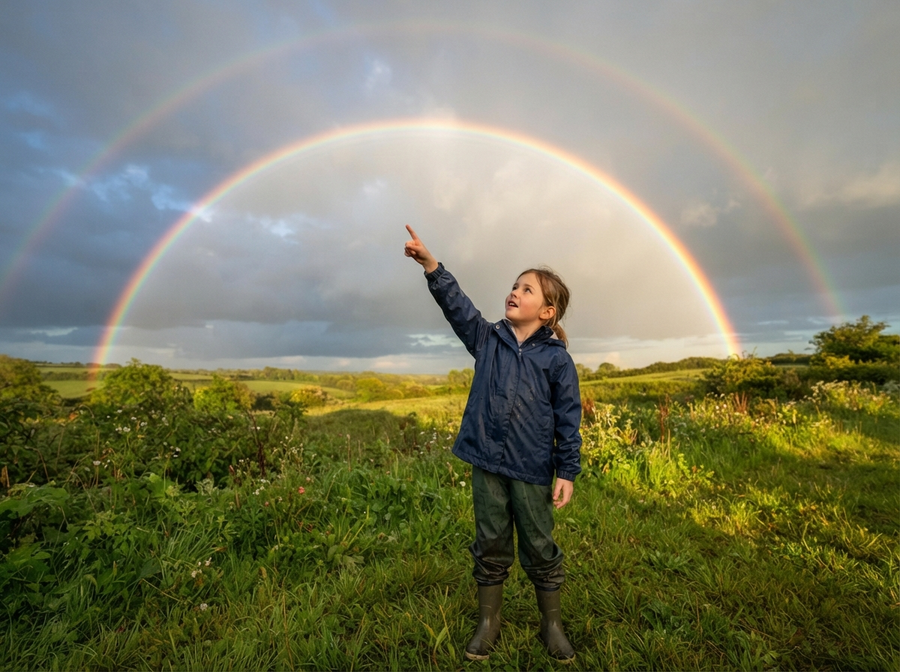
Why Are Rainbows Arcs? And Can You See a Full Circle?
When you look at a rainbow from the ground, it almost always looks like a half-circle or an arc. This is because of where you are standing in relation to the sun and the raindrops. To see a rainbow, the sun must be behind you, and the rain must be in front of you. The center of the rainbow's arc is always directly opposite the sun's position in the sky.
But here's a fun secret: a rainbow is actually a full circle! We just don't usually see the bottom half because the ground gets in the way. If you were in an airplane or on a very tall mountain looking down into a patch of rain, you might be lucky enough to see a complete circular rainbow! Imagine that, a perfect ring of colors!
The specific angle at which the light reflects and refracts inside the raindrops, combined with your viewing position, is what creates this circular shape. Each raindrop sends a cone of light back to your eye, and when all those cones from millions of raindrops combine, they form the arc we see.
Double Rainbows and Other Rainbow Wonders
Sometimes, if you're really lucky, you might spot a fainter second rainbow above the first one. This is called a double rainbow! How does this happen? It occurs when sunlight reflects twice inside the raindrops instead of just once. Because of this extra reflection, the colors in the second rainbow are actually reversed! So, in a double rainbow, the top rainbow will have violet on the outside and red on the inside.
There are even rarer types of rainbows, like 'supernumerary bows' which are faint, narrow bands of color sometimes seen inside the primary rainbow, or 'moonbows' which are rainbows created by moonlight instead of sunlight. Moonbows are much fainter and often appear white to our eyes because there isn't enough light to activate our color vision fully.
Your Unique Rainbow Experience
Did you know that no two people ever see the exact same rainbow? It's true! Because a rainbow's appearance depends on where you are standing in relation to the sun and the raindrops, each person's eyes receive light from slightly different raindrops. So, the rainbow you see is unique to you!
This makes rainbows even more special. They are a personal natural phenomenon, a beautiful optical illusion painted just for your eyes. Next time you see one, take a moment to appreciate this amazing scientific display that is happening just for you, thanks to the wonderful interaction of light and water.
Want to bring some rainbow magic to your day? You can explore our collection of rainbow coloring pages and create your own colorful masterpieces online or print them out!
Educational Standards & Fact-Checking
Reviewed by KidsColouring Editorial Team
Educational References & Scientific Sources
Our curriculum and factual articles are synthesized from trusted academic encyclopedias, wildlife conservation bodies, and public science institutions:
- •Smithsonian Institution Educational Resources & National Zoo Archives — Smithsonian Institution
- •National Geographic Kids Science & Animal Encyclopedias — National Geographic Society
- •Encyclopaedia Britannica Academic & Elementary Learning Reference — Encyclopaedia Britannica


