
Giant Panda Facts for Kids: Discover the Bamboo-Loving Bear! at a Glance
Topic Focus
Giant Panda Facts for Kids: Discover the Bamboo-Loving Bear!
Learning Level
Ages 4–10 (Preschool to Grade 4)
Subject Area
Animal Facts
Format
Verified Fun Facts & Guided Exploration
Giant Panda Facts for Kids: Discover the Bamboo-Loving Bear!
Hello, curious explorers! Get ready to embark on an exciting adventure into the world of one of Earth's most beloved and unique animals: the Giant Panda! With their distinctive black and white fur, playful antics, and a love for munching on bamboo, pandas capture hearts all around the globe. But there's so much more to these gentle giants than meets the eye!
Imagine a bear that spends most of its day eating, climbing trees, and sometimes even doing somersaults! That's a Giant Panda for you. They are truly special creatures, and by learning about them, we can understand why it's so important to protect them and their natural homes. So, let's dive in and uncover some incredible secrets about these amazing bamboo-loving bears!
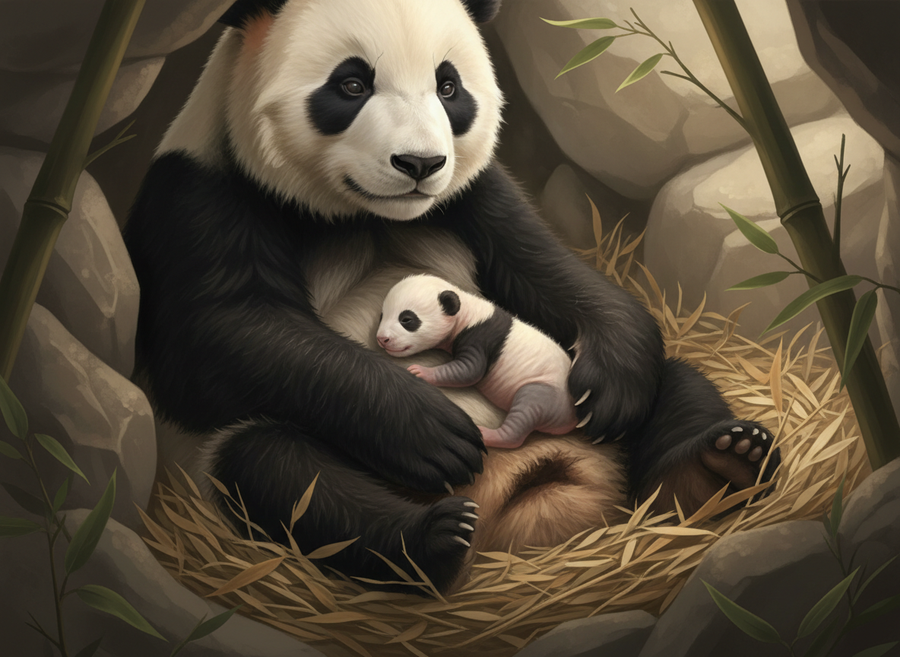
A Giant Panda's day is mostly about eating bamboo, climbing trees, and being super cute!
Quick Facts
Giant Pandas are native to the mountains of central China.
Their diet is almost entirely bamboo – they can eat up to 40 pounds a day!
They have an extra 'thumb' (a modified wrist bone) to help them hold bamboo.
Despite being bears, they don't truly hibernate like some other bear species.
Baby pandas are born tiny, pink, and blind, weighing less than a stick of butter.
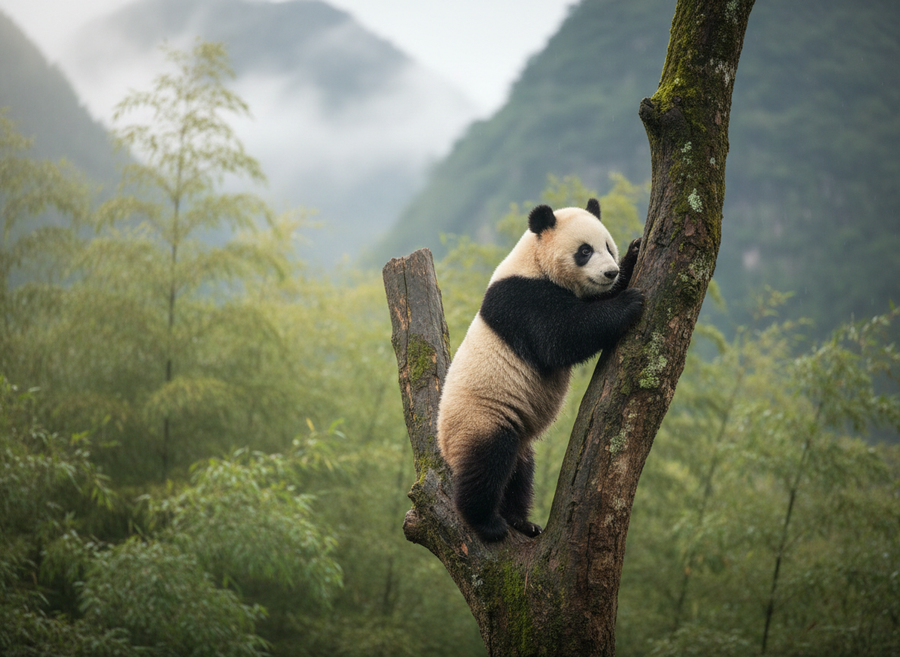
Giant Pandas are excellent tree climbers and can even swim!
Their black and white fur helps them camouflage in snowy and rocky habitats.
Where Do Giant Pandas Live?
Giant Pandas call the cool, misty mountains of central China their home. They live in dense bamboo forests high up in the mountains, where it's often cloudy and rainy. These forests provide everything a panda needs: plenty of bamboo to eat, tall trees for climbing and shelter, and a quiet place to raise their cubs. Imagine a giant, fluffy bear quietly munching on bamboo shoots amidst towering green plants – that's a typical panda scene!
Unfortunately, the amount of space where pandas can live has shrunk over time. This is why they are considered a vulnerable species, meaning they need our help to protect their homes. Conservationists and scientists work hard to create safe environments for pandas, ensuring they have enough bamboo and peace to thrive. These efforts include setting up special reserves where pandas are protected from harm and their habitat is carefully managed.
What Do Giant Pandas Eat All Day?
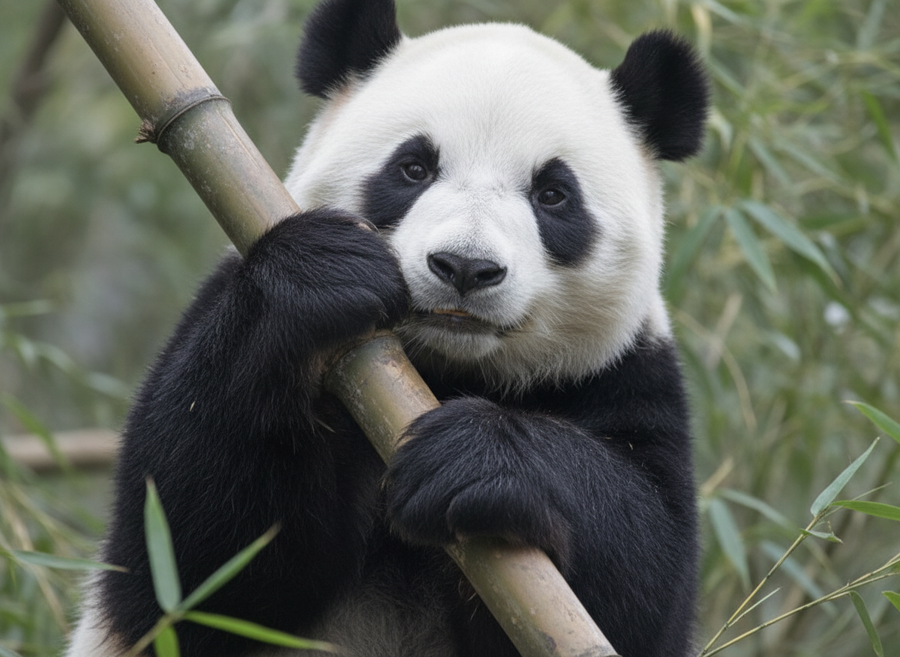
If you were a Giant Panda, your favorite food would be bamboo, bamboo, and more bamboo! About 99% of a panda's diet consists of different parts of the bamboo plant, including the stalks, shoots, and leaves. They spend a huge part of their day – sometimes up to 14 hours! – just eating. To give you an idea, an adult panda can eat anywhere from 20 to 40 pounds of bamboo every single day! That's like eating over 100 bamboo sticks!
Even though they are bears and their ancestors used to eat meat, pandas have adapted over millions of years to become bamboo specialists. Their strong jaws and powerful teeth are perfect for crushing tough bamboo stalks. They also have a special 'thumb' – it's not a real thumb like ours, but an extra bone in their wrist that acts like one – which helps them grip bamboo stalks tightly while they munch. It's a super cool adaptation that makes them very efficient eaters.
Panda Babies: Tiny and Special!
When a baby panda, called a cub, is born, it's one of the tiniest newborns in the animal kingdom compared to its mother's size. A newborn panda cub is pink, hairless, blind, and weighs only about 3 to 5 ounces. That's smaller than a stick of butter! Imagine a huge panda mom, weighing hundreds of pounds, giving birth to a baby so small and delicate. It's truly amazing!
Panda mothers are incredibly caring. They cradle their tiny cubs close to them, protecting them and keeping them warm. For the first few months, the cub relies entirely on its mother for milk and protection. They grow quickly, and after about three months, they start to develop their iconic black and white fur and can see the world around them. They will stay with their mothers for up to two or three years, learning important panda skills like climbing and finding the best bamboo.
Protecting Our Panda Friends
Giant Pandas are a symbol of wildlife conservation around the world. For many years, they were considered endangered, meaning they were at a very high risk of disappearing forever. Thanks to incredible efforts by scientists, governments, and people like you who care about animals, their status has improved to 'vulnerable.'
What does 'vulnerable' mean? It means they are still at risk, but their numbers are increasing, and we have a better chance of saving them! These efforts include protecting their bamboo forests, creating safe corridors for them to move between habitats, and even breeding programs in zoos that help increase their population before releasing some back into the wild. Every time you learn about pandas or share facts with your friends, you're helping to raise awareness and contribute to their future. Together, we can make sure these magnificent, bamboo-loving bears continue to thrive for generations to come!
Educational Standards & Fact-Checking
Reviewed by KidsColouring Editorial Team
Educational References & Scientific Sources
Our curriculum and factual articles are synthesized from trusted academic encyclopedias, wildlife conservation bodies, and public science institutions:
- •Smithsonian Institution Educational Resources & National Zoo Archives — Smithsonian Institution
- •National Geographic Kids Science & Animal Encyclopedias — National Geographic Society
- •Encyclopaedia Britannica Academic & Elementary Learning Reference — Encyclopaedia Britannica


