
Amazing Seahorse Facts for Kids at a Glance
Topic Focus
Amazing Seahorse Facts for Kids
Learning Level
Ages 4–10 (Preschool to Grade 4)
Subject Area
Ocean Facts
Format
Verified Fun Facts & Guided Exploration
Amazing Seahorse Facts for Kids: Uncovering Ocean Wonders
Imagine a tiny creature with a horse-like head, a monkey-like tail, and a pouch like a kangaroo! Does it sound like something from a fantasy story? Well, it's real, and it lives in our oceans! We're talking about the incredible seahorse, one of the most unique and charming animals you'll ever learn about. These delicate underwater marvels are full of surprises, from how they eat to how they have their babies.
Seahorses are not fish in the way a shark or a tuna is, but they are indeed a type of fish! They belong to the genus Hippocampus, which comes from ancient Greek words meaning 'horse' and 'sea monster.' But don't let 'sea monster' fool you; seahorses are gentle, slow-moving creatures that play an important role in their underwater homes. Let's dive into the fascinating world of seahorses and discover what makes them so extraordinary!
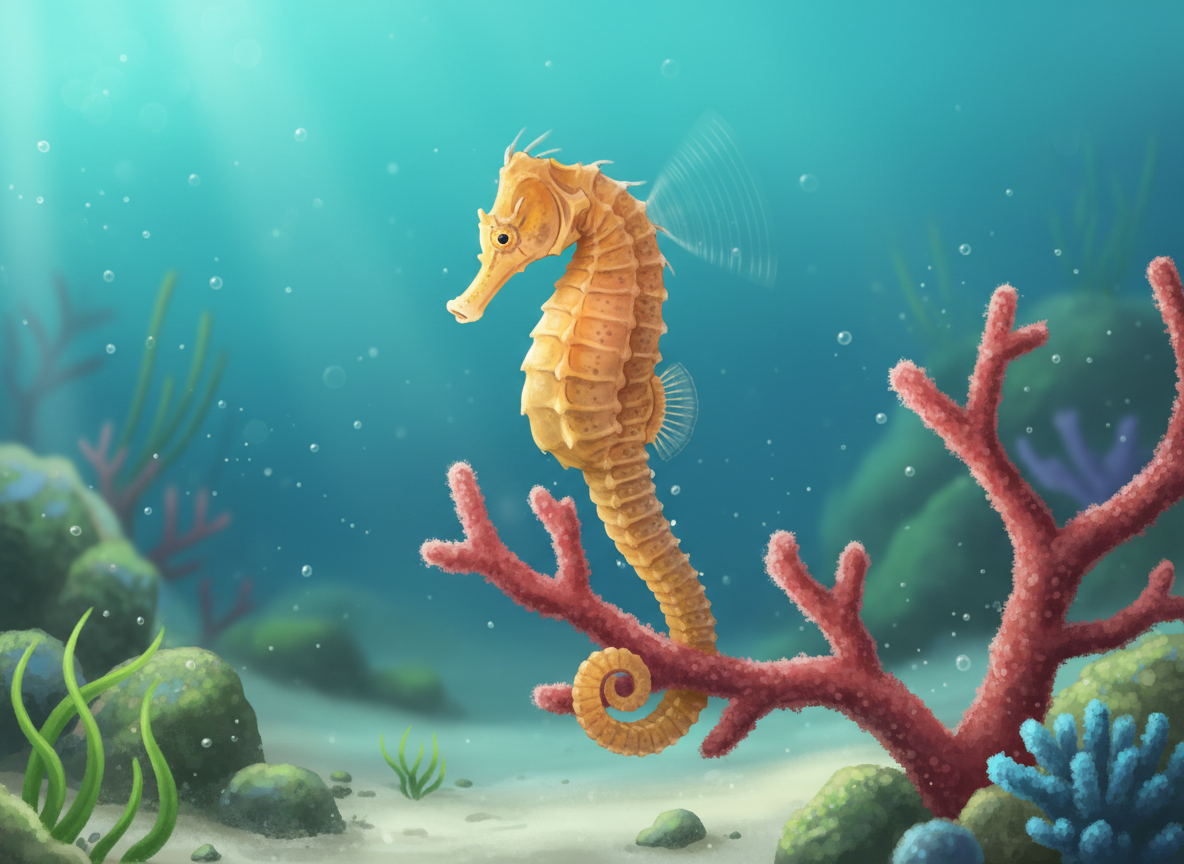
Seahorses are like tiny, magical horses of the sea, full of amazing secrets!
Quick Facts
There are over 40 different types of seahorses, all with unique patterns and sizes.
Seahorses are the only fish that swim upright, not horizontally like most other fish.
They use their curly tails to grab onto seaweed and coral, so they don't drift away.
A seahorse's eyes can move independently, looking forward and backward at the same time!
They don't have teeth or a stomach; food passes through their system very quickly.
Male seahorses are the ones who carry and give birth to the babies.
Seahorses can change color to blend in with their surroundings, like chameleons.
They eat tiny crustaceans by sucking them up like a vacuum cleaner.
What Makes a Seahorse a Fish?
Even though they look so different from typical fish, seahorses are indeed bony fish. They have fins, gills for breathing underwater, and a swim bladder to help them float. However, they have some very special adaptations that set them apart:
Unique Shape: Their upright posture and horse-like head are unmistakable.
Dorsal Fin Power: Unlike most fish that use a tail fin for propulsion, seahorses use a small fin on their back (dorsal fin) that flutters incredibly fast, up to 35 times per second! This makes them slow swimmers, but very precise.
Prehensile Tail: Their tails are like a monkey's tail – they can grip onto things! This is super helpful in strong currents, keeping them anchored to plants or corals.
Bony Plates: Instead of scales, seahorses have a series of bony plates under their skin, which acts like armor to protect them from predators.
These features help them survive in their marine habitats, usually shallow, temperate, and tropical waters around the world, especially in seagrass beds and coral reefs.
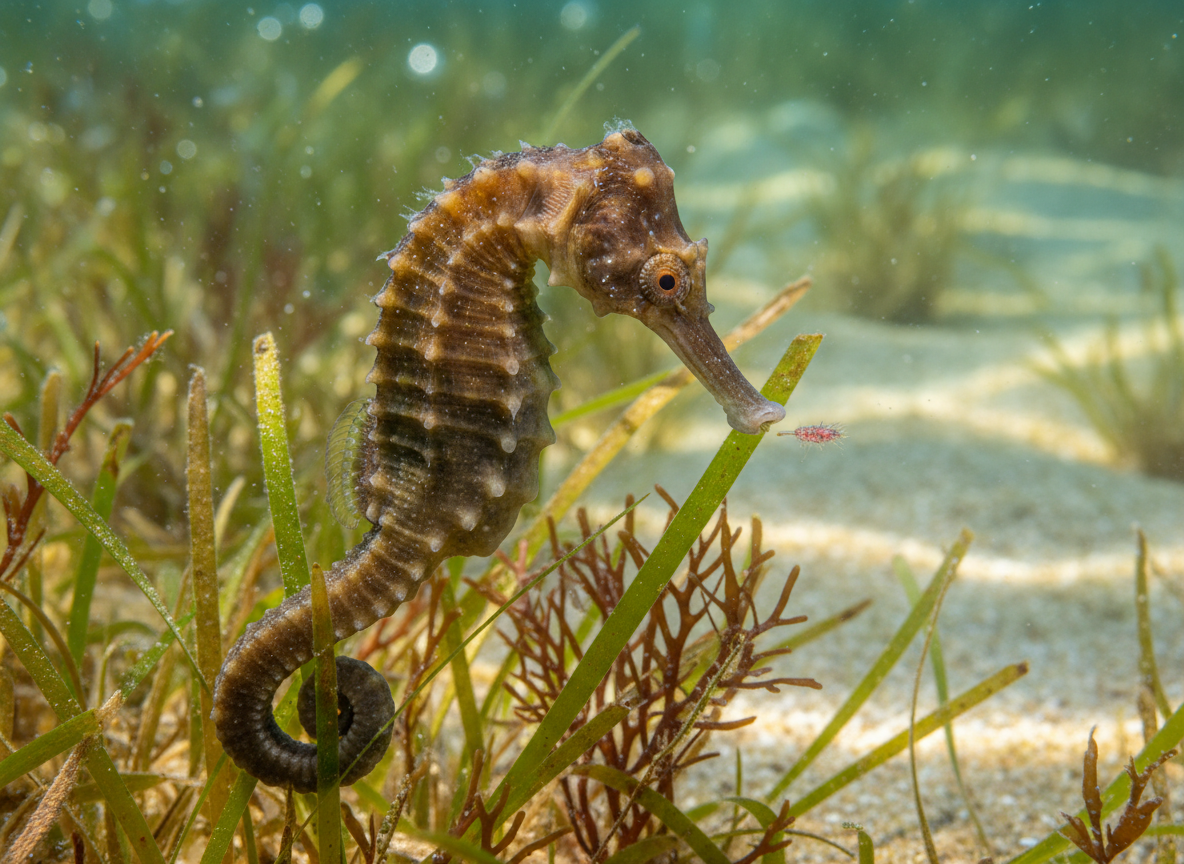
Amazing Camouflage and Feeding Habits
Seahorses are masters of disguise! Many species can change their color and even grow skin filaments to match their surroundings. This amazing camouflage helps them hide from predators and ambush their prey. Imagine being able to look exactly like the plant you're clinging to – that's a seahorse superpower!
When it comes to eating, seahorses are quite particular. They are carnivores, which means they eat meat, but only tiny animals. They love munching on small crustaceans like brine shrimp and copepods. Since they are slow swimmers, they rely on their camouflage and excellent vision to catch their meals. Their eyes can move independently, allowing them to scan their environment for food and danger at the same time!
When a tasty morsel swims by, the seahorse uses its long snout like a straw, quickly sucking up its prey with a powerful snap of its head. This vacuum-like feeding action is incredibly fast – one of the fastest movements in the animal kingdom! Because they don't have a stomach, they need to eat almost constantly to get enough nutrients, making them busy little eaters.
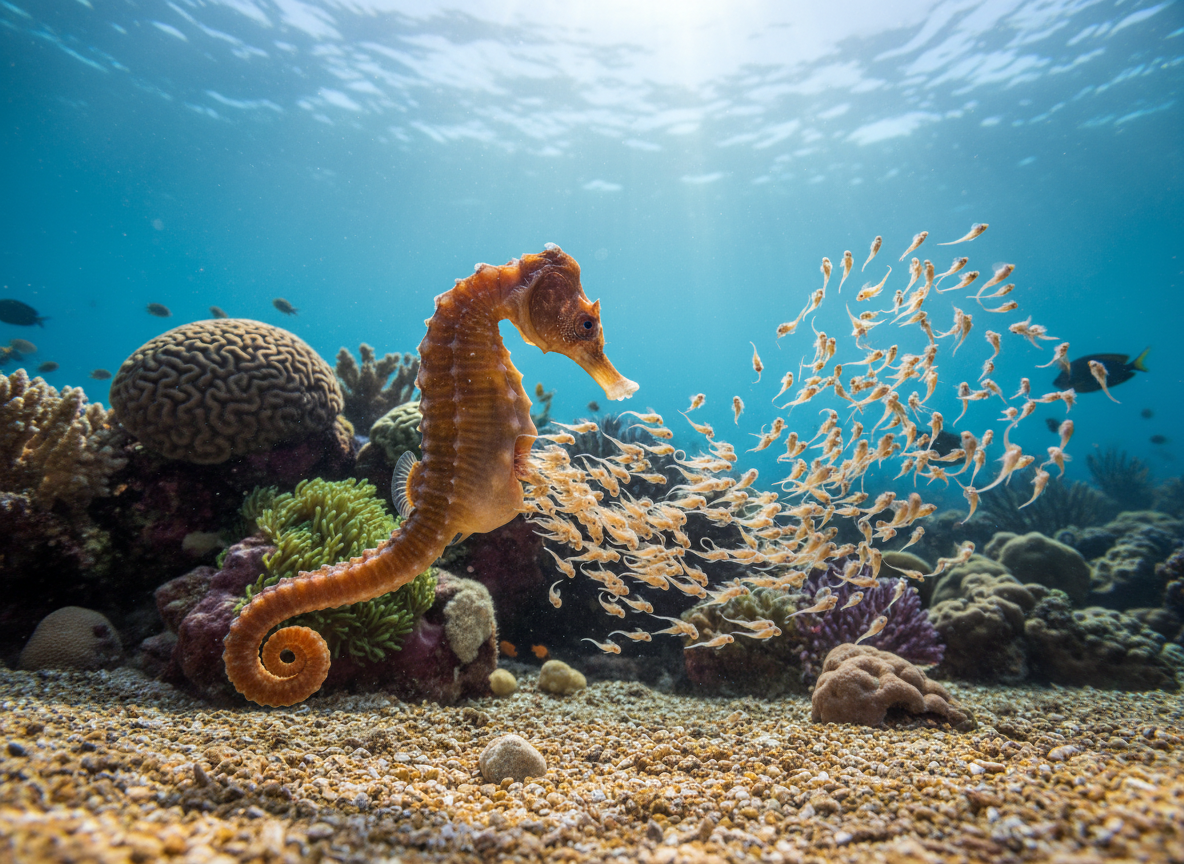
The Incredible Role of the Male Seahorse
One of the most astonishing facts about seahorses is their unique way of having babies. In almost all other animals, the female carries the young, but not with seahorses! The male seahorse is the one who gets pregnant and gives birth. It's a truly amazing process:
Courtship Dance: Seahorses engage in a beautiful courtship dance that can last for several days. They entwine their tails and swim together.
Egg Transfer: The female deposits her eggs into a special brood pouch located on the male's abdomen.
Male Pregnancy: The male then fertilizes the eggs inside his pouch and carries them for several weeks, protecting them as they develop. He even provides nutrients to the growing embryos.
Birth: When the babies (called 'fry') are ready, the male goes through labor, contracting his pouch muscles to release hundreds of tiny, perfectly formed seahorses into the water. It's quite a sight to behold!
This incredible parental care ensures that the delicate baby seahorses have the best chance to survive in the big ocean. The male's dedication is truly heartwarming.
Where Do Seahorses Live and Why Are They Important?
Seahorses can be found in shallow tropical and temperate waters all over the world, from the Atlantic to the Pacific Oceans. They prefer habitats with plenty of places to cling to, like:
Seagrass Beds: These underwater meadows provide food, shelter, and a perfect hiding spot.
Coral Reefs: The intricate structures of coral offer protection and a rich variety of tiny prey.
Mangrove Forests: The roots of mangrove trees create a sheltered environment for many young marine animals, including seahorses.
Seahorses are an important part of the marine ecosystem. They help control populations of tiny crustaceans, and in turn, they can be a food source for larger predators, although their bony plates make them a less appealing meal. Unfortunately, many seahorse species are facing challenges due to habitat loss, pollution, and being caught for traditional medicine or the aquarium trade. Protecting their homes, like seagrass and coral reefs, is crucial for these enchanting creatures to thrive.
Learning about seahorses helps us understand how special and interconnected our ocean world is. Every creature, no matter how small or unusual, plays a vital role. If you love these amazing animals, you can explore their world even more by coloring some fantastic seahorse pictures! You can find lots of free seahorse coloring pages to color online or print out and enjoy.
Educational Standards & Fact-Checking
Reviewed by KidsColouring Editorial Team
Educational References & Scientific Sources
Our curriculum and factual articles are synthesized from trusted academic encyclopedias, wildlife conservation bodies, and public science institutions:
- •Smithsonian Institution Educational Resources & National Zoo Archives — Smithsonian Institution
- •National Geographic Kids Science & Animal Encyclopedias — National Geographic Society
- •Encyclopaedia Britannica Academic & Elementary Learning Reference — Encyclopaedia Britannica


