
Whale Wonders: Fascinating Facts About These Ocean Giants at a Glance
Topic Focus
Whale Wonders: Fascinating Facts About These Ocean Giants
Learning Level
Ages 4–10 (Preschool to Grade 4)
Subject Area
Ocean Facts
Format
Verified Fun Facts & Guided Exploration
Whale Wonders: Fascinating Facts About These Ocean Giants
Imagine an animal as big as a school bus, living its whole life in the vast, blue ocean. That's a whale! Whales are some of the most incredible creatures on Earth, and they've been swimming our planet's waters for millions of years. They're not fish, even though they live in the water. Whales are mammals, just like us! This means they breathe air, are warm-blooded, and mothers feed their babies milk.
From the tiniest dolphin (which is a type of toothed whale!) to the colossal blue whale, these ocean giants have many secrets to share. Get ready to dive deep and discover some truly amazing facts about whales, their unique ways of life, and why they are so important to our planet's health. You'll be surprised by what you learn about these magnificent marine marvels!
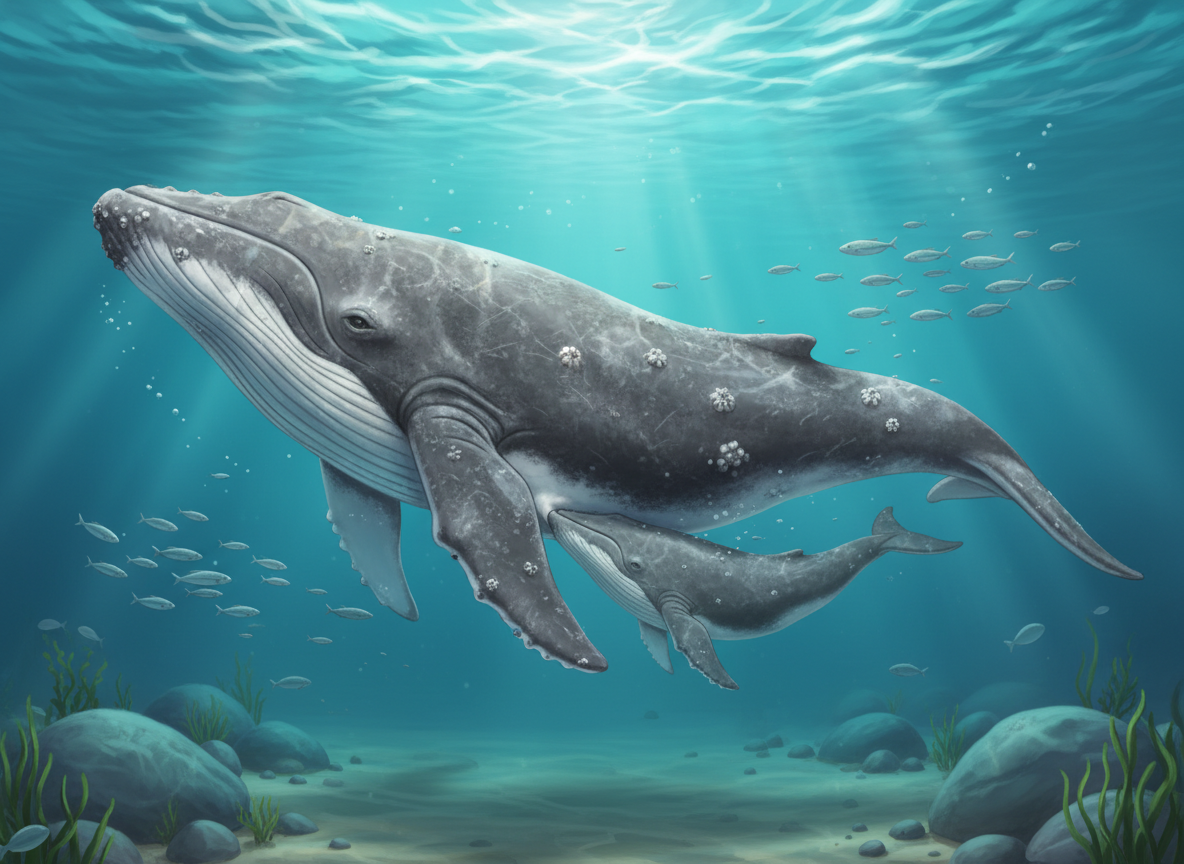
Whales are the gentle giants of the ocean, singing their stories across the waves.
Quick Facts
Whales breathe air through blowholes on top of their heads.
The blue whale is the largest animal ever known to have lived on Earth.
Some whales, like humpbacks, sing long, complex songs.
Whales use echolocation (like sonar) to find food and navigate.
Baby whales are called calves and are born underwater.
There are two main types of whales: toothed whales and baleen whales.
Whales migrate thousands of miles between feeding and breeding grounds.
What Makes a Whale a Mammal?
It might seem strange that an animal living entirely in the ocean isn't a fish, but whales are indeed mammals! This means they share several key characteristics with humans, dogs, and elephants. Let's explore what makes them part of the mammal family:
Air-Breathing: Unlike fish that use gills to take oxygen from water, whales must come to the surface to breathe air through their blowholes. A blowhole is like a nostril on top of their head! They can hold their breath for a very long time, with some whales diving for over an hour.
Warm-Blooded: Whales can maintain a constant body temperature, even in cold ocean waters. They have a thick layer of blubber (fat) under their skin that acts like a built-in wetsuit to keep them warm.
Live Birth and Milk Feeding: Female whales give birth to live young, called calves, underwater. The mother then nurses her calf with rich, fatty milk, helping it grow big and strong very quickly.
Hair: Believe it or not, most whales have a few hairs, especially when they are young or around their jaws. These are often sensory hairs, helping them to feel their surroundings.
These features show just how unique whales are, perfectly adapted to their watery home while still being part of the mammal family tree.
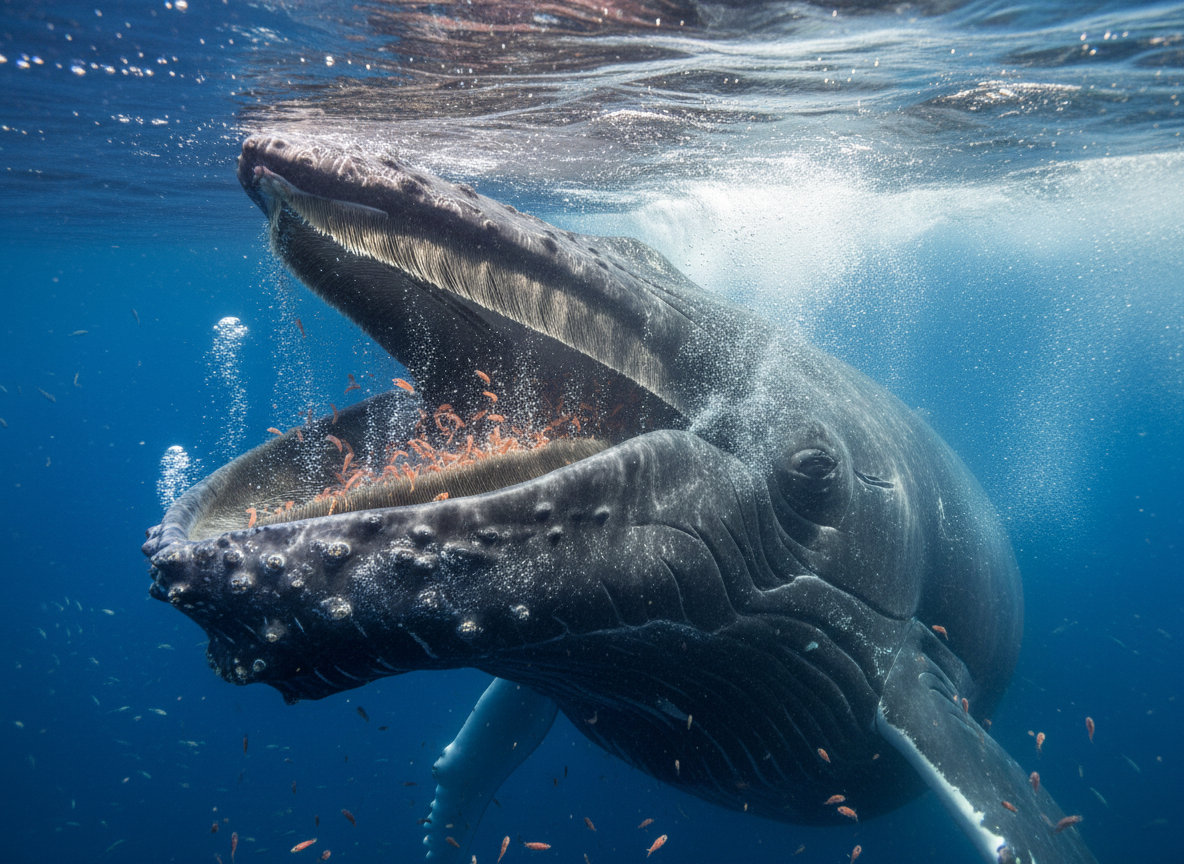
Two Big Whale Families: Toothed and Baleen Whales
Did you know there isn't just one type of whale? Scientists group whales into two main categories, and their mouths are the biggest clue!
Toothed Whales (Odontocetes): These whales have teeth, just like us! They use their teeth to catch and eat prey like fish, squid, and even other marine mammals. Dolphins and porpoises are actually types of toothed whales. The orca, or killer whale, is another famous toothed whale known for being a powerful hunter. Sperm whales, with their enormous heads, are also toothed whales and are famous for diving incredibly deep to hunt giant squid. Many toothed whales also use a special ability called echolocation. They send out clicks and listen for the echoes to create a sound picture of their surroundings, helping them navigate and find food in dark or murky waters.
Baleen Whales (Mysticetes): These whales don't have teeth. Instead, they have hundreds of baleen plates hanging from their upper jaws. Baleen looks and feels a bit like a giant comb or brush made of fingernail material. Baleen whales feed by taking huge gulps of water, then pushing the water out through the baleen plates. Tiny krill (small shrimp-like creatures) and small fish get trapped on the inside of the baleen, which the whale then swallows. The blue whale, humpback whale, and gray whale are all baleen whales.
Each type of whale has developed amazing ways to find food and survive in the vast ocean.
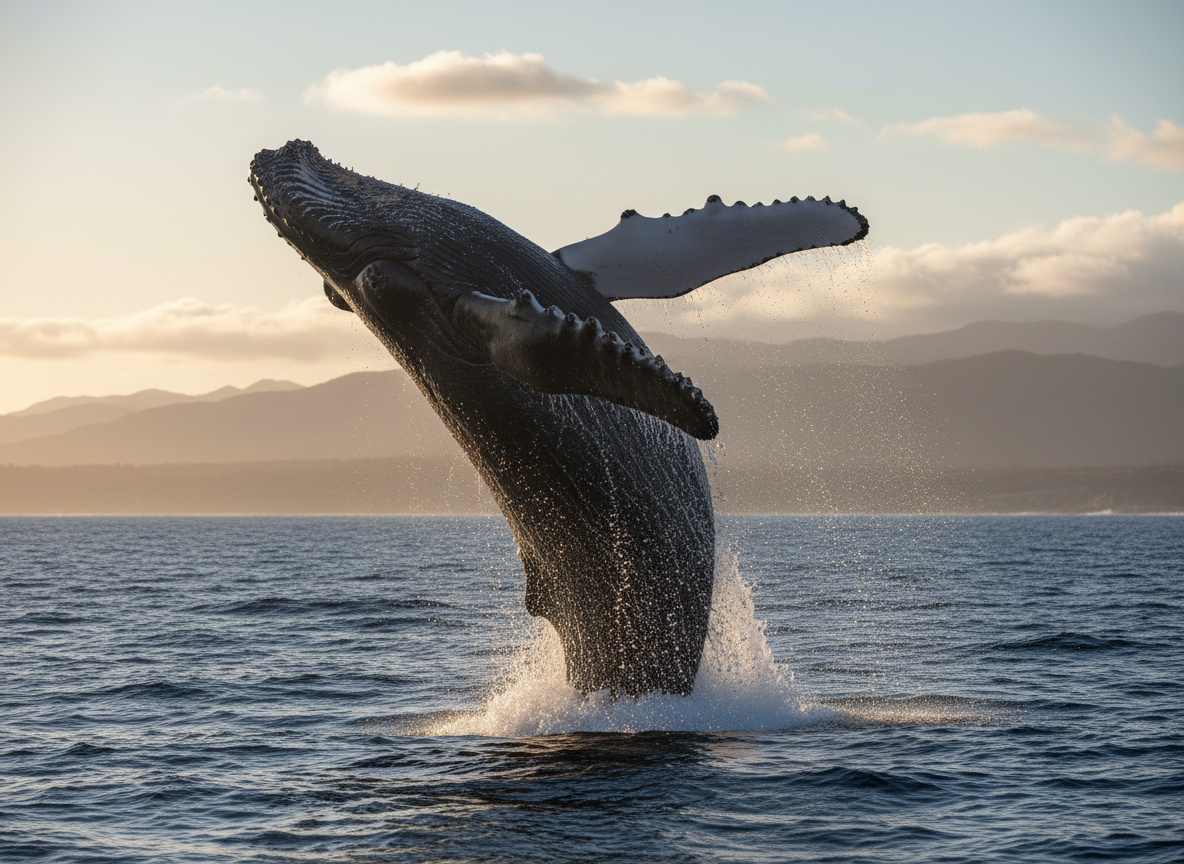
The Largest Animal on Earth: The Blue Whale
When we talk about giants, no animal on Earth compares to the blue whale. It is not just the largest whale; it is the largest animal that has ever lived, even bigger than the biggest dinosaurs! A blue whale can grow up to 100 feet long – that's longer than three school buses lined up end-to-end! They can weigh as much as 200 tons, which is like 30 elephants.
Despite their enormous size, blue whales eat tiny creatures called krill. They are baleen whales, and they can eat up to 4 tons of krill every single day! To do this, they take enormous gulps of water, expanding their throat pleats like a giant accordion, and then filter out the krill. It's an incredible feat of nature to sustain such a massive body on such small food.
Whale Songs and Incredible Journeys
Whales are also famous for their communication. Many whales, especially humpback whales, are known for their incredibly complex and beautiful songs. These songs can last for many minutes and are sometimes repeated for hours! Scientists believe these songs are used for communication, especially during mating season, and can travel for hundreds of miles underwater.
Beyond singing, whales are master travelers. Many species undertake epic migrations each year, swimming thousands of miles between their feeding grounds and breeding grounds. For example, gray whales travel from the cold Arctic waters, where they feed, all the way down to warmer lagoons in Mexico to give birth to their calves. These journeys are some of the longest migrations of any mammal on Earth, showing their incredible endurance and navigational skills.
Why Whales are So Important to Our Planet
Whales are not just fascinating; they play a super important role in keeping our oceans healthy. They are often called 'ocean engineers' or 'gardeners of the sea.' How? When whales dive deep to feed and then come to the surface to breathe and release waste, they help to mix nutrients in the ocean. This mixing helps tiny plant-like organisms called phytoplankton to grow. Phytoplankton are the base of the ocean food web and produce a lot of the oxygen we breathe!
When whales eventually die, their bodies sink to the ocean floor in what's known as a 'whale fall.' These whale falls create an entire ecosystem for deep-sea creatures, providing food and shelter for years, sometimes even decades. Protecting whales means protecting the health of our entire ocean, which is good for all life on Earth, including us!
We hope you've enjoyed learning about these magnificent creatures. If you want to continue your ocean adventure, why not explore our free whale coloring pages? You can color online or print them out and bring these amazing giants to life with your own colors!
Educational Standards & Fact-Checking
Reviewed by KidsColouring Editorial Team
Educational References & Scientific Sources
Our curriculum and factual articles are synthesized from trusted academic encyclopedias, wildlife conservation bodies, and public science institutions:
- •Smithsonian Institution Educational Resources & National Zoo Archives — Smithsonian Institution
- •National Geographic Kids Science & Animal Encyclopedias — National Geographic Society
- •Encyclopaedia Britannica Academic & Elementary Learning Reference — Encyclopaedia Britannica


