Science Facts6 min read8/4/2026

Rainbow Facts for Kids: The Science Behind Nature's Colorful Arc

Have you ever seen a rainbow stretching across the sky after a rainstorm and wondered how it got there? Rainbows are one of nature's most magical light shows, and the science behind them is just as amazing as they look! A rainbow happens when sunlight and water droplets work together in a special way. When the sun shines while it's still raining, or just after the rain stops, you might spot this colorful arc in the sky. The light bends and bounces inside millions of tiny water droplets floating in the air, and that's what creates the beautiful bands of color we see.

The best part? You don't need any special equipment or magic to understand rainbows—just some basic science! Every rainbow follows the same rules of light and physics, which means once you learn how they form, you'll be able to spot them and explain them to your friends. In this article, we'll explore the fascinating world of rainbows, from why they always appear in a curved arc to why they have those specific colors in that exact order.

rainbow, coast, desktop backgrounds, full hd wallpaper, laptop wallpaper, sunset, beautiful wallpaper, beach, sky, sky background, windows wallpaper, wallpaper hd, sea, ocean, beautiful nature, nature wallpaper, travel, water, free background, wallpaper 4k, landscape, hd wallpaper, free wallpaper, nature, shore, vacation, dramatic, horizon, sunlight, australia, scenic, 4k wallpaper 1920x1080, clouds, rocks, nature background, mac wallpaper, cool backgrounds, cliff, 4k wallpaper, wallpaper
Photo by Cleverpix on Pixabay

A rainbow is sunlight taking a detour through millions of water droplets—and each drop plays a tiny part in creating the whole arc!

Quick Facts

  • Rainbows form when sunlight enters water droplets, bounces inside them, and exits at just the right angle for our eyes to see.
  • The colors always appear in the same order: red, orange, yellow, green, blue, indigo, and violet (ROYGBIV).
  • You must have the sun behind you and rain or water droplets in front of you to see a rainbow.
  • The angle between the sunlight, water droplet, and your eye must be exactly 42 degrees for you to see the rainbow.
  • Double rainbows happen when light bounces twice inside water droplets instead of just once.
  • Rainbows are never actually in one specific location—they move if you move, because they depend on your viewing angle.
  • The colors in a rainbow are created by light bending (refracting) at different angles depending on their wavelength.
  • Moonbows (rainbows created by moonlight) are rare but real, and they usually appear white because moonlight is much dimmer than sunlight.

How Rainbows Are Made: The Step-by-Step Process

Creating a rainbow is like following a recipe where the ingredients are sunlight, water droplets, and the perfect angle. Let's break down exactly what happens in the sky when a rainbow forms.

First, you need sunlight shining behind you. The sun must be relatively low in the sky—usually below 42 degrees from the horizon. This is why rainbows are most common in the early morning or late afternoon. Next, you need water droplets in front of you. These could be from rain that's still falling, a waterfall, a fountain, or even the mist from a garden hose on a sunny day.

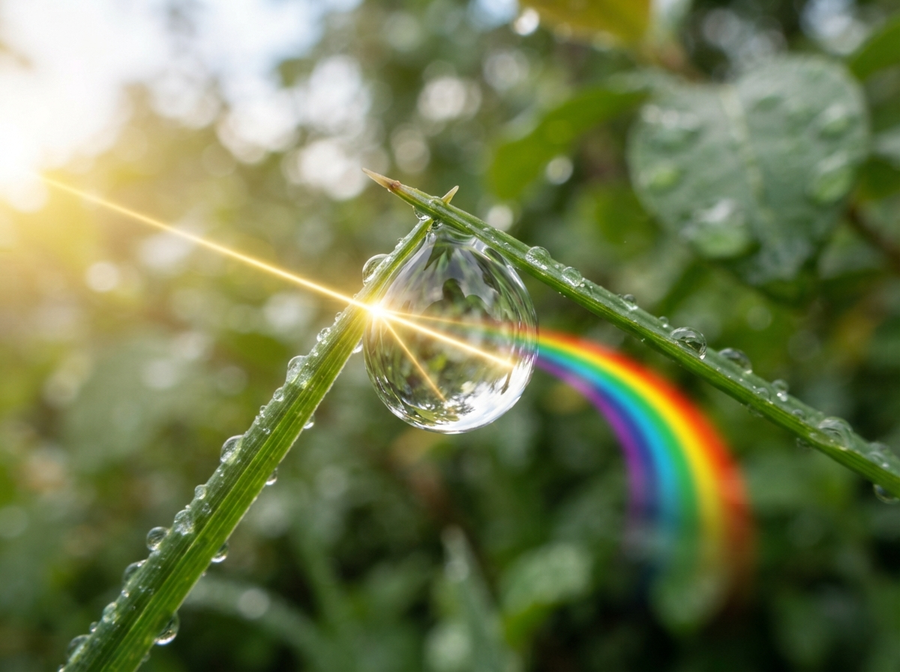
When a ray of sunlight enters a water droplet, something amazing happens. The light slows down and bends, a process called refraction. Inside the droplet, the light bounces off the back surface like a tiny mirror. As the light exits the droplet, it bends again. Here's the key part: different colors of light bend at slightly different angles. Red light bends the least (about 40 degrees), while violet light bends the most (about 58 degrees). This separation of colors is called dispersion, and it's what creates the rainbow bands we see.

But here's something surprising—millions of water droplets are reflecting light at you, not just one! Each droplet contributes to the rainbow, and they all work together to create that bright arc in the sky. The reason you see a curved arc instead of a straight line is because of geometry. All the droplets that create light rays hitting your eye at exactly 42 degrees form a circle around the antisolar point (the spot directly opposite the sun from your perspective).

boy, child, happy, children smile, sunshine, nature, children laugh, calm after the storm, dreams, enjoy, light, rain, playground, sunbeam, sunny
Photo by mariya_m on Pixabay

Why Rainbows Have Seven Colors (And Why That Number Matters)

When you look at a rainbow, you see bands of color arranged in a specific order: red on the outside, then orange, yellow, green, blue, indigo, and violet on the inside. Many people remember this order using the name ROYGBIV. But here's an interesting question: why exactly seven colors? And are there really seven, or is that just what we've decided to call them?

The truth is that a rainbow actually contains all the colors of visible light, arranged smoothly from one end to the other. There's no hard line where red stops and orange begins—the colors blend gradually. Scientists divide the rainbow into seven colors partly because it's a useful way to teach about light, and partly because of tradition. Isaac Newton, the famous scientist who studied light in the 1600s, decided on seven colors, and we've mostly stuck with that number ever since.

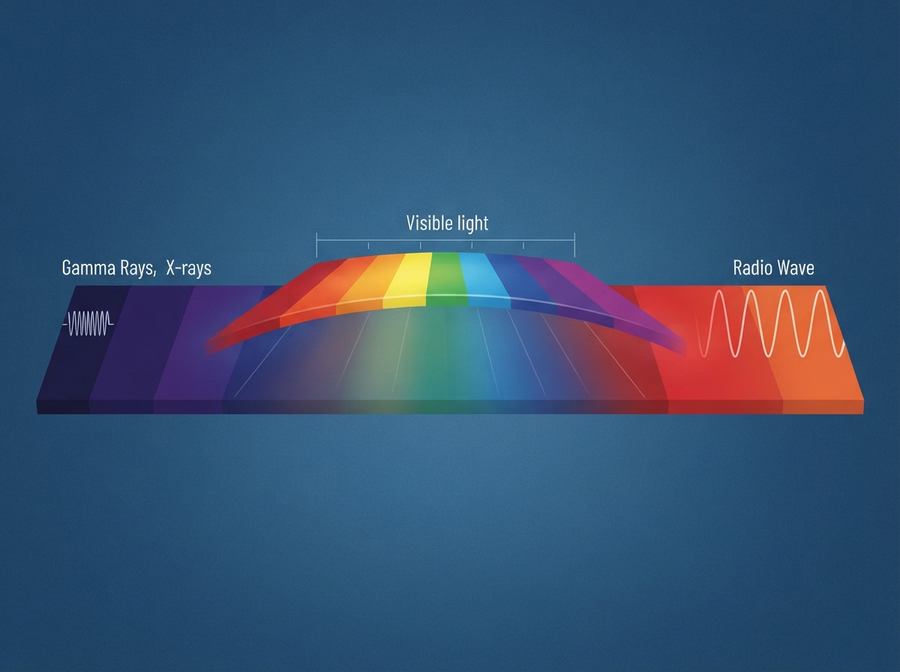
Each color in the rainbow represents a different wavelength of light. Red has the longest wavelength, while violet has the shortest. Our eyes can see all these wavelengths, and they combine to create the full spectrum of visible light. Interestingly, some animals see colors differently than we do. Bees, for example, can see ultraviolet light that's invisible to humans, so a rainbow might look different to a bee than it does to you!

The order of rainbow colors never changes because it's determined by the physics of how light bends. Red always bends the least and appears on the outside of the arc, while violet always bends the most and appears on the inside. This is true for every rainbow, everywhere in the world.

prism, spectral colors, spectrum, light spectrum, optics, light rays, rainbow colors, mirrors, redirection, prism, prism, prism, prism, prism
Photo by Antranias on Pixabay

The Perfect Angle: Why Rainbows Appear Where They Do

One of the most fascinating facts about rainbows is that they only appear at a specific angle. This angle is called the rainbow angle, and it's always about 42 degrees. This measurement is from the antisolar point (the spot directly opposite the sun) to the rainbow itself.

Here's why this angle matters so much: if you're looking at a rainbow, and you measure the angle between the sun (behind you), the water droplets, and your eyes, that angle must be approximately 42 degrees. If you move, the rainbow appears to move with you! This is because the angle changes based on where you're standing. You can never actually walk up to a rainbow and touch it because it's not a physical object in one location—it's an optical effect that depends on your position and the sun's position.

This also explains why you can't see a rainbow when the sun is high in the sky at noon. The sun needs to be lower than 42 degrees above the horizon. Early morning and late afternoon rainbows are much more common than midday ones. If you're near the equator, you might see rainbows at different times than someone living farther north or south, because the sun's path across the sky changes depending on your location and the season.

The 42-degree angle is so important that it even has a name in physics: the primary rainbow angle. When light bounces twice inside a water droplet instead of once, it creates a secondary rainbow at about 50 degrees. This is why you sometimes see a fainter rainbow outside the main one, with its colors reversed!

Double Rainbows and Secondary Rainbows: When One Rainbow Isn't Enough

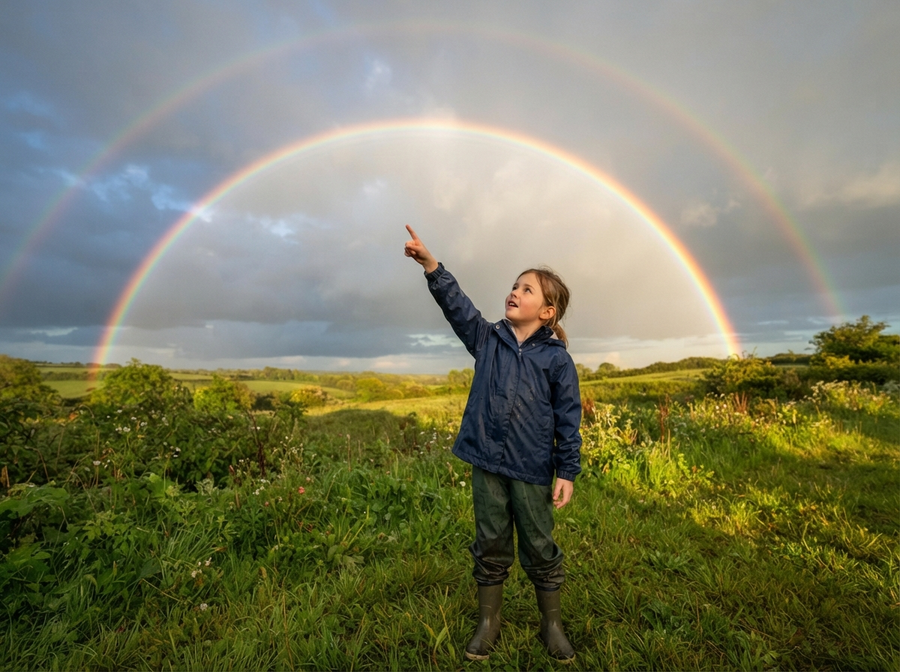
If you're really lucky, you might see a double rainbow—and it's even more spectacular than a single rainbow. A double rainbow happens when light bounces inside water droplets twice instead of just once. After the first bounce (which creates the primary rainbow), some light bounces a second time before exiting the droplet. This creates the secondary rainbow, which appears at a wider angle (about 50 degrees instead of 42 degrees) and is fainter than the primary rainbow.

Here's something really cool about secondary rainbows: the colors are reversed. In the primary rainbow, red is on the outside and violet is on the inside. But in the secondary rainbow, violet is on the outside and red is on the inside. This happens because the light has bounced twice, changing the angle at which each color exits the droplet.

Between the primary and secondary rainbows, you might notice something strange. The sky between them appears darker than the sky outside the rainbows. This area is called Alexander's dark band or Alexander's dark spot, named after Alexander of Aphrodisias, an ancient Greek philosopher who first noticed it around 200 AD. The sky is darker there because less light is being reflected toward your eyes from that region.

Secondary rainbows are fainter than primary rainbows because some light is lost with each bounce inside the water droplet. The more times light bounces, the dimmer it becomes. Occasionally, people have reported seeing tertiary rainbows (three bounces), but these are extremely rare and very faint.

Where to Find Rainbows: The Best Places and Times

If you want to see a rainbow, you need to know where and when to look. The most obvious time is right after a rainstorm, when the sun is breaking through the clouds. But rainbows can appear in other places too, and knowing where to look increases your chances of spotting one.

The ideal rainbow conditions are:

  • Sun behind you—always position yourself so the sun is at your back
  • Rain or water in front of you—look toward the area where it's still raining or where there's mist
  • Low sun angle—early morning or late afternoon rainbows are most common
  • Clear visibility—you need to be able to see the water droplets and the sky clearly

Beyond rainstorms, you can find rainbows near waterfalls, especially if you position yourself with the sun behind you and the mist in front. Garden sprinklers and fountains can create rainbows on sunny days. Some people even create rainbows indoors by spraying water with a hose while standing with their back to a window on a sunny day.

Beaches are excellent rainbow spots because there's often water spray from waves, and you have a wide-open sky. Mountain valleys where waterfalls are common also produce frequent rainbows. If you're patient and watch for the right conditions, you'll start noticing rainbows in places you never expected to see them.

Moonbows: Rainbows in the Night Sky

Most people think rainbows only happen during the day when the sun is shining. But there's a rare and magical phenomenon called a moonbow (or lunar rainbow) that happens at night when the moon is bright enough. Moonbows form using exactly the same science as regular rainbows, except moonlight bounces through water droplets instead of sunlight.

The main reason moonbows are rare is that moonlight is much, much dimmer than sunlight. For a moonbow to be visible, you need a very bright moon—usually a full moon or nearly full moon. You also need rain or mist in front of you while the moon is behind you, just like with regular rainbows. Even when all these conditions are perfect, moonbows are very faint. Our eyes aren't as sensitive to color in dim light, so moonbows usually appear white or pale rather than showing the full spectrum of colors.

Because moonbows are so rare, many people have never seen one. If you ever get the chance to witness a moonbow, you're experiencing something truly special! Some famous locations for moonbow sightings include waterfalls like Yosemite Falls in California, where the combination of powerful mist and occasional full moons creates the right conditions.

Frequently Asked Questions

Can you touch a rainbow?

No, you cannot touch a rainbow because it's not a physical object. A rainbow is an optical effect created by light bending through water droplets. If you try to walk toward a rainbow, it will appear to move away from you, always staying at the same angle from the sun. The rainbow exists in your line of sight, not at a specific location in space.

Why do rainbows always appear in an arc shape?

Rainbows appear as arcs because of the specific 42-degree angle at which light must enter your eye. All the water droplets that create this perfect angle form a circle around the point opposite the sun (called the antisolar point). You see the arc because you're standing on the ground and can only see the part of this circle that's above the horizon.

Are there colors in a rainbow that we can't see?

Humans can only see the visible spectrum of light, which creates the colors we see in rainbows. However, light extends beyond what we can see—ultraviolet light is beyond violet, and infrared light is beyond red. Some animals, like bees and birds, can see ultraviolet light, so they might perceive rainbows differently than we do.

Can you see a rainbow at noon?

It's very difficult to see a rainbow at noon because the sun is too high in the sky. Rainbows require the sun to be below 42 degrees from the horizon. Early morning and late afternoon are the best times to see rainbows because the sun is lower in the sky at those times.

What causes the colors in a rainbow to separate?

The colors separate because different colors of light have different wavelengths, and they bend at slightly different angles when passing through water droplets. This process is called dispersion. Red light bends the least, while violet bends the most, which is why they appear on opposite sides of the rainbow.

Color Related Pages

Keep learning hands-on — color free printable sheets that match this topic.