
Tornado Facts for Kids: Amazing Twister Science at a Glance
Topic Focus
Tornado Facts for Kids: Amazing Twister Science
Learning Level
Ages 4–10 (Preschool to Grade 4)
Subject Area
Science Facts
Format
Verified Fun Facts & Guided Exploration
Tornado Facts for Kids: Amazing Twister Science
Have you ever seen a picture or video of a tornado? These swirling columns of air are some of nature's most powerful and mysterious weather events. They can pick up objects, twist trees, and even change the landscape in just a few minutes! But what exactly is a tornado, and how does such an incredible force come to be?
Get ready to dive into the exciting world of tornado science! We'll explore how these amazing twisters form, what makes them so strong, and some of the surprising things scientists have learned about them. Understanding tornadoes helps us appreciate the power of our planet's weather and how important it is to stay safe when one is nearby.
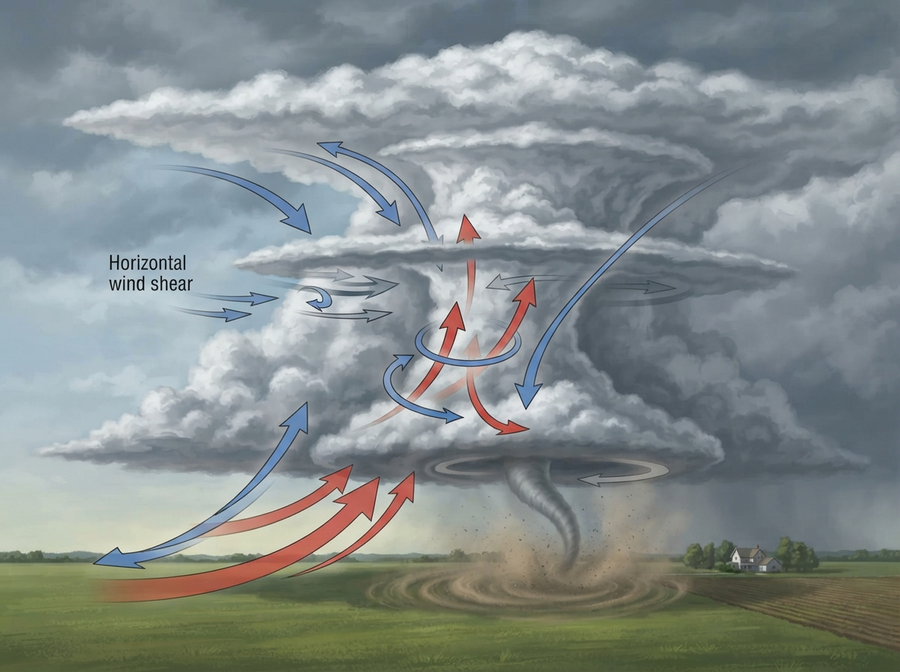
Tornadoes are like nature's giant ballet dancers, swirling with incredible power and grace!
Quick Facts
A tornado is a violently rotating column of air, extending from a thunderstorm to the ground.
They are sometimes called 'twisters' or 'cyclones,' though 'cyclone' has a broader meaning.
Most tornadoes spin counter-clockwise in the Northern Hemisphere.
The United States experiences more tornadoes than any other country in the world.
Tornadoes can happen at any time of year, but are most common in spring and early summer.
The Fujita Scale (or Enhanced Fujita Scale) is used to measure a tornado's strength.
Some tornadoes can travel for many miles and last for over an hour.
The fastest wind speeds ever recorded on Earth were inside a tornado.
What Makes a Tornado Form?
Tornadoes need a very specific recipe of ingredients to form, and it all starts with thunderstorms. Imagine warm, moist air rising from the ground and cool, dry air sinking from above. When these two types of air meet, especially if they are moving in different directions or at different speeds, it creates a spinning effect in the atmosphere. This spinning is called 'wind shear.'
Think of it like rolling a pencil between your hands. One hand moves forward, the other backward, and the pencil spins. In the sky, this wind shear creates a horizontal tube of spinning air. If a strong updraft (a column of rising air within a thunderstorm) tilts this horizontal tube vertically, it can become a powerful, rotating column that stretches down towards the ground. When this rotating column touches the ground, it's officially a tornado!
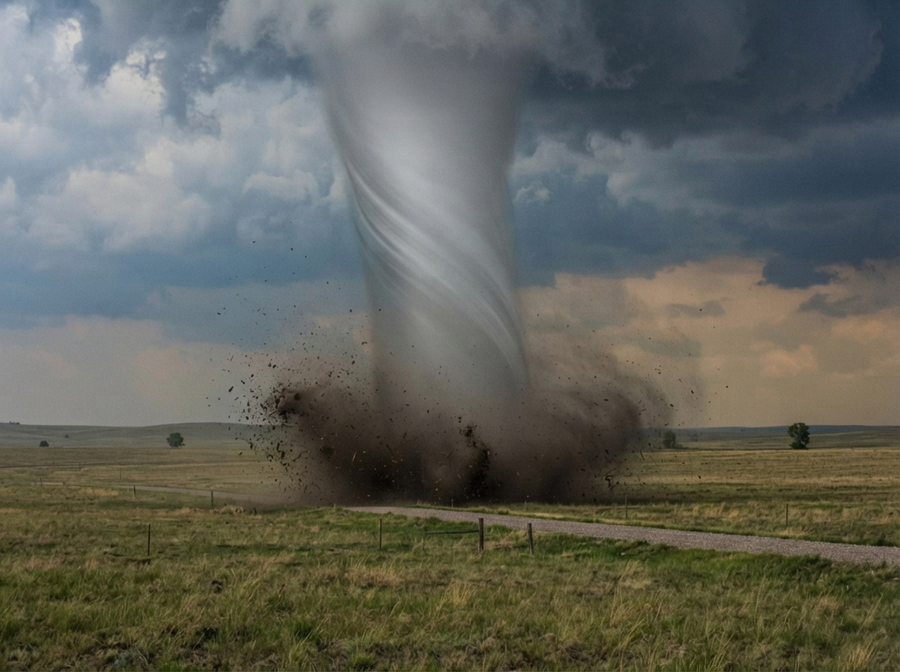
The Anatomy of a Twister: Funnel Clouds and Debris
When you see a tornado, you're often looking at its 'funnel cloud.' This funnel isn't just air; it's made up of water droplets (condensed moisture) and often dirt and debris that the tornado picks up from the ground. The stronger the tornado, the more debris it can lift, sometimes making the funnel appear very dark.
Not all tornadoes have a visible funnel all the way to the ground, but they are still tornadoes if the rotating wind connects the storm to the ground. Sometimes, all you see is a swirling cloud of dust and debris at ground level. Tornadoes can be wide or narrow, tall or short, and their shape can change as they move. They are truly unique natural phenomena!
How Do Scientists Measure Tornado Strength?
Scientists use a special scale called the Enhanced Fujita (EF) Scale to measure how strong a tornado is. This scale goes from EF0 (the weakest) to EF5 (the strongest). It's not measured by how big the tornado looks, but by the amount of damage it causes and the estimated wind speeds. For example:
EF0: Light damage, like branches breaking off trees. Wind speeds 65-85 mph.
EF1: Moderate damage, like roof surfaces peeled off. Wind speeds 86-110 mph.
EF2: Considerable damage, like roofs torn off well-constructed houses. Wind speeds 111-135 mph.
EF3: Severe damage, like entire stories of houses destroyed. Wind speeds 136-165 mph.
EF4: Devastating damage, like well-constructed houses leveled. Wind speeds 166-200 mph.
EF5: Incredible damage, like strong-frame houses swept clean from their foundations. Wind speeds over 200 mph!
These powerful storms are amazing to learn about, but it's important to remember they can be very dangerous. That's why meteorologists (weather scientists) work hard to predict them and warn people.
Where Do Tornadoes Happen Most Often?
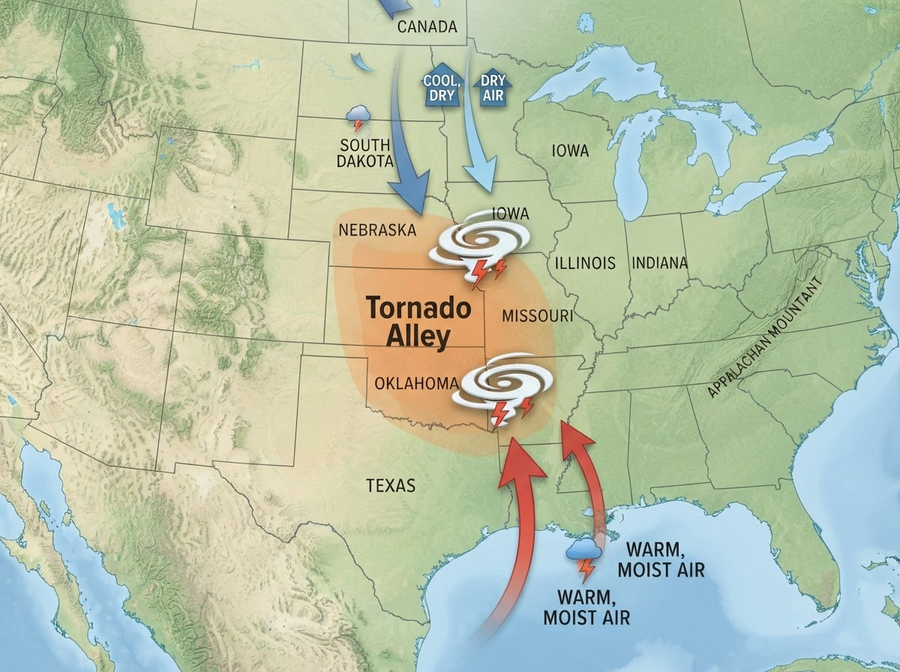
While tornadoes can happen in many parts of the world, certain regions are more prone to them. The central United States is often called 'Tornado Alley' because it experiences more tornadoes than anywhere else on Earth. This area includes states like Texas, Oklahoma, Kansas, and Nebraska. Why here?
It's because this region has the perfect conditions for tornado formation: warm, moist air from the Gulf of Mexico meets cool, dry air from the Rocky Mountains and cold, dry air from Canada. This creates the ideal 'clash' of air masses needed for powerful thunderstorms and, eventually, tornadoes. Other parts of the world, like Australia, Argentina, and Bangladesh, also experience tornadoes, but usually not as frequently or as intensely as Tornado Alley.
Want to see the swirling beauty of these natural wonders in a safe, fun way? You can imagine your own tornado path by coloring some amazing weather pages! Head over to KidsColouringPage.com to find free printable pages or color online.
Educational Standards & Fact-Checking
Reviewed by KidsColouring Editorial Team
Educational References & Scientific Sources
Our curriculum and factual articles are synthesized from trusted academic encyclopedias, wildlife conservation bodies, and public science institutions:
- •Smithsonian Institution Educational Resources & National Zoo Archives — Smithsonian Institution
- •National Geographic Kids Science & Animal Encyclopedias — National Geographic Society
- •Encyclopaedia Britannica Academic & Elementary Learning Reference — Encyclopaedia Britannica


